

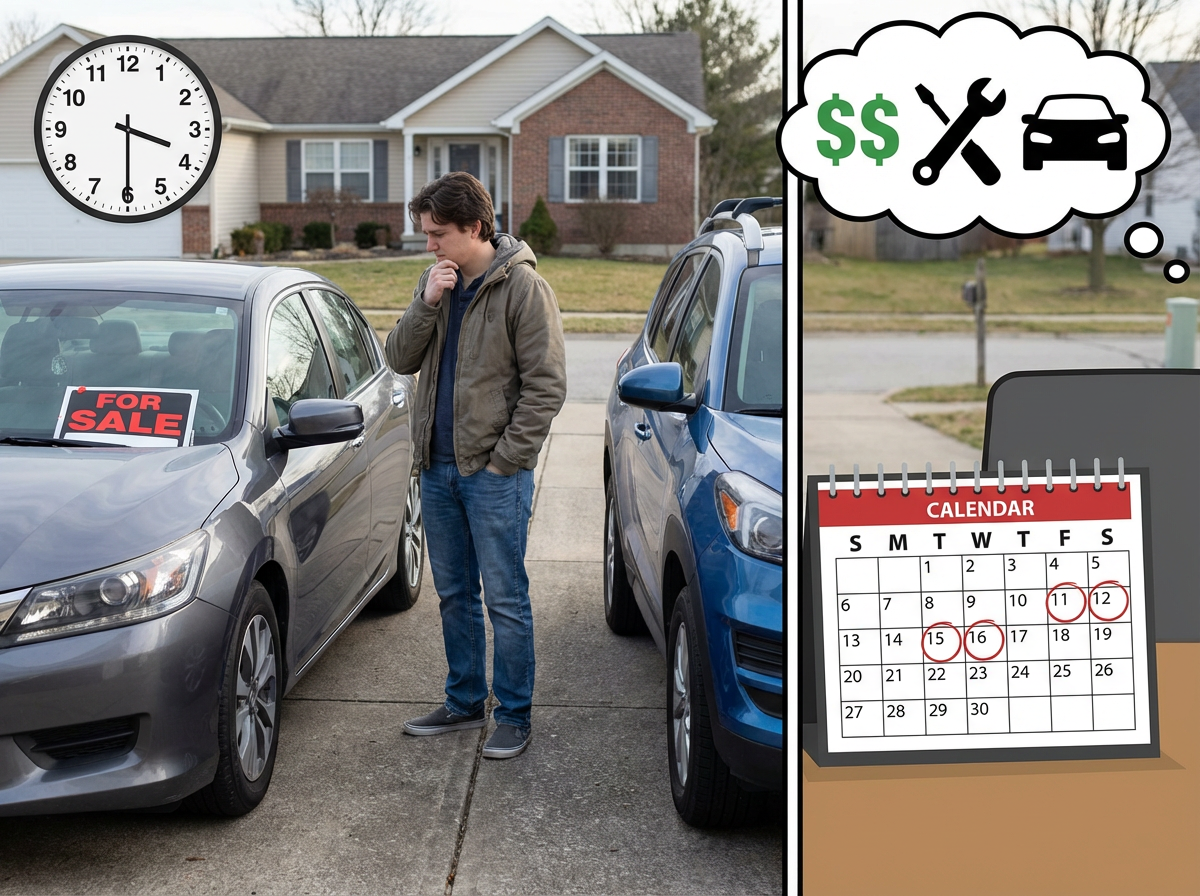
Timing the sale of a car is one of the most important financial decisions a motorist will make. A vehicle is not just a tool for transport but also a depreciating asset that continually loses value as the years and miles add up. The decision of when to sell my car often comes down to two options: securing a quick car sale for certainty, or waiting in the hope of squeezing more money from the deal.
This choice depends on several factors: depreciation rates, ongoing running costs, the condition of the vehicle, and the seller’s personal circumstances. Understanding the trade-offs between selling now and later helps ensure the best possible outcome.
Depreciation: why time is not on your side
The reality of car values over time
Cars are unusual in that they begin losing value almost immediately. Unlike investments such as property or collectables, vehicles almost always decline in worth.
- Immediate drop: A car loses value the moment it leaves the dealership forecourt.
- First-year plunge: Most new cars fall by 15–35% in their first year.
- Three-year milestone: Many models have already lost half of their original value by year three.
- Long-term decline: Older cars drop at a slower pace, but depreciation rarely stops altogether.
Why depreciation matters when selling
Holding onto a car while debating the timing can cost more than most realise. The longer a car is kept, the lower the potential return. Sellers weighing up a quick car sale vs. waiting should factor in how relentless depreciation can be.
Key takeaways:
- Cars lose value every year, fastest in the early years.
- Depreciation is the primary reason timing matters so much.
- Waiting rarely increases value unless dealing with rare classics.
The hidden cost of waiting
Running costs while holding out
Keeping a car while waiting for a better price is rarely free. Costs that continue to mount include:
- Insurance premiums: unavoidable, whether the vehicle is used or not.
- Road tax: payable until DVLA is informed of a change of ownership.
- MOT & servicing: without these, the car is harder to sell; with them, the costs continue.
- Repairs & breakdowns: older cars are more likely to fail, leading to unexpected bills.
How costs erase potential gains
Many sellers hope to gain an extra £200–£300 by waiting, but one major repair can wipe that out instantly. The gamble is whether the car remains reliable long enough to secure that higher price.
Key takeaways:
- Insurance, tax, and servicing reduce profit margins.
- Repair bills can outweigh the benefit of waiting.
- Delays always carry financial risk.
The “bird in the hand” principle
The saying “a bird in the hand is worth two in the bush” is particularly relevant to cars. A quick car sale provides certainty and closes the chapter without future risk. Waiting may produce a slightly higher return, but it is a gamble dependent on market demand, car condition, and luck.
Market fluctuations, economic dips, and new regulations can all impact resale value unexpectedly. What looks like a solid bet today could lose hundreds in value if timing slips.
Key takeaways:
- Certainty now may outweigh a possible higher figure later.
- Cars deteriorate over time, not improve.
- External factors like fuel prices or regulations can reduce demand.
Assessing vehicle condition before deciding
Signs that a car is better sold quickly
- MOT expiry date approaching
- Upcoming repairs (brakes, tyres, suspension)
- Cosmetic damage affecting buyer perception
- High mileage relative to market averages
When waiting may be justified
- Vehicle is in immaculate condition
- Low mileage compared with similar cars
- Desirable features such as hybrid engines or premium trims
- Demand for the model remains high
If looming issues outweigh potential gains, selling sooner is often the more brilliant move. For a straightforward process, the Sell Your Car service provides fair offers through an instant car quote online.
Key takeaways:
- Be realistic about the car’s condition.
- Excellent vehicles may justify waiting.
- Imminent problems make a quick sale more sensible.
Understanding your personal timeline
Situations where speed matters
- Urgent need for cash flow
- Relocating abroad or moving house
- Lack of space for multiple vehicles
- Rising repair costs are becoming unmanageable.
Situations where waiting may work
- No financial pressure to sell
- Secondary or spare car not urgently needed
- Market trends suggesting stable or increasing demand
Timing is not purely financial; personal life often dictates whether a quick car sale or patience is the better choice.
Key takeaways:
- Personal circumstances should shape the decision.
- Urgency favours fast sales, and flexibility supports waiting.
Negotiating: Quick sale vs. top price
Quick sale negotiation
Flexibility is the key to shifting a car quickly. Sellers may need to lower the asking price slightly to secure fast interest.
Profit-focused negotiation
For those holding out, preparation is vital:
- Research current market values on Auto Trader, eBay, and classified sites.
- Set a minimum acceptable price.
- Be willing to walk away from unsatisfactory offers.
Striking the balance between flexibility and firmness determines how smooth the sales process will be.
Key takeaways:
- Quick sales often require small compromises.
- Patience and research support higher profits.
- Balance is essential for successful negotiation.
Preparing for a quick sale
Even fast sales benefit from preparation. Small efforts can increase value and prevent delays.
- Wash, polish, and vacuum the vehicle.
- Remove personal items.
- Organise paperwork: V5C logbook, MOT certificate, service records.
- Fix minor, inexpensive issues (bulbs, wipers, fluids).
Paperwork is often the leading cause of delays. Reviewing documents needed to scrap a car provides insight into what buyers expect.
Selling options compared
Private sale
- Pros: Maximum potential price, complete control of negotiations.
- Cons: Time-consuming, risk of unreliable buyers.
Dealer trade-in
- Pros: Immediate convenience when upgrading.
- Cons: Lower offers tied to dealer’s stock.
Online car buyers
- Pros: Speed, simplicity, guaranteed collection.
- Cons: Price lower than private sale, dependent on honest descriptions.
Scrap option
For vehicles beyond economical repair, scrapping through Sell a Vehicle’s scrap car service is often the best outcome. Collection is free, paperwork is handled, and payment is issued securely.
Key takeaways:
- Private sale = more money, more hassle.
- Trade-in = quick but limited.
- Online = balance of speed and fairness.
- Scrap = solution for end-of-life vehicles.
Paperwork and legal essentials
DVLA requirements
- Complete the V5C logbook.
- Provide the new keeper slip to the buyer.
- Notify DVLA of the change immediately.
After-sale obligations
- Cancel insurance (see how to cancel your car insurance).
- Apply for a refund of unused road tax.
- If keeping a cherished plate, follow the DVLA process (see how to keep your private number plate).
Skipping these steps risks fines or liability for the new keeper’s actions.
Regional differences and local demand
- Manchester: Smaller hatchbacks sell quickly due to urban demand.
- London: Clean Air Zones increase demand for hybrids and EVs.
- Birmingham: Diesel demand is weaker due to the Clean Air Zone.
Where a car is located influences its desirability. Online valuations through Sell a Vehicle smooth out these regional variations by assessing cars against the national market.
Final verdict: Sell now or later?
The decision comes down to balancing certainty against potential profit:
- A quick car sale is ideal for those who value time, reduced risk, and immediate cash.
- Waiting may be worthwhile for immaculate cars, stable markets, and sellers without urgency.
In most cases, depreciation and ongoing costs tip the scales towards selling sooner rather than later. Timing the sale strategically ensures the best outcome, without unnecessary stress or expense.
For tailored support, sellers can get in touch for advice and valuations that match their circumstances.