

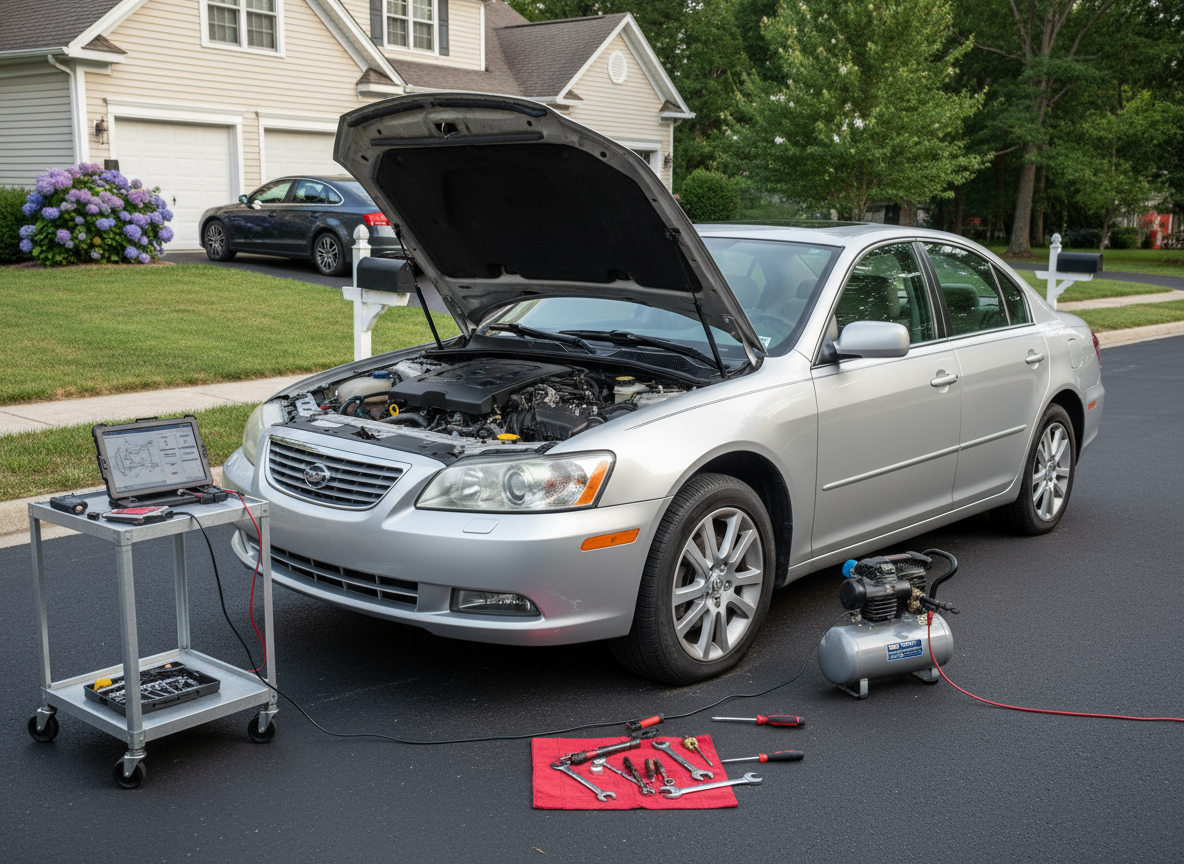
Selling a car that doesn’t run isn’t the same as passing on a used motor with some life left in it. When the engine won’t fire and the tyres haven’t moved in months, you’re not in the market for eager buyers looking for their next daily runaround. Instead, you’re working with the value of materials and components, not the vehicle as a whole.
Still, there are plenty of ways to sell a non-running car. Some are quick and hassle-free, while others take more effort but can bring in extra cash. Let’s break down your options for non-runner cars so that you can make the best choice for your situation.
Understanding your options
When the car on your drive won’t start, it’s easy to feel stuck. But you’re far from out of choices. The three main paths are:
- Scrapping it: The most straightforward way to shift a dead car and get money for its scrap metal value.
- Selling it for parts: Time-consuming but potentially more profitable if the vehicle has desirable components.
- Donating it: A charitable route, turning your problem into support for a good cause.
Key Takeaways
- Selling a non-runner is different from selling a standard used car.
- Your main routes are scrapping, breaking it for parts, or donating.
Scrapping your car: the easiest route
Scrapping is often the most straightforward option. You request a quote, a licensed scrap dealer arranges collection, and you’re paid once the car’s processed.
I remember a lad down my road, an old Ford Escort sat rusting at the kerb. He dreaded the thought of finding a buyer. I told him plain: “Scrap it, mate. Best way to be done with it.” He did, and he couldn’t believe how quick it all was; one phone call and the car was gone.
The money you receive depends on:
- The weight of the car.
- Current scrap metal prices.
It’s always smart to get several quotes. You can easily get a quote to scrap your car through trusted services like Sell a Vehicle.
Key Takeaways
- Scrapping is fast and straightforward.
- Always compare multiple quotes.
Finding a reputable scrapyard
Not every scrapyard is equal. To stay on the right side of the law and protect yourself, make sure you choose a licensed operator.
What to check before agreeing:
- They’re an Authorised Treatment Facility (ATF).
- They issue a Certificate of Destruction (CoD), proof that you’re no longer responsible for the car.
- They have positive reviews and a solid track record.
This paperwork isn’t just red tape; it saves you from potential fines and future headaches if the car isn’t disposed of correctly.
Key Takeaways
- Only use licensed scrapyards.
- Always obtain a Certificate of Destruction.
Free collection: a significant benefit
When a car doesn’t run, moving it yourself is costly and inconvenient. The good news is that most scrapyards and collection services offer free vehicle pick-up.
This means:
- No towing or trailer hire.
- No asking mates with vans for favours.
- Stress-free removal straight from your home.
Key Takeaways
- Free collection is a standard benefit.
- It saves you both time and money.
Selling for parts: more effort, potentially more money
If you’re not in a rush, parting out the vehicle can sometimes earn more than scrapping. Certain components, like the engine, gearbox, and catalytic converter, often fetch good money.
Think of it like an old watch. The whole thing may not tick, but inside there are gears and springs a watchmaker would pay for. A non-runner works much the same.
What this option requires:
- Identifying valuable parts.
- Safely removing them.
- Listing them for sale.
- Dealing with buyers and postage.
Key Takeaways
- Selling for parts can be lucrative.
- It demands time, effort, and some know-how.
Where to sell car parts
There’s no shortage of places to shift car parts, if you go down this road:
- Online marketplaces: eBay and Gumtree are popular choices.
- Specialist car part websites: Platforms built just for auto spares.
- Local breaker yards: Some will buy parts directly.
Key Takeaways
- Multiple platforms exist for selling parts.
- Online marketplaces are convenient, but breaker yards can be quicker.
Is it worth the effort?
Before you start pulling your car apart, weigh up whether it’s worth the hassle.
- If the vehicle is old, the parts may not have much demand.
- If components are worn or rusted, buyers won’t pay much.
- If you don’t have tools or space, it could be more trouble than it’s worth.
Key Takeaways
- Parting out isn’t always profitable.
- Scraping might be the more brilliant move for older cars.
Donating your car: a charitable choice
Some people prefer to make a positive out of a bad situation. Donating a car that doesn’t run is one way to do it.
Charities may use non-runners for:
- Training purposes.
- Fundraising auctions.
- Direct resale for parts or scrap.
Besides helping a good cause, you can also claim a tax deduction.
Key Takeaways
- Donation turns a problem car into charitable support.
- Tax benefits may apply.
Paperwork and legal obligations
No matter how you dispose of your non-runner, the DVLA must be notified. Neglect this step and you risk fines or continued liability for the vehicle.
Steps to follow:
- Complete Section 9 of the V5C logbook.
- Send it to the DVLA.
- Record the date and buyer’s details.
You’ll find further information in our guide on the documents needed to scrap a car.
Key Takeaways
- Always notify the DVLA after selling or scrapping.
- Complete and send Section 9 of the logbook.
Getting the best price for your non-runner
Even if it doesn’t run, you can still squeeze extra value out of it.
Tips to maximise returns:
- Get multiple quotes; scrapyards and breakers differ in pricing.
- Be honest about the car’s condition; hiding damage helps no one.
- Remove personal items before collection.
- Gather paperwork, including the V5C and any service records.
Key Takeaways
- Multiple quotes ensure fairness.
- Honesty and good paperwork increase trust and value.
Regional options for selling your non-runner
Location matters. Scrap and collection services often work regionally, which means your best deal may depend on where you live.
For example:
By checking local services, you’ll often find quicker collection times and slightly better rates.
Key takeaways
- You can sell a non-running car by scrapping, parting it out, or donating.
- Scrapping is the fastest and most painless choice.
- Parts selling may yield more profit, but requires effort.
- Donating helps a cause and may give tax perks.
- Always handle DVLA paperwork correctly.
Shop around to get the best deal.
Next steps
- Assess your car’s condition; decide whether scrapping, selling parts, or donating is right for you.
- Get multiple quotes from scrapyards and breakers.
- Gather paperwork; have your logbook ready.
- Arrange collection; most services will pick it up for free.
- Notify the DVLA; finalise ownership transfer legally.
And if you’re ready to move forward, Sell a Vehicle makes it easy. Whether you want to find out how to sell your car, scrap it, or just get in touch with questions, the help is right here.