

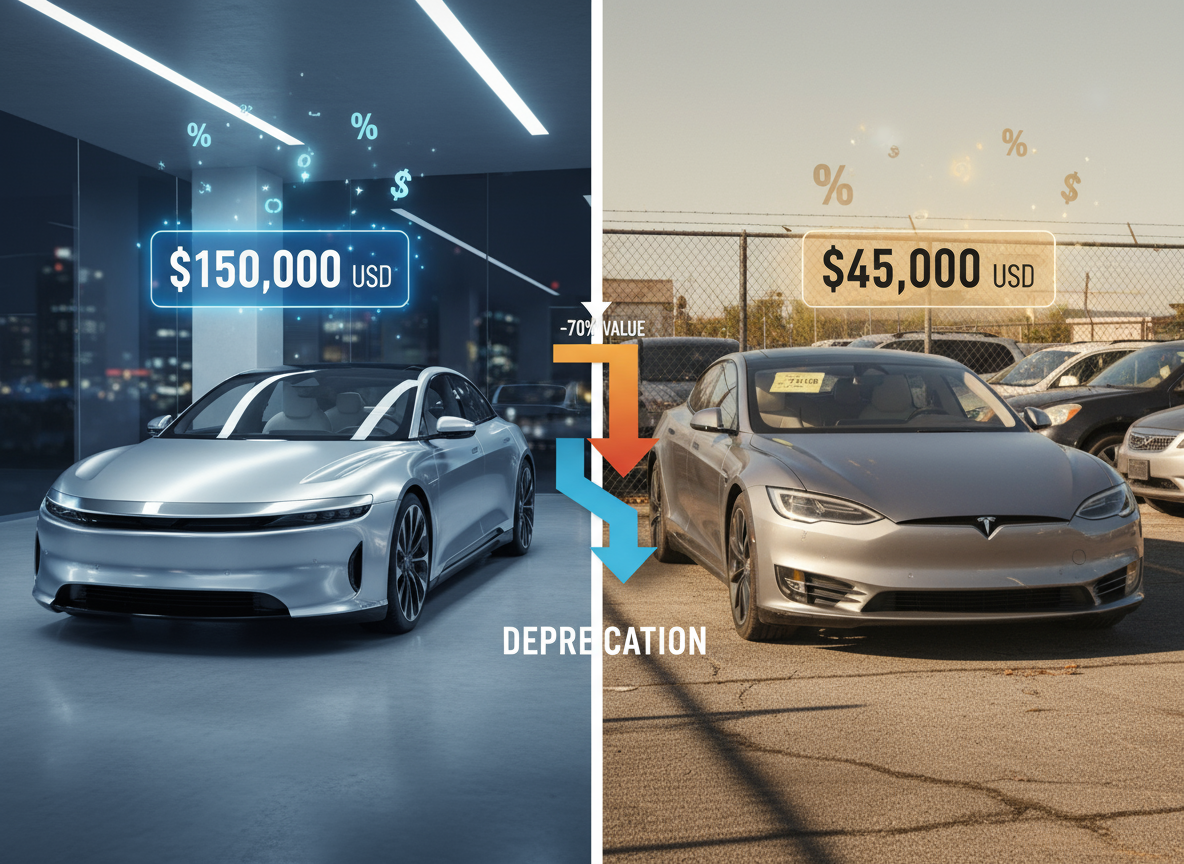
If you’ve ever bought a new motor, you’ll know the sinking feeling that comes when you check its value a year later. Car depreciation is one of those hidden costs that creeps up on every driver. Fuel and insurance might feel steep, but in most cases, it’s depreciation that quietly costs you the most.
Think of it as money evaporating the moment you turn the key in a new car. I learned this the hard way back in ’78 when I treated myself to a brand-new Ford Cortina. Lovely machine, polished every Sunday, never missed a service. But three years later? It was worth half what I paid. That, my friends, is depreciation doing its dirty work.
What is car depreciation?
At its core, car depreciation is the difference between what you paid for your vehicle and what you can sell it for later. Every car loses value over time, but the speed depends on factors like age, mileage, demand, and condition.
New cars suffer the fastest drop; some lose up to 20% of their value in the first year alone. It’s a bit like buying the latest telly. The moment you unbox it, it’s not “new” anymore, and its value dips straight away.
Key takeaways:
- Depreciation is usually the single most significant cost of owning a car.
- New cars lose value the fastest.
- It’s the gap between purchase price and resale value.
Factors that influence depreciation
Plenty of things affect how quickly your car’s value drops. Some are obvious, while others might surprise you.
Age and mileage
The older the car and the more miles on the clock, the lower the value. High mileage is a red flag for buyers because it suggests wear, tear, and looming repairs.
Make and model
Some brands hold their value better than others. A reliable Toyota might depreciate slowly, while a less popular brand drops faster simply because fewer people want it.
Condition, inside and out
Scratches, dents, a battered interior, they all knock pounds off your price. A well-maintained car with service stamps will always fetch more.
Fuel efficiency
With fuel costs forever creeping up, buyers favour cars that sip rather than guzzle petrol. Thirsty engines tend to depreciate quickly.
Colour and features
Neutral colours like black, silver, and grey appeal to more buyers, so they hold value better. Loud colours narrow your market. Optional extras (sat nav, leather seats) might help a little, but don’t expect them to cancel out heavy depreciation.
Market demand
Cars in demand will lose less value. If the market is flooded with a specific model, prices sink. Think of it as supply and demand at play.
Key takeaways:
- Age, mileage, and condition are top factors.
- Brand reputation and fuel economy affect long-term value.
- Market demand can either soften or worsen depreciation.
How to calculate car depreciation
You don’t need to be an accountant to figure out roughly how much your motor’s lost in value.
Straight-line depreciation
Take the purchase price, subtract the estimated scrap or salvage value, and divide by the number of years you’ll own it. This gives you a fixed yearly depreciation amount.
Percentage-based depreciation
Many use this method: your car loses a percentage each year, often steep in year one (15–20%), then slows down over time.
Online depreciation calculators
Plenty of free tools exist. Enter your reg, mileage, and details, and the system estimates your car’s current value.
Trade-in values
Guides like Parkers and What Car? Show average trade-in prices for your make and model, based on real market data.
Key takeaways:
- Straight-line = simplest method.
- Percentage-based = more realistic for most new cars.
- Online calculators and trade-in sites give real-time estimates.
Minimising depreciation: tips to slow the bleed
You can’t avoid depreciation entirely, but you can slow it down and get the best deal when it comes time to sell.
- Service it regularly. A stamped service book is worth its weight in gold.
- Drive smoothly. No need for rally driving. Harsh braking and speeding wear cars out faster.
- Protect the paintwork. Regular washes, a layer of wax, or paint protection film can save you from rust and scratches.
- Keep the interior tidy. No one wants a car that smells of chips or is covered in pet hair.
- Store it safely. Garages and covers help prevent weather damage.
Key takeaways:
- A well-maintained car depreciates more slowly.
- Clean inside and out matters more than you think.
- Storage and gentle driving protect value.
Selling your car at the right time
When you sell, it can be just as important as how you sell.
- Avoid the brand-new plunge. A nearly new car is better value than brand new. Let someone else take the initial hit.
- Sell before big mileage milestones. Cars lose more value when they tick past 60k or 100k.
- Seasonal timing. Convertibles sell better in summer, while 4x4s are hot in winter.
- Market awareness. Keep an eye on demand. If used cars are scarce, you’ll fetch more.
Key takeaways:
- Timing sales well helps you retain more value.
- Mileage milestones matter.
- Seasonal demand can boost returns.
Getting the best deal when selling
When it’s time to part ways, you’ll want to get the best deal for your car.
- Presentation is key. Clean it thoroughly inside and out.
- Have paperwork ready. MOTs, service history, and your V5C reassure buyers. (Need help? Check our guide on the documents needed to scrap a car.)
- Price fairly. Check online listings for similar models.
- Be honest. Buyers value transparency.
- Private sale vs. trade-in. Private sales may fetch more but take effort.
- Online car buying services. For speed and convenience, Sell a Vehicle lets you find out how to sell your car without hassle.
Key takeaways:
- Clean and prep for sale.
- Paperwork builds confidence.
- Selling privately may earn more, but online services save time.
Depreciation and scrap cars
Sometimes depreciation leaves you with a car worth next to nothing. When repairs outweigh value, scrapping makes sense.
- When to scrap. Failed MOT? Expensive repairs? Better to cut your losses.
- Scrap value. Based mainly on vehicle weight and current scrap metal prices.
- Reputable scrapyards. Always choose licensed yards that issue Certificates of Destruction.
- Get multiple quotes. Sell a Vehicle can help you get a quote to scrap your car quickly and securely.
Key takeaways:
- Scrapping is best when repairs exceed the car’s value.
- Weight and metal prices decide scrap worth.
- Always use a licensed yard and compare quotes.
A mechanic’s story
Years back, a neighbour had a Vauxhall Cavalier he adored. Trouble was, he’d let the bodywork go, skipped a few services, and the MOT history was patchy. When he went to sell, he was shocked at the low offers. We gave it a deep clean, sorted a cheap service, and dug out the old paperwork. In the end, he didn’t get top money, but he got a much better deal than the first quotes.
Lesson learned: treat your car well, and it’ll return the favour when you sell.
Next steps: don’t let your car lose more value
Depreciation never stops, but acting sooner means you’ll usually get the best deal.
- Consider selling before your car loses more value.\
- Use Sell a Vehicle’s free valuation tool to see what your motor’s worth today.
- If it’s time to move on, contact us for help.
- For regional options, check sell your car in Manchester or scrap your car in Birmingham.
Don’t let depreciation nibble away at your old motor until it’s worth peanuts. Take action, and keep more of your money where it belongs, in your pocket.