

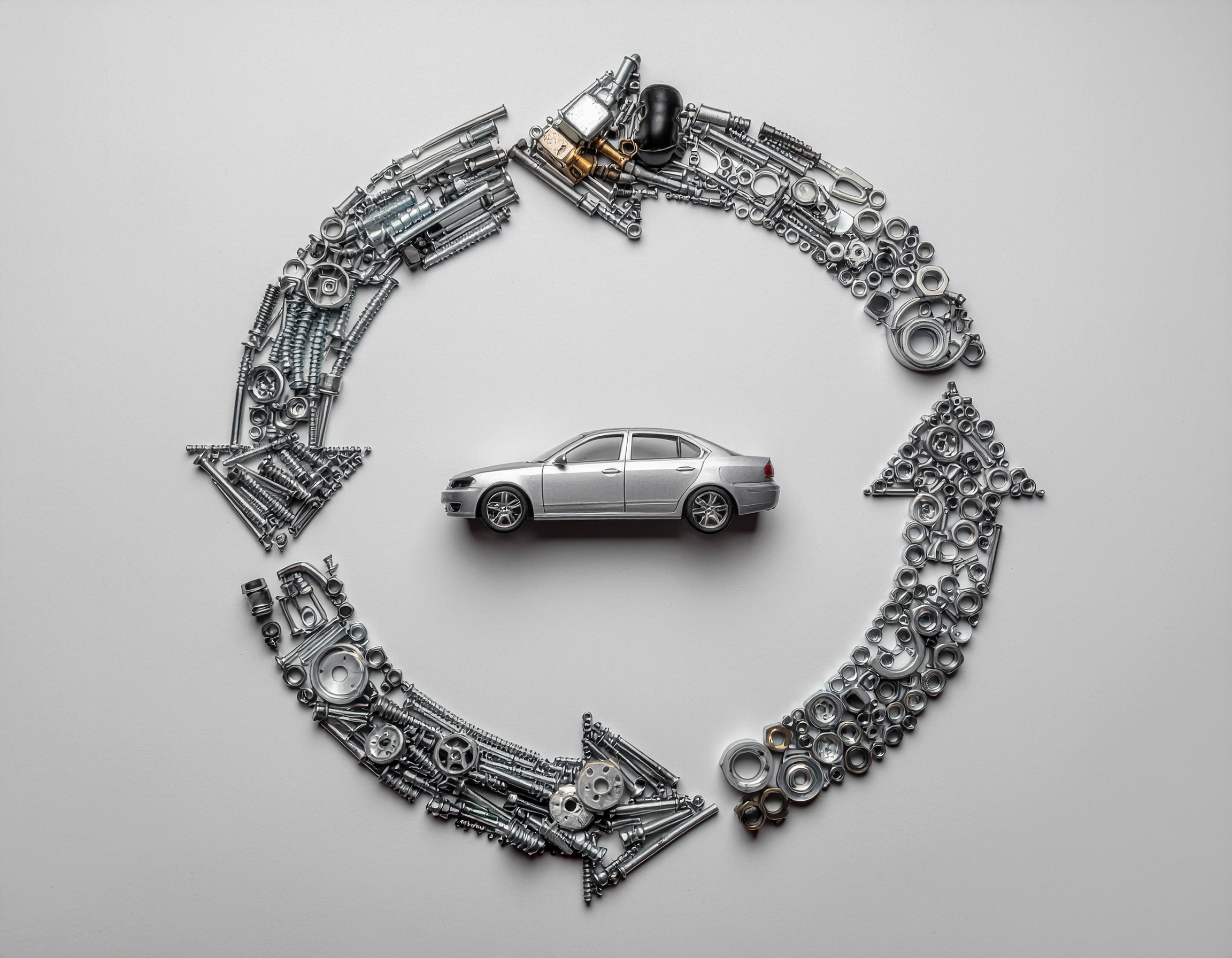
Back when I first started in the trade, recycling wasn’t much more than stacking old cars on top of each other until the pile leaned too far, then sending the lot off to be crushed. Nobody gave a second thought to where those cars ended up or what was lost in the process. Today, things are very different. The shift toward a circular economy means that an old car is no longer the end of the road but the start of something new.
Every vehicle is packed with materials that can be recovered, reused, and remade. From steel panels to tyres, wiring looms to windscreens, the value is there, but it takes a proper auto recycling process to unlock it. And the beauty of this shift? By recycling car parts and repurposing materials, we’re not just cutting waste; we’re conserving resources, reducing pollution, and creating new opportunities for both drivers and industry.
What is the circular economy?
The circular economy is a simple concept dressed in modern language. Instead of the old “take, make, dispose” approach, the aim is to create loops. Products are designed, used, recovered, and remade into something else. Waste becomes a resource, and every item has multiple lives.
In the automotive world, this means dismantling and recycling car parts rather than crushing entire vehicles. A gearbox might find its way into another motor. Steel panels can be melted and reformed into construction beams. Even shredded tyres end up cushioning playgrounds. Every part has a path back into the economy rather than into landfill.
Key points of the circular economy:
- Reduces waste through recovery, reuse, and recycling.
- Cars fit neatly into this system thanks to their high material content.
- The focus is on extending product lifecycles and cutting environmental harm.
How the auto recycling process works
Most people assume that once a car disappears on a recovery truck, it’s crushed and forgotten. The reality is much more precise. A modern auto recycling process breaks the car down step by step:
- Depollution – Hazardous materials like oil, coolant, brake fluid, air-con gas, and the battery are drained safely to prevent leaks.
- Part recovery – Engines, gearboxes, alternators, tyres, and smaller components are removed for reconditioning and resale.
- Plastics and glass separation – Bumpers, dashboards, windscreens, and windows are sent to specialist recyclers.
- Metal shredding – Once stripped, the body is crushed and shredded. Magnets and advanced systems separate steel, aluminium, and other metals.
- Reuse and remanufacture – These materials re-enter industries ranging from construction to consumer goods.
I once stood in an ATF (Authorised Treatment Facility) watching a tired old Rover being dismantled. Within a few hours, what looked like a heap of scrap had been reduced to sorted piles of metal, plastic, rubber, and wiring. Almost nothing went to waste, a perfect example of the circular economy in action.
Materials recovered from car recycling
A car is a rolling treasure chest, and modern recycling ensures the contents don’t go to waste:
- Steel: The largest component, endlessly recyclable.
- Aluminium: Found in engines, gearboxes, and panels. Recycling saves 95% of the energy needed to produce new aluminium.
- Copper: Pulled from wiring harnesses and electronics. Recycled copper helps power renewable industries.
- Glass: From windscreens and windows, recycled into new glass or construction products.
- Plastics: Dashboards, bumpers, and trim are increasingly recyclable with advanced tech.
- Tyres: Shredded into road surfacing, playground flooring, or even new tyres.
On average, up to 95% of a car can now be recycled if the right processes are followed.
The economic and environmental benefits
Why go to all this trouble? Because the benefits stack up on both sides:
Environmental wins
- Less mining for raw materials.
- Lower emissions thanks to energy savings in metal recycling.
- Cleaner land and waterways as toxic fluids are handled properly.
Economic wins
- Thousands of jobs are supported in dismantling, processing, and remanufacturing.
- Affordable spare parts for drivers through reconditioned engines and gearboxes.
- Cost savings for industries sourcing recycled metals and plastics.
I used to sell reconditioned alternators to young mechanics who couldn’t afford new ones. Without recycling, they’d have been priced out of fixing their cars.
Real-world applications: where recycled car parts go
Once a car’s been through the auto recycling process, the materials spread far beyond the scrapyard:
- Construction: Steel from cars reborn as beams and rebar.
- Consumer goods: Plastics and metals go into appliances, bicycles, and furniture.
- New cars: Many modern vehicles already contain recycled aluminium and steel.
- Infrastructure: Rubber from tyres laid into roads and sports grounds.
That cracked bumper from your hatchback might end up inside a fridge. A steel door panel could find new life as part of a railway track. Recycling car parts ensures value keeps flowing through the system.
Legislation and regulation in UK auto recycling
By law, all end-of-life vehicles must go through licensed Authorised Treatment Facilities (ATFs). These facilities are required to:
- Issue a Certificate of Destruction (CoD).
- Handle fluids and hazardous materials safely.
- Ensure at least 95% recovery by weight.
This protects both the environment and consumers, and it weeds out dodgy operators who cut corners. If you’re scrapping, always choose a licensed ATF or a trusted network like Sell a Vehicle’s scrap car service.
Challenges in modern car recycling
It isn’t all smooth sailing. As cars become more advanced, recyclers face new hurdles:
- Electric vehicle batteries – Lithium-ion packs require specialist dismantling.
- Complex plastics – Some blends are still tough to recycle economically.
- Electronic waste – Sensors, wiring, and circuit boards add new layers of complexity.
Manufacturers are being pushed to design vehicles that are easier to dismantle and recycle from the start, closing the loop before the car even hits the road.
The future of the circular economy in auto recycling
The industry is moving fast, with innovation leading the charge:
- Battery recycling – A growing focus as EVs take over.
- Closed-loop supply chains – Automakers reclaiming and reusing their own materials.
- Smart design – Cars built with dismantling in mind, making the auto recycling process quicker and cleaner.
The long-term goal? Almost nothing from a car ends up in a landfill.
How drivers can support the circular economy
You don’t need to run a scrapyard to make a difference. Everyday drivers can support the system by:
- Choosing reconditioned parts for repairs.
- Using licensed ATFs when scrapping, get a quote to scrap your car.
- Selling through trusted networks like Sell a Vehicle for peace of mind.
If you’re unsure about the process, our guide on the documents needed to scrap a car will walk you through the essentials.
A quick story from the workshop
I’ll never forget when Mrs Higgins rolled up with her Morris Minor, rusted from sitting in her garden for decades. She thought it was worthless. The recycling yard stripped it down, recovered the steel, sold the spoked wheels, and even reconditioned the engine block.
That single car ended up spread across construction projects, repair garages, and even a playground surface. To her, it looked like junk. In reality, it was value waiting to be unlocked, exactly what the circular economy is about.
Next steps if you’re ready to recycle
If you’re ready to move on from your old motor:
- Get a free quote – Start with Sell a Vehicle.
- Prepare paperwork – Your V5C, ID, and proof of address.
- Arrange collection – Collection is free and hassle-free.
- Get paid – Money straight into your bank.
- Cancel your insurance – Our guide on cancelling car insurance will save you from paying extra.
And if you’ve got a private plate you want to keep, see our advice on how to transfer a number plate before scrapping.
Conclusion: a second life for every car
The circular economy isn’t a buzzword, it’s the new reality of motoring. Through responsible auto recycling processes, almost every part of an old car can be recovered, reused, or repurposed. That reduces environmental harm, creates jobs, and gives drivers access to affordable parts.
By recycling car parts, your old motor might live on as a beam in a building, rubber in a sports pitch, or even a gearbox in another car. Endings can be beginnings, and responsible choices ripple far beyond your driveway.
When you’re ready to let go of your old car, Sell a Vehicle makes sure it’s done properly, fairly, and in line with the circular economy.