

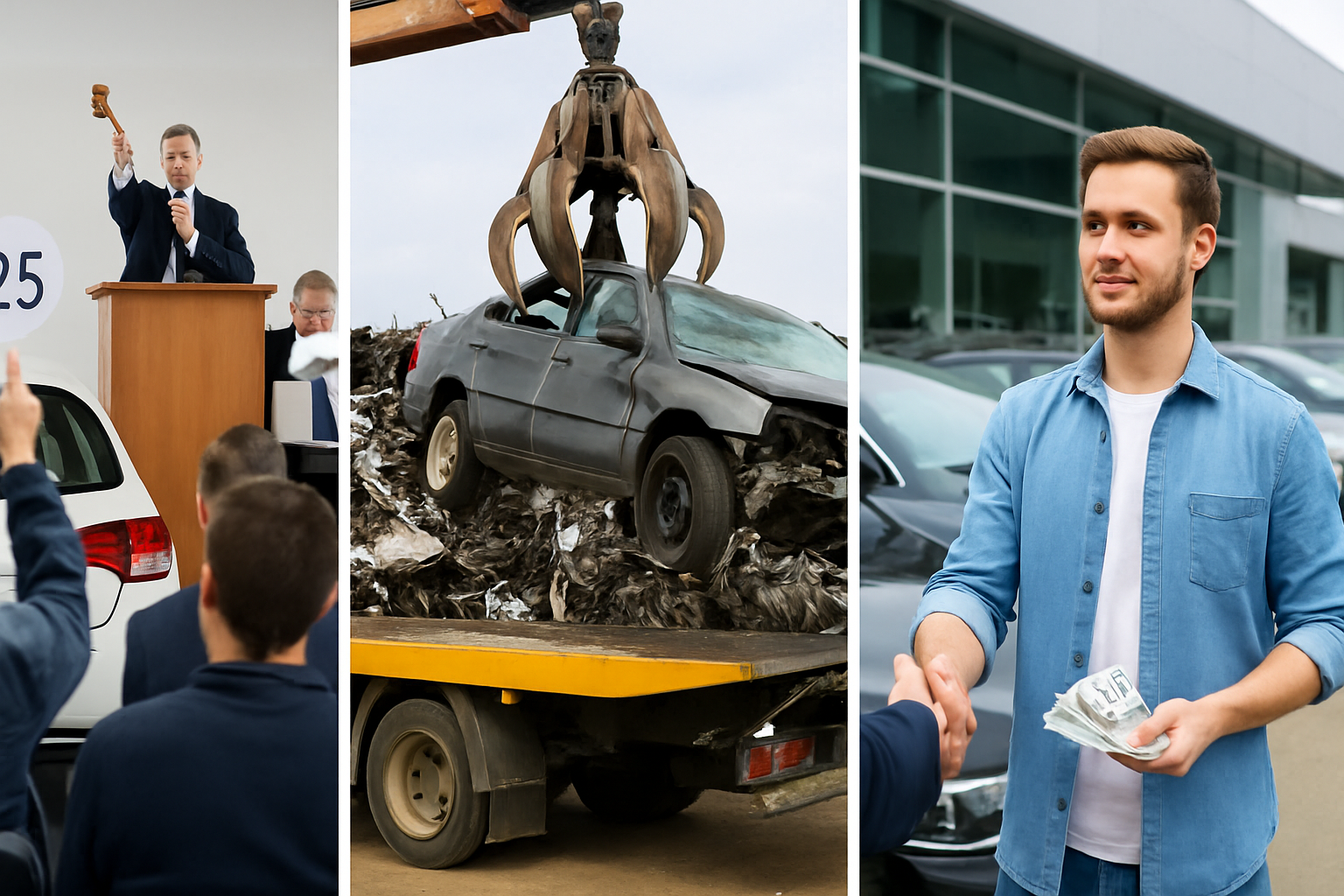
At some point, every car reaches a stage where the owner has to make a decision: continue repairing, or let it go. When it’s time to part ways, there are several ways to sell your car, each with distinct advantages and drawbacks. The most common choices are auctioning, scrapping, or taking a direct cash sale.
Each option has its place. Auctions appeal to those with rare or high-value cars, scrapping is often best for end-of-life vehicles, and cash sales offer speed and convenience for cars in usable condition. Understanding these routes in detail can save money, reduce stress, and ensure a smooth handover.
Understanding your options
The decision between auction, scrap, and cash sale is not simply about price. It involves convenience, timescales, legal obligations, and the overall condition of the car.
The three main options:
- Auctioning a car: competitive but uncertain.
- Scrapping a car: straightforward, fast, and legally compliant.
- Selling for cash: immediate and hassle-free.
Key Takeaways:
- Auctions suit rare, collectible, or desirable vehicles.
- Scrapping makes sense for MOT failures, write-offs, or severely damaged cars.
- Cash sales work best for cars that still run and require a quick sale.
Auctioning your car
The upsides of auctions
Auctions bring together a broad audience of buyers, from trade dealers to private collectors. Competitive bidding can sometimes push the final price beyond expectations.
- Potential for higher returns: Desirable vehicles often sell for more than trade-in value.
- Quick turnover once sold: When the hammer falls, the sale is final.
- Broad buyer reach: Auction houses market vehicles to a wider audience than local adverts.
The downsides of auctions
The benefits come with risks. Not every vehicle performs well in an auction environment.
- No price guarantee: A car may sell for less than expected.
- Auction fees: Commission and entry costs reduce net earnings.
- Timing: Sellers must wait for available slots, and success often depends on the right audience being present.
Key Takeaway: Auctions are best for higher-value or unique cars. They can bring excellent returns, but the outcome is uncertain, and fees apply.
Scrapping your car: a practical solution
For many vehicles, particularly older ones with high mileage or severe damage, scrapping is the most logical choice. Using a licensed service ensures compliance with UK regulations while putting money back in the owner’s pocket.
When scrapping makes sense
- MOT failure: When repair costs outweigh the car’s overall value.
- Non-runners: Cars with engine or gearbox failure.
- Accident write-offs: Vehicles deemed unsafe or uneconomical to repair.
- Rust or structural issues: Cars beyond viable restoration.
How the scrap process works
- Find a licensed dealer: Always choose an Authorised Treatment Facility (ATF).
- Get a quote: Scrap value depends on weight, demand for parts, and the current scrap metal market.
- Arrange collection: Many services, including Sell a Vehicle, offer free collection.
- Receive a Certificate of Destruction (CoD): Essential legal proof that the car has been dismantled and deregistered.
- Notify the DVLA: Ensures the owner is no longer liable for tax or penalties.
Benefits of scrapping
- Speed and simplicity: Often completed in 24- 48 hours.
- Guaranteed outcome: As long as the car matches the description, it will be accepted.
- Environmental compliance: Fluids, tyres, and metals are recycled responsibly.
- Cash payment: Services like Sell a Vehicle provide scrap car for cash, combining legal disposal with a quick payout.
Key Takeaway: Scrapping is the most practical option for end-of-life cars, offering fast, legal, and environmentally sound disposal.
Selling for cash
Direct cash sales appeal to owners who want speed without the uncertainties of auctions. With reputable services, valuations are quick, transactions are secure, and the car is removed without the hassle of advertising.
Benefits of a cash sale
- Speed: Valuations can be provided within minutes, and cars can be collected in days.
- Convenience: No need for test drives, haggling, or multiple viewings.
- Certainty: Once the price is agreed, payment is usually made promptly.
Risks and precautions
- Avoid rogue traders: Some unlicensed buyers operate illegally.
- Check credentials: Always use services with strong reputations and licensing.
- Paperwork compliance: Ensure DVLA notification and insurance cancellation are completed.
Key Takeaway: A cash sale is ideal for usable cars where speed and simplicity are more important than maximising price.
Factors to weigh before deciding
Choosing between auction, scrap, and cash requires balancing personal needs with the condition of the vehicle.
Key factors to consider:
- Condition of the car: Is it desirable, roadworthy, or beyond economical repair?
- Timeframe: Is the goal to sell immediately, or is there flexibility?
- Financial expectations: Is maximising value more important than reducing hassle?
Key Takeaway: Honest assessment of condition, urgency, and financial goals helps identify the best route.
Paperwork you cannot ignore
Whichever path is chosen, correct documentation protects sellers from fines or liability.
- V5C logbook: Essential for transferring ownership.
- DVLA notification: Required for sales, scrap, or transfers.
- Insurance: Cancel cover as soon as ownership ends. For help, see the guide on cancelling your car insurance.
- Road tax refund: Apply for repayment of unused months.
- Private plates: If keeping a personalised plate, arrange retention beforehand. Guidance is available in the blog on how to keep your private number plate.
Key Takeaway: Legal compliance ensures the car is no longer linked to the seller, avoiding future problems.
Comparing the options side by side
Auctions:
- Best for rare or high-value vehicles.
- Higher potential returns but risky.
- Fees apply, and no guarantee of success.
Scrapping:
- Best for MOT failures, damaged, or end-of-life cars.
- Simple, fast, and compliant with regulations.
- Value depends on scrap weight and market rates.
Cash sales:
- Best for decent-condition cars where speed matters.
- Fast and convenient.
- Lower returns than auctions but more secure.
Key Takeaway: Each option has strengths, but the right choice depends on balancing value against speed and effort.
Regional coverage across the UK
Sell a Vehicle supports all major routes nationwide, whether the goal is auction, scrap car for cash, or quick valuations.
- Sell your car in Manchester for a fair deal.
- Arrange a scrap car service in London for quick collection.
- Explore car-selling options in Birmingham with local support.
Key Takeaway: With UK-wide coverage, Sell a Vehicle ensures easy access to the right selling option, wherever the car is based.
Final thoughts: making the right call
Every vehicle has a point where continuing repairs no longer make sense. Deciding between auction, scrap, or cash is about matching the correct method to the car’s condition and the seller’s goals.
- Auctions reward rare or desirable vehicles but carry risk.
- Scrapping is the most sensible path for old, damaged, or unsafe cars.
- Cash sales are ideal for those who want a quick, stress-free transaction.
Sell a Vehicle offers all three solutions, helping owners across the UK find the most suitable route. Whether the priority is maximum value, speed, or simplicity, the right choice ensures a clean break and money back in return.
For further guidance, contact us and explore the ways to sell your car with confidence.