

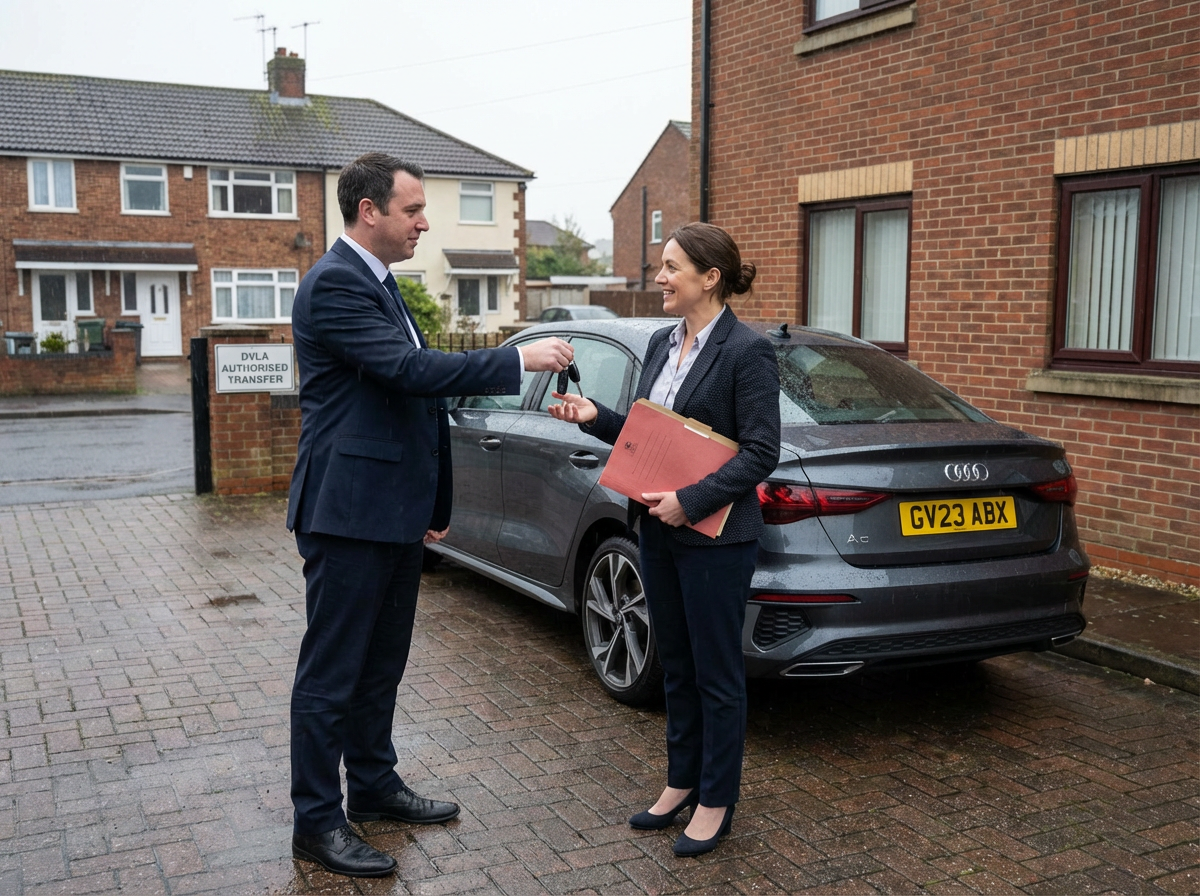
Among all the documents linked to a car, one stands above the rest in importance: the V5C. Commonly referred to as the logbook, it is the DVLA’s official record connecting a vehicle to its registered keeper.
Anyone planning to sell a car, scrap a vehicle, or purchase second-hand needs to understand what is a V5C and how it is used to transfer car ownership. Failure to manage the logbook correctly can lead to serious complications, including fines, legal liability, and unwanted correspondence about a car that has already been sold.
This comprehensive guide explains everything about the V5C, its purpose, key sections, and the exact steps needed to transfer ownership legally and correctly.
What is a V5C?
The V5C, or Vehicle Registration Certificate, is a document issued by the Driver and Vehicle Licensing Agency (DVLA). It records the details of the vehicle and identifies the registered keeper.
It is important to note that the V5C is not proof of ownership. Ownership relates to who has purchased the vehicle, while the V5C identifies the individual legally responsible for taxation, insurance, and compliance with UK road regulations.
This distinction is crucial: many disputes and misunderstandings arise because people mistakenly treat the V5C as evidence of ownership.
What the V5C Includes
A valid V5C contains all the essential identifying details about the car and its keeper. These include:
- Vehicle registration number, make, and model.
- Engine size and fuel type.
- Vehicle Identification Number (VIN).
- Year of first registration.
- Registered keeper’s name and address.
Without these details, it would be impossible for the DVLA to track responsibility for the vehicle. This is why losing a V5C causes disruption and can prevent a sale or scrap from being processed.
Key takeaways:
- The V5C proves who is responsible for the car, not who owns it.
- It contains the essential vehicle details required by law.
- It must be accurate and up to date to avoid penalties.
A Brief History of the V5C
The V5C replaced earlier forms of vehicle registration documents that were prone to forgery. Older green logbooks were exploited in car crime, as they could be easily falsified.
The modern V5C, introduced in red and blue, was designed with anti-fraud measures, including unique reference codes and security features. It remains the most reliable way for the DVLA to ensure a vehicle’s status and registered keeper are properly recorded.
Key Sections of the V5C
While the V5C may appear complex, its structure is straightforward once broken down.
- Section A: Vehicle details such as registration, VIN, make, model, and engine type.
- Section B: Registered keeper’s name and address.
- Section 4: New Keeper’s Details slip to be passed to the buyer.
- Section 6: Notification of Sale or Transfer, which must be sent to DVLA.
Failure to update these sections accurately can result in fines, penalties, or administrative delays.
Key takeaways:
- Section A outlines the car’s identity.
- Section B records who is legally responsible.
- Sections 4 and 6 are essential during sales and transfers.
How to Transfer Car Ownership with a V5C
When selling or buying a vehicle, the V5C is central to the process of ensuring the DVLA is informed. If it is not completed correctly, the seller remains the registered keeper in the DVLA’s records and may continue to receive fines and enforcement notices.
Step-by-step process
- Fill in Section 4 (New Keeper’s Details): The buyer’s full name and address must be written clearly.
- Provide Section 4 to the buyer: This serves as temporary evidence of keeper status until DVLA issues a new logbook.
- Complete Section 6 (Notification of Sale or Transfer): Record the date of transfer and details of the new keeper.
- Send Section 6 to the DVLA: This must be posted without delay.
- Keep a copy: A photograph or duplicate ensures proof of submission.
- Await DVLA confirmation: A letter will confirm the seller is no longer responsible.
Key takeaways:
- Both Section 4 and Section 6 must be completed.
- Notification to DVLA is mandatory.
- Retaining proof of transfer protects the seller.
Digital Transfers: The Online Alternative
In addition to the paper method, DVLA offers an online service for immediate transfer of details.
- Access the official GOV.UK service “Tell DVLA about a vehicle sale.”
- Input the vehicle registration, V5C reference number, and buyer’s information.
- Both parties receive confirmation by email, and DVLA updates records instantly.
This method reduces the risks of lost post and is often faster for both buyer and seller.
What if You Don’t Have a V5C?
A missing V5C is inconvenient but not insurmountable. Most transactions cannot proceed without it, so replacement is usually necessary.
How to obtain a replacement
- Online application: Fastest option through GOV.UK.
- By post: Submit form V62 (Application for a Vehicle Registration Certificate) available online or at Post Offices.
- Fee: A £25 charge applies.
Key takeaways:
- A missing logbook can be replaced online or by post.
- A fee applies, making safekeeping essential.
- Without the V5C, selling or scrapping is usually not possible.
Common V5C Mistakes and How to Avoid Them
Errors on the V5C can delay ownership transfers or result in DVLA rejecting submissions.
The most common mistakes include:
- Incorrect details, such as misspelt names or incomplete addresses.
- Failure to complete Section 6 leaves the seller legally responsible.
- Neglecting to update addresses after moving house.
- Poor handwriting leads to rejections.
Analogy: The process is like calibrating precision tools – small errors cause significant problems. Care and accuracy prevent disruption.
Key takeaways:
- Double-check all details before sending.
- Always notify DVLA of changes.
- Keep logbook information current.
Special Scenarios for V5C Transfers
Beyond standard sales, the V5C is required in several other legal situations.
Dealer sales
Dealers often handle paperwork, but the seller must still confirm DVLA has been notified.
Inherited vehicles
When a vehicle is inherited, the executor of the estate is responsible for informing DVLA.
Export
Vehicles leaving the UK require the export section of the V5C to be completed and sent to DVLA.
Scrapping
When scrapping, the V5C must be given to the Authorised Treatment Facility (ATF), and a Certificate of Destruction should be requested.
Scrapping Your Car and the V5C
For vehicles beyond repair, scrapping is the final step. The V5C remains essential to ensure the DVLA removes responsibility from the former keeper.
Required steps
- Provide the V5C to the ATF.
- Request a Certificate of Destruction as evidence.
- Inform DVLA online or by post.
Drivers can get a quote to scrap a car through Sell a Vehicle. For additional details, see our guide on the documents needed to scrap a car.
Key takeaways:
- A V5C must be handed to the ATF.
- A Certificate of Destruction is required.
- DVLA must be informed to close records.
Regional Considerations
The legal process for using a V5C is uniform across the UK, but many drivers look for local services when selling. Regional support is available through Sell a Vehicle, including:
Regional guidance ensures sellers connect with trusted buyers while following the same V5C procedures nationwide.
Why the V5C Matters for Sellers
The V5C protects sellers by proving when responsibility for the vehicle ended. Once DVLA updates records, any subsequent fines, penalties, or accidents are no longer the previous keeper’s concern.
Attempting to sell or scrap without the V5C exposes the former keeper to unnecessary legal risk. Completing the document accurately ensures a final, legal transfer.
For those preparing to move on from a vehicle, the next step is to find out how to sell your car securely through Sell a Vehicle’s network, or scrap your car with an authorised partner.
Final Thoughts
The answer to what is a V5C is simple: it is the DVLA’s record of responsibility for a car. It is not proof of ownership but proof of who is accountable for taxation, insurance, and compliance.
When transferring, the V5C is the only way to transfer car ownership legally. Whether using the paper sections or the online process, the essential steps are to record details accurately, notify DVLA, and retain proof.
By following these requirements, sellers can complete the transfer without future liability.
For support, drivers can contact Sell a Vehicle for advice and assistance.