

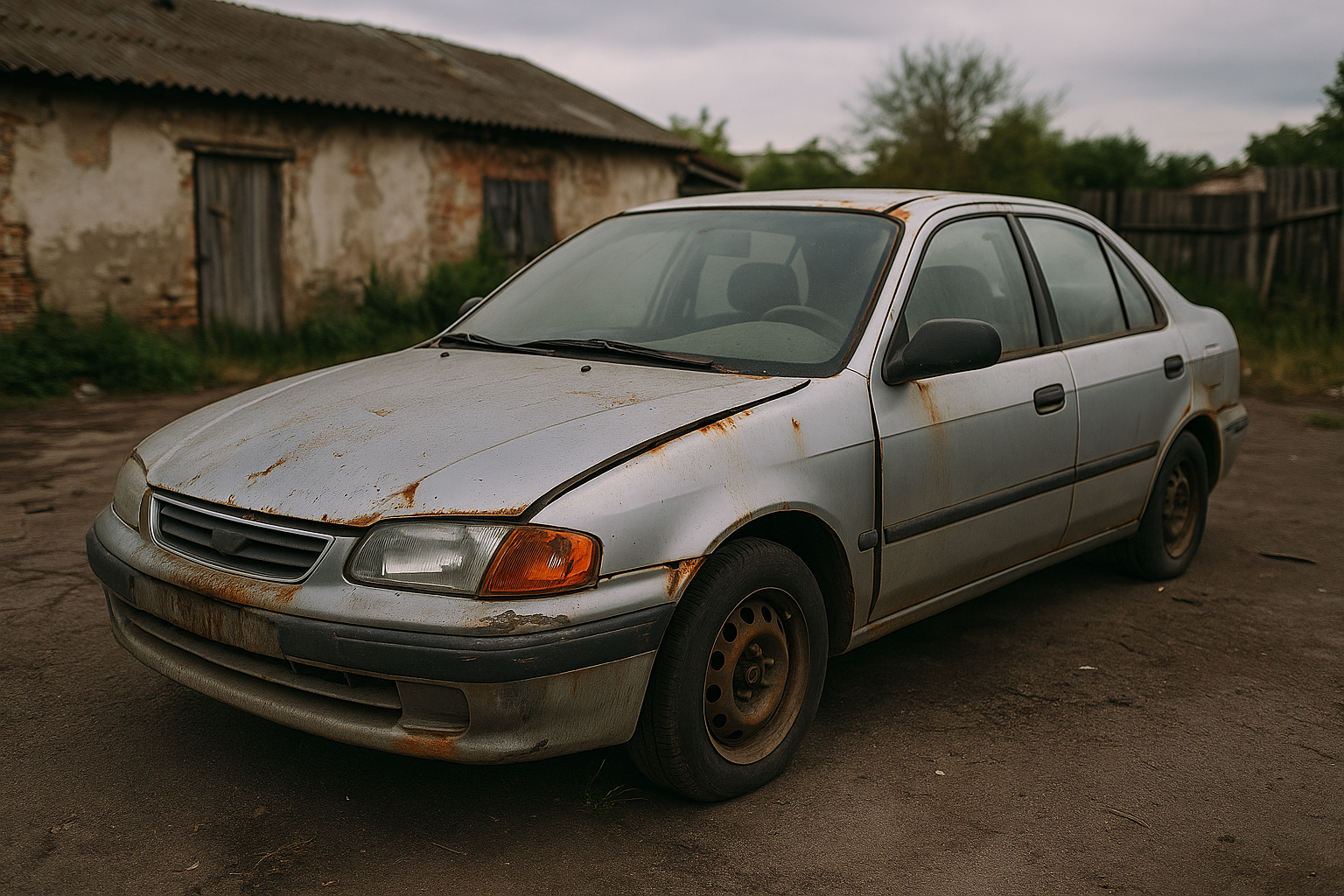
Cars have a lifespan. Some push through two decades with little more than the odd repair, while others begin showing their age after just a few years. Either way, there comes a point where the costs, the stress, or the sheer unreliability outweigh the benefits of keeping the vehicle on the road. Recognising when to scrap your car isn’t always straightforward, but ignoring the warning signs usually leads to wasted money and mounting frustration.
Deciding to let go doesn’t mean your old car has no value. End-of-life vehicles can still provide scrap metals, reusable parts, and recycling opportunities. The smart move is knowing the signs to scrap a car and acting before it drains your wallet or compromises safety.
Here are the five most telling indicators it’s time to stop patching up and move on.
1. Repeated MOT Failures
The annual MOT test is designed to keep unsafe vehicles off the road. For older cars, failing an MOT once isn’t unusual, but when it becomes a yearly ritual, it’s a clear sign the car’s best days are behind it.
Typical reasons cars repeatedly fail MOTs include:
- Severe rust on the chassis or sills that weakens the structure.
- Worn suspension components that cause handling issues.
- Brake system faults that compromise stopping distance.
- Steering rack problems that make the car wander on the road.
- Persistent electrical faults in ageing models that are costly to diagnose.
Each repair may seem manageable at first, but stacked together, they can outstrip the car’s entire value.
Example of repair economics:
- A patch of welding on the sills: £300–£400.
- Replacement suspension arms: £250–£400.
- Brake overhaul: £400–£600.
- Electrical diagnostics and repairs: £200–£500.
Add these up over a couple of years and it’s easy to exceed the worth of a 10–15 year-old hatchback.
Tip: If the repair estimate after a failed MOT is higher than the car’s current market value, that’s one of the strongest signals it’s time to get a quote to scrap your car through Sell a Vehicle’s scrap service.
2. Repairs Cost More Than the Car
Repairs are part of ownership, but once costs surpass the resale value of the car, continuing rarely makes sense.
High-cost repairs often include:
- Timing belt replacement: £400–£800.
- Clutch replacement: £500–£1,000.
- Gearbox rebuild or replacement: £1,200–£1,500+.
- Major engine repair or replacement: £2,000+.
For context, many older family cars are worth less than £1,000 on the second-hand market. Putting thousands into repairs is like fitting a luxury kitchen in a crumbling house, you won’t see the value back.
Instead of pouring money into a lost cause, many drivers turn to find out how to sell your car for parts or scrap it entirely. Either option usually recovers more value than repeated, expensive repairs.
3. Safety Becomes a Concern
A car’s first job is to keep you safe on the road. Once that confidence is gone, no amount of patching will make driving enjoyable or sensible.
Red flags that compromise safety include:
- Brakes that feel spongy or pull to one side.
- Steering play that makes controlling the car unpredictable.
- Airbag systems that no longer function.
- Rust damage around suspension mounting points or chassis rails.
Even if the car still technically drives, ignoring these issues risks not only the driver but every passenger and road user. Safety failures are one of the most important signs that it’s time to scrap your car in Manchester, Birmingham, London, or wherever you live.
Why safety concerns justify scrapping:
- The cost of major rust repairs can exceed £1,000.
- Airbag replacements are expensive and sometimes unobtainable for older models.
- Steering and brake system rebuilds quickly outstrip market value.
When safety is compromised, scrapping isn’t giving up, it’s ensuring peace of mind and avoiding preventable accidents.
4. Fuel Efficiency Is Terrible
Rising fuel costs highlight another major clue: inefficiency. Older cars burn more petrol or diesel per mile, and in areas with emission-based charges, they can cost even more to keep on the road.
Examples of efficiency gaps:
- Cars built 15–20 years ago: often under 30 mpg.
- Newer petrol models: typically 45–55 mpg.
- Hybrids: often 60–70 mpg or higher.
On top of this, cities like London enforce ULEZ (Ultra Low Emission Zone) charges. Driving an older car that doesn’t meet standards can add £12.50 per day to commuting costs.
Even if the car feels mechanically sound, inefficient fuel economy coupled with charges makes scrapping a logical choice. Switching to a more efficient car can pay back the difference within months.
For those in major cities, using Sell a Vehicle’s London scrap service is often cheaper than carrying the burden of ULEZ and fuel bills.
5. The Car Has Become Unreliable
Reliability is about more than avoiding inconvenience. A car that breaks down regularly leaves its owner vulnerable, stranded at the roadside, missing work, or paying out for constant call-outs.
Warning signs of unreliability include:
- Regular overheating or engine warning lights.
- Frequent flat batteries or charging system issues.
- Being towed multiple times in a short span.
- Constant minor repairs that never seem to end.
At this stage, the vehicle isn’t doing its basic job. Trust is gone. Unreliable cars are draining, both financially and emotionally.
Scrapping the car provides closure and an opportunity to move to something dependable. By using Sell a Vehicle, drivers can avoid the endless cycle of repairs and get in touch with a network that ensures their car is handled legally and efficiently.
Why Scrapping Makes Sense
Scrapping is often framed as the end of the road, but in reality, it’s a practical solution.
Benefits of scrapping through a trusted service include:
- Fair quotes based on metal value and weight.
- Free collection if the car can’t drive.
- Certificate of Destruction (CoD) within seven days to confirm legal disposal.
- Environmental gain: Up to 95% of each vehicle is recycled.
Instead of throwing good money after bad repairs, scrapping allows the car’s materials to be reused in new products. That’s not loss, it’s renewal.
DVLA Rules for Scrapping
In the UK, scrapping must follow strict legal steps. Ignoring these can lead to fines or future liabilities.
Key DVLA rules include:
- Use only an Authorised Treatment Facility (ATF).
- Hand over your V5C logbook, keeping Section 9 (or V5C/3) to notify the DVLA.
- Receive a Certificate of Destruction (CoD) within 7 days.
- Notify the DVLA immediately that the vehicle is scrapped.
- Cancel insurance and apply for a road tax refund if applicable.
Failing to follow these steps could leave you responsible for a car you no longer own. For more details, check our guide on the documents needed to scrap a car.
Regional Scrapping Support
Scrapping isn’t confined to one area. Wherever the car finally gives up, Sell a Vehicle’s UK-wide network ensures there’s a solution nearby.
- If you’re facing mounting repair bills, scrap a car in Manchester using trusted local yards.
- To avoid ULEZ and high running costs, scrap a car in London with quick collection.
- When an old vehicle in the Midlands reaches its end, scrap a car in Birmingham through approved facilities.
Regional support removes the hassle of arranging transport. Even non-runners can be collected directly.
Analogy: Cars and Old Shoes
Deciding when to scrap your car is similar to knowing when to replace a pair of worn-out shoes. At first, it’s only the sole thinning. Then the stitching comes loose. Soon, water seeps in and blisters form. Each repair, new laces, and a glued sole buys a little time, but eventually, it’s no longer worth the effort.
Cars are no different. Small fixes work for a while, but when the structure, reliability, or efficiency fails, the smart choice is to replace rather than endlessly repairing.
What to Do Before Scrapping
To make the process smooth, a few final steps help drivers avoid complications:
- Remove personal belongings. Cars often store years of forgotten items.
- Check for accessories or upgrades that can be resold separately.
- Apply to retain your private number plate if you want to keep it (see our guide on keeping your private number plate).
- Cancel insurance once the Certificate of Destruction is issued (see our car insurance cancellation guide).
- Notify the DVLA promptly to avoid ongoing tax liability.
These small steps save headaches and ensure compliance.
Final Thoughts
Cars aren’t immortal, and pouring money into one that’s unsafe, inefficient, or unreliable rarely pays off. The five major signs to scrap a car, repeated MOT failures, repair bills beyond value, safety risks, poor fuel economy, and constant breakdowns, all point to the same conclusion.
Scrapping isn’t giving up. It’s making a responsible choice that saves money, clears space, and ensures recycling benefits the environment. Through Sell a Vehicle, drivers can get a quote to scrap your car, arrange free collection, and move on without stress. And if you’d like tailored support, simply get in touch.