

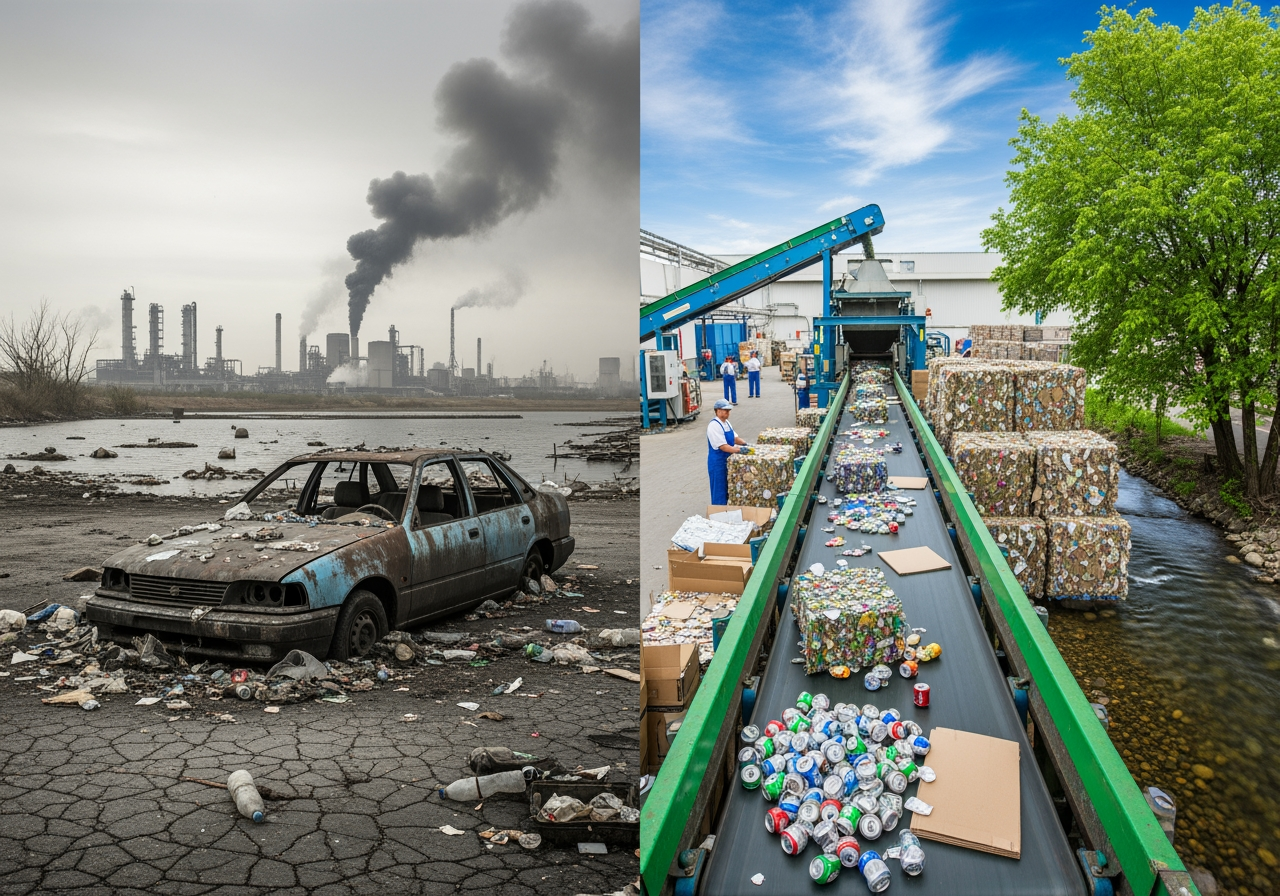
When I worked on the garage floor, scrapping a car felt like the end of the road. Motors would roll in with blown engines, seized brakes, or sills eaten alive by rust, and once they were hauled away, nobody gave much thought to what happened next. Out of sight, out of mind.
Things are different now. We’ve learned that what happens after a car leaves your driveway matters just as much as the years it spent on the road. Done properly, scrapping isn’t just about clearing space or moving on from an unreliable banger. It’s about making a positive choice for the environment. By embracing green vehicle disposal, you’re cutting down on pollution, conserving resources, and keeping valuable materials in circulation. The real benefits of car recycling stretch far wider than most people realise, touching on energy, air quality, and even community health.
Why car recycling matters more than ever
Every car is a bundle of valuable resources, steel, aluminium, copper, glass, and plastics, wrapped around a tankful of potential hazards like fluids, batteries, and oils. Left unmanaged, that vehicle turns into a toxic heap, leaking substances into soil and waterways.
Recycling changes the story. It extracts value from what’s still useful while ensuring harmful materials are safely dealt with. Here’s the standout figure: in the UK, over 95% of every scrapped vehicle is reused, recycled, or recovered when processed at Authorised Treatment Facilities (ATFs). That makes car recycling one of the most efficient examples of the circular economy we’ve got.
If you want to ensure your old motor is treated properly, you can get a quote to scrap your car through Sell a Vehicle and know it’ll be handled by licensed professionals.
Conserving raw materials and natural resources
Modern cars are built from hundreds of kilos of metals and polymers. Mining fresh materials doesn’t just cost money, it wreaks havoc on landscapes and ecosystems. Recycling, on the other hand, pulls value back into circulation.
- Steel recycling saves iron ore extraction and slashes the energy needed for new production.
- Aluminium recycling uses around 95% less energy than processing raw bauxite.
- Copper and plastics are stripped out and reused in wiring, dashboards, and even everyday household goods.
I remember breaking down an old Ford Sierra years ago. Almost every part found another purpose: the engine block was melted down, the alloys fed into new castings, and the carpets went off for fibre recovery. That’s the untold story behind the benefits of car recycling, every nut, bolt, and trim salvaged means fewer new resources ripped from the ground.
Reducing landfill and protecting landscapes
Leaving a car to rot in a field or dumping it at a landfill is more than unsightly; it’s downright dangerous.
- Space waste: Cars eat up massive amounts of room that could be reclaimed.
- Fluid leakage: Oil, coolant, and brake fluid seep into the soil and nearby water.
- Toxins: Plastics and coatings break down slowly, releasing harmful micro-particles for decades.
By choosing green vehicle disposal, you prevent your old car from being part of the problem. Instead, it becomes part of a controlled recycling loop where waste is minimised and value is preserved.
If your vehicle is already uneconomical to keep, you can still find out how to sell your car for parts or scrap through Sell a Vehicle, rather than letting it sit idle.
Pollution control: keeping toxins at bay
A typical car carries more than 20 litres of fluids: oil, antifreeze, brake fluid, refrigerants, and more. Left to leak, every one of those substances is an environmental hazard.
At an ATF, technicians don’t just crush cars. They:
- Drain and safely dispose of all hazardous liquids.
- Remove and recycle lead-acid batteries.
- Process tyres, catalytic converters, and other parts for reuse or safe disposal.
I saw the ugly side of neglect when someone dumped a wreck behind the workshop years back. Within weeks, a rainbow film of leaked fuel shimmered across every puddle. That was just one vehicle. Multiply it by thousands, and you get the scale of the problem recycling helps prevent.
Energy savings: the hidden win
One of the biggest hidden benefits of car recycling is energy conservation. Producing new steel from ore is one of the most energy-intensive industrial processes on earth. Recycling steel from old cars uses about 60% less energy.
Aluminium savings are even greater, up to 95% less energy required. That translates to fewer carbon emissions from power plants and less destruction from mining operations. By recycling your car, you’re saving energy without lifting a finger.
Supporting the circular economy
The “circular economy” might sound like a buzzword, but in the motor trade, it’s already working. Green vehicle disposal means keeping resources flowing instead of throwing them away.
- Engines and gearboxes are reconditioned and resold.
- Seats, trim, and interiors feed into second-hand markets.
- Tyres are shredded and reborn as playground flooring or sports pitch surfaces.
So while your old hatchback might be gone, it’s never wasted. Pieces of it live on in other forms, keeping waste out of the ground and value in circulation.
The recycling process: step by step
What actually happens once your car leaves your driveway? Here’s the behind-the-scenes sequence:
- Depollution: Hazardous materials like batteries, tyres, and fluids are removed.
- Part recovery: Usable spares, alternators, gearboxes, catalytic converters, are salvaged.
- Shredding: The body shell is crushed and shredded.
- Sorting: Magnets and advanced systems separate metals and plastics.
- Reuse: Steel, aluminium, glass, and plastics re-enter manufacturing chains.
It’s thorough, systematic, and designed to make sure no harmful substance slips through the cracks.
Choosing the right recycling partner
Not all scrapyards are equal. A rogue operator might skip proper depollution or dump waste illegally, undoing the good you intended.
To avoid that:
- Always use licensed Authorised Treatment Facilities.
- Make sure they’re compliant with DVLA regulations.
- Stick with trusted networks like Sell a Vehicle to guarantee proper handling.
By choosing carefully, you ensure your recycling effort supports the planet instead of creating new risks.
The local impact: cleaner communities
The benefits of car recycling show up close to home. Cleaner air, safer water, and tidier communities are the real outcomes.
- Fewer abandoned cars dumped in fields and lay-bys.
- Reduced groundwater contamination around scrapyards.
- Lower emissions because less mining and heavy manufacturing is needed.
I noticed it in my own town when authorities cracked down on dodgy breaker yards. Once vehicles were redirected through ATFs, the oily ditches and smoke-filled skies disappeared. It wasn’t theory; it was a difference you could breathe.
Selling versus scrapping: where’s the balance?
If your car still has some life left, you might wonder whether selling it or scrapping it makes more sense. Here’s a quick rule:
- Sell it if it’s roadworthy and could still serve a driver outside emission zones.
- Scrap it if it’s unsafe, non-compliant, or beyond repair.
Either way, you’re part of green vehicle disposal, ensuring your car doesn’t rot and release toxins while sitting unused.
To get both options side by side, you can request a scrap valuation or sell your car quickly online through Sell a Vehicle.
Upgrading after recycling
For most drivers, scrapping is only step one. Step two is upgrading to something compliant and affordable.
- Approved used cars offer value without the price tag of brand new.
- Hybrids and EVs provide long-term fuel and emissions savings.
- ULEZ-compliant petrols (post-2006) are often budget-friendly.
By recycling one polluting vehicle and upgrading to a cleaner one, you’re reducing your footprint while keeping yourself on the road legally.
The bigger picture: emissions zones and future policy
Scrapping isn’t just a nice choice anymore; it’s becoming unavoidable. With more UK cities rolling out emission zones, non-compliant cars are harder and harder to keep. Instead of bleeding money on daily charges, recycling ensures you’re not stuck with a vehicle that’s costing you twice over.
Future government incentives might appear, but waiting on them is a gamble. Using scrappage alternatives like Sell a Vehicle means you can act now and still benefit financially.
Actionable steps for eco-friendly drivers
Ready to take the plunge? Here’s your roadmap:
- Check compliance using DVLA or Transport for London tools.
- Get a valuation through Sell a Vehicle.
- Arrange collection with a trusted ATF.
- Prepare documents, V5C logbook, proof of address, photo ID.
- Follow up afterwards, cancel your insurance and transfer or keep your private number plate with our guide.
- Take credit where it’s due, you’ve made a responsible choice for both your wallet and the planet.
Final word from the workshop
Back when I started out, no one thought twice about what happened to a car once it left the yard. These days, we know better. Every recycled car is less strain on the planet, fewer resources wasted, and less toxic waste dumped in fields and waterways.
The benefits of car recycling aren’t abstract. They’re cleaner towns, healthier air, and a future where motoring doesn’t carry the same environmental cost. And with Sell a Vehicle, the whole process is straightforward, you get a fair price, the paperwork sorted, and the peace of mind that your car has been handled responsibly.
If you’re ready to move on from your old car, get your scrap quote today and make sure your next step is a green one.