

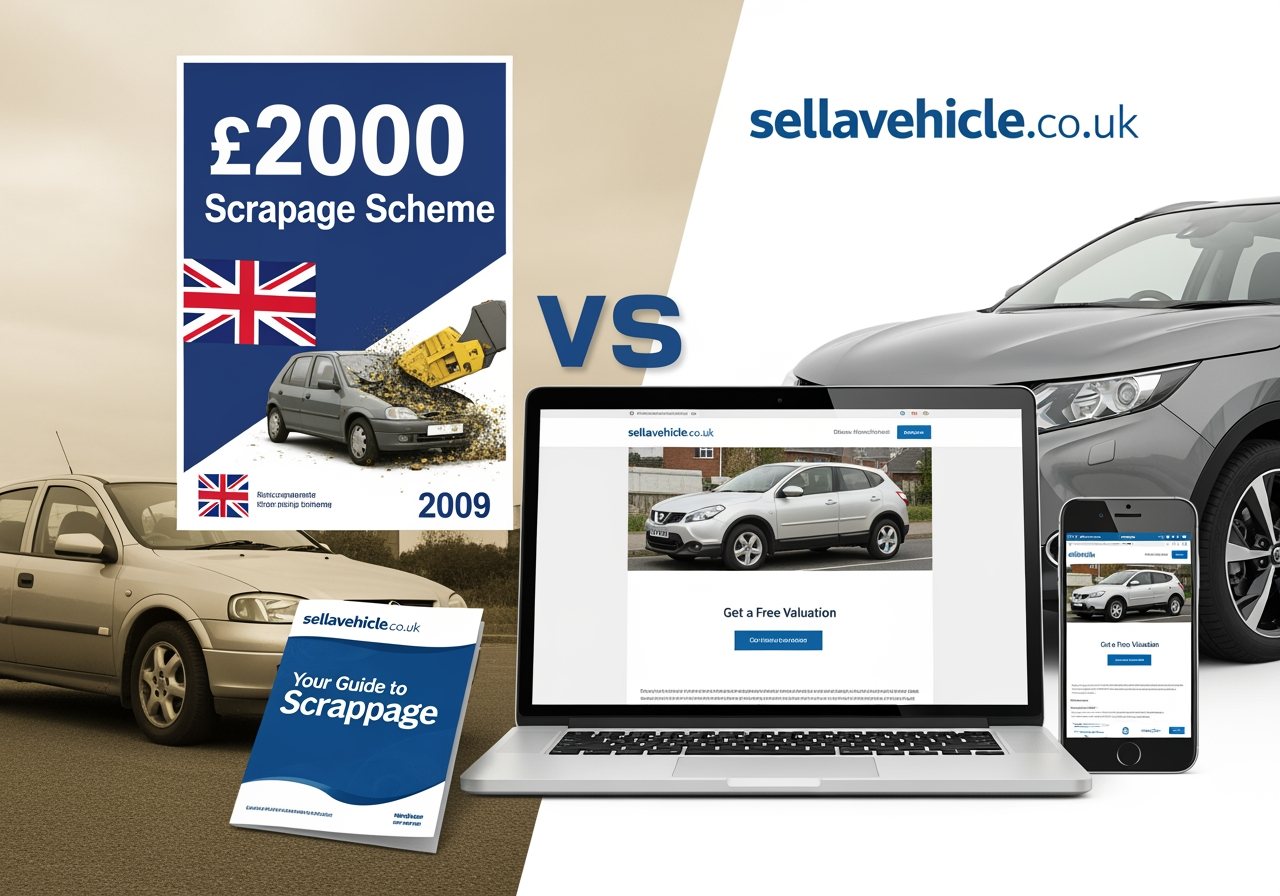
When the first car scrappage scheme rolled out in the UK back in 2009, my workshop was busier than a Friday night chippy. Folks were queuing up to swap their smoky old motors for something shiny and modern, all thanks to the government giving them a leg-up. A mate of mine turned up one morning with a grin wider than the Mersey Tunnel after bagging a decent deal on a hybrid. That was the power of a scheme designed to tempt people into cleaner, newer cars.
But those days are long gone. The official car scrappage scheme ended, and plenty of drivers have been left wondering what to do with older vehicles. If you’ve got a trusty motor that doesn’t meet modern emissions standards, or one that’s limping toward its final MOT, you might feel like you’ve missed the boat. The truth? You haven’t. There are still scrappage scheme alternatives, and many of them are faster, simpler, and even more profitable than the old government handouts ever were.
The rise of scrappage schemes: a quick history
The UK scrappage programme began in May 2009 at the height of the financial crisis. The country’s car industry was struggling, dealerships were empty, and drivers were hanging onto older cars for longer. The government stepped in with a clever idea:
- Boost sales: Encourage drivers to buy new cars, keeping manufacturers and showrooms afloat.
- Cut emissions: Take older, dirtier vehicles off the road.
The deal was straightforward. Trade in a car that was at least ten years old, and you’d get £2,000 off a new one. Half came from the government, half from the manufacturer.
By the time the scheme closed, over 390,000 cars had been scrapped. Showrooms were buzzing again, and thousands of drivers who thought their banger was worthless suddenly had a reason to upgrade.
And it wasn’t just Britain. Similar scrappage programmes appeared across Europe, the US, and Asia. It was a global push to kick-start economies and reduce pollution.
Why the scheme mattered at the time
Scrappage felt like a golden ticket for ordinary drivers.
- That old Mondeo gathering dust on your driveway? Suddenly it was worth £2,000.
- Local councils noticed cleaner air as older diesels disappeared from congested streets.
- Road safety improved as people traded in cars with no airbags or ABS for modern models.
For a while, it worked brilliantly. But like all incentives, it was temporary.
The scrappage scheme ended – now what?
Eventually, the official car scrappage scheme ended. A few manufacturers ran their own short-term offers, but the big government-backed push vanished.
Since then, new pressures have taken its place:
- Low Emission Zones (LEZs) and ULEZs now dictate where you can drive.
- Daily charges hit drivers of older cars every time they enter cities.
- Falling resale values mean non-compliant cars are harder to sell privately.
So while the cash bonus has gone, the problem hasn’t. In fact, it’s become more urgent.
Checking if your car is compliant
Before making any decisions, it’s worth checking whether your car is even affected.
- London: TfL’s online tool lets you check instantly using your reg.
- Other cities: Councils like Birmingham, Bath, and Bristol run their own checkers.
Generally, if your car is petrol and older than 2005, or diesel pre-2015, it’s likely to be non-compliant. That means charges each time you enter certain city zones.
The options now: scrappage scheme alternatives
With the car scrappage scheme ended, here are your practical alternatives today:
1. Private sale
You can still list your car online or in the local paper. You may get more than scrap value, especially if you live outside emission zones. But it’s not always smooth sailing. Tyre-kickers, cheeky offers, and “still available?” messages can test anyone’s patience.
2. Dealer trade-in
Some dealers still run trade-in discounts, but usually the offers on older cars aren’t generous. Plus, you’re tied to buying from them.
3. Sell a Vehicle
With Sell a Vehicle, you can cut the hassle:
- Enter your reg for a free quote.
- Arrange free collection.
- Get paid directly into your bank.
Whether your car’s non-compliant, a non-runner, or just past its prime, Sell your car through the network and get a fair, fast offer.
4. Responsible scrapping
If your motor’s truly on its last legs, get a quote to scrap your car. The process is done through Authorised Treatment Facilities (ATFs), so the car is dismantled properly, parts recycled, and paperwork handled.
Why Sell a Vehicle works better than scrappage ever did
The scrappage scheme was limited, temporary, and tied to buying a new car. Miss the window and you were out of luck.
Sell a Vehicle, on the other hand:
- Works year-round.
- Pays fairly, regardless of condition.
- Handles paperwork and DVLA notifications.
- Collects from your driveway.
In many ways, it’s more practical than scrappage ever was. No waiting for government incentives, no strings attached.
Step-by-step: how to sell through Sell a Vehicle
Here’s how simple it is:
- Get a quote – pop your reg into the online form.
- Review the offer – clear, upfront, and fair.
- Book collection – pick a time that suits you.
- Prepare documents – V5C logbook, ID, proof of address.
- Get paid – direct to your bank account.
No tyre-kickers, no haggling, no stress.
Documents you’ll need
To keep things smooth, make sure you’ve got:
- V5C logbook – proof of ownership.
- Photo ID – passport or driving licence.
- Proof of address – utility bill or bank statement.
If your logbook’s missing, you can order a replacement from the DVLA. Our guide to the documents needed to scrap a car explains the details.
How to make the sale even smoother
From my years in the trade, here are three tips:
- Be honest about the car’s condition. Hiding faults causes delays.
- Clear your belongings. You’d be shocked how many sat navs, glasses, and CDs get left behind.
- Have paperwork ready. Nothing slows down a collection like rummaging for missing documents.
Why upgrading makes sense now
Selling isn’t just about getting rid of an old motor. It’s about planning for the future.
When choosing a replacement:
- Fuel type – Petrol’s still practical, hybrids save fuel, and electric is increasingly popular.
- Budget – Don’t overstretch. Factor in insurance and running costs.
- Future-proofing – A compliant car saves you from future ULEZ headaches.
If you live in London, Birmingham, or Manchester, upgrading sooner will save you from piling up daily charges.
A customer story: when waiting costs more
I had a customer years ago with an ageing diesel Volvo. Lovely car, but not ULEZ-compliant. He thought he’d wait in case another government scheme came along. Six months later, he’d spent over £1,000 in charges just commuting into central London. When he finally sold, the value had dropped too.
That’s the risk of waiting, you end up paying charges while your car loses value.
Looking ahead: will scrappage schemes return?
It’s possible governments might bring incentives back as more emission zones expand. But there’s no guarantee, and waiting around could cost you more in charges and depreciation.
The smarter play is to look at the scrappage scheme alternatives available now, with Sell a Vehicle right at the top of the list.
Final thoughts
Yes, the car scrappage scheme ended, but the problem of what to do with older, non-compliant cars hasn’t. The good news is, you don’t need a government cheque anymore.
Whether you sell privately, trade in, scrap responsibly, or go through Sell a Vehicle, you’ve got real options. And with Sell a Vehicle’s contact team, you can get straightforward advice and a fair price, whether your car’s still running or ready for the scrapyard.