

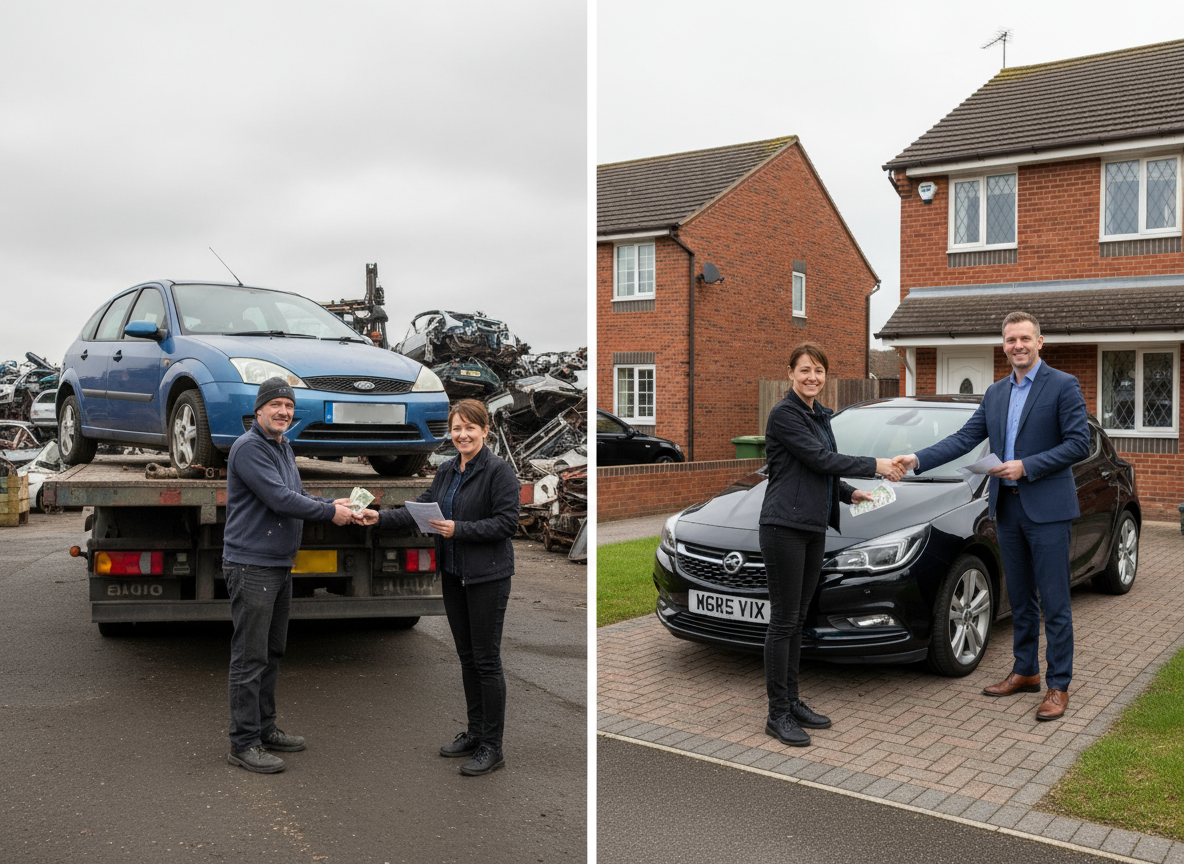
When a car starts showing its age, UK owners often face the same difficult choice: keep investing money into it, or get rid of it. Once that decision is made, another one follows quickly: Should the car be scrapped or sold privately? It’s the classic scrap vs sell privately dilemma.
For some, the temptation of squeezing out every last pound from a private sale feels appealing. For others, the quick and easy route of scrapping removes stress and delivers fast cash. The reality is that both options come with advantages and drawbacks, and the right decision depends on three factors: the condition of the car, the time available, and how much effort the owner is prepared to put in.
This guide explores both paths in detail, offering practical insight to help UK car owners choose wisely.
Why does selling privately appeal to many car owners
The main attraction of a private sale is financial. By avoiding dealers or scrap yards, sellers can pocket the full value of the car rather than settling for trade or scrap rates. This route especially appeals when the vehicle is in good condition, has a reasonable market demand, and still retains useful features such as a valid MOT, service history, or desirable specification.
Advantages of private sales
- Higher potential returns: Private buyers are usually prepared to pay closer to the car’s market value.
- Control of the sale: Sellers decide on the asking price, when and where the vehicle is advertised, and who it is sold to.
- Larger buyer pool: Enthusiasts or first-time drivers often prefer buying privately to secure lower costs than dealerships charge.
- Flexibility: The seller controls the timing of the sale and can wait for the best offer.
Key Takeaway: A private sale usually delivers more money, provided the car is in demand and the seller invests the time.
The hidden challenges of private selling
Private selling is not always as profitable or straightforward as it first appears. Cars that are older, have high mileage, or require significant repairs often attract little serious interest. Even when a buyer does occur, the process of selling privately can be time-intensive and stressful.
Common hurdles when selling privately
- Advertising costs
Platforms such as Autotrader or Gumtree charge listing fees. While free options exist on social media or smaller websites, they rarely attract as many serious buyers. - Preparation time
A car must be cleaned, photographed well, and described accurately in an advert. Without this effort, the chances of securing a fair price are slim. - Enquiries and negotiations
Private buyers will almost always attempt to haggle on price. Handling calls, texts, and emails takes patience and persistence. - Test drives and appointments
Sellers must arrange safe meeting points, deal with cancellations, and ensure insurance requirements are covered for test drives. - Security concerns
Fake bank transfers, fraudulent cheques, and other scams are common risks. Owners need to be vigilant to avoid losing both car and cash.
Key Takeaway: A private sale requires significant effort, involves financial and personal risk, and often takes longer than expected.
The simplicity of scrapping a car
Scrapping has become a far more organised and regulated process in the UK than it was decades ago. Through a service such as Sell a Vehicle, owners can receive a quote, arrange free collection, and be paid promptly.
Benefits of scrapping
- Speed: The entire process can often be completed in just 24–48 hours.
- Convenience: No need to handle viewings, advertising, or haggling.
- Guaranteed outcome: A licensed Authorised Treatment Facility (ATF) will accept the car as long as it matches the description provided.
- Compliance with the law: The scrap yard will issue a Certificate of Destruction (CoD), proving the car has been recycled legally.
Key Takeaway: Scrapping provides peace of mind, certainty, and a quick resolution, even if the financial reward is lower than selling privately.
Legal obligations when scrapping a car
Scrapping involves more than simply handing over the keys. UK law requires specific steps to ensure everything is done correctly.
- DVLA notification: Owners must inform the DVLA once a car has been scrapped. Failure to do so can lead to fines.
- Certificate of Destruction: Issued by an ATF, this document proves the car has been dismantled or recycled responsibly.
- Number plates and private registrations: If the car carries a personalised plate, it must be removed and retained with a retention certificate before scrapping.
- Insurance cancellation: Once the vehicle has been scrapped, insurance should be cancelled immediately to avoid unnecessary payments.
For a detailed breakdown, see Sell a Vehicle’s guide on what documents are needed to scrap a car.
Key Takeaway: Scrapping is straightforward but must be completed through a licensed facility with the correct paperwork.
When scrapping makes the most sense
Not every vehicle is suitable for private resale. Some are worth more as recycled metal and parts than as running cars.
Scenarios where scrapping is the better choice:
- MOT failures: Cars that would cost more to repair than their overall market value.
- Non-runners: Vehicles with engine or gearbox failure that won’t start.
- Low-value models: Old or unpopular cars where resale demand is virtually non-existent.
- Urgent disposal needs: When cash is needed quickly or the car is taking up valuable space.
Key Takeaway: Scraping is the most practical choice for cars with little or no resale value.
When private selling is still worthwhile
Some vehicles, despite being older, remain appealing to private buyers.
Situations where selling privately pays off:
- Good overall condition: A solid service history, clean bodywork, and valid MOT make a car attractive.
- Desirable models: Cars with high demand, such as hatchbacks for new drivers or popular family cars, often sell faster.
- Higher-value vehicles: Even with age, prestige or performance, cars tend to outperform scrap prices.
- Time to wait: Sellers who are not in a rush can afford to wait for the right buyer.
For more insight into preparation, see Sell a Vehicle’s resource on how to sell a car privately.
Key Takeaway: Private selling works best for well-kept, desirable cars where market demand remains strong.
Environmental considerations
One factor often overlooked in the scrap vs sell privately decision is environmental impact. Scrapping ensures that the vehicle is depolluted, dismantled, and recycled responsibly.
- Hazardous fluids: Oils, brake fluid, and coolants are drained and disposed of safely.
- Recycled parts: Usable parts are recovered for resale, reducing waste.
- Reused metal: Steel and aluminium are recycled into new products.
Key Takeaway: Scrapping contributes to environmental sustainability by ensuring safe disposal and recycling.
Scrap vs sell privately: the balancing act
At its core, the decision hinges on four questions:
- Is the maximum value more important than speed?
- Is the car roadworthy and desirable, or end-of-life?
- How much effort is the seller willing to put in?
- Is avoiding stress worth accepting less money?
For many owners, scrapping suits cars that are no longer practical to keep on the road. For others, selling privately offers a way to maximise value, even if it requires patience and work.
Key Takeaway: The right path is shaped by condition, effort, urgency, and financial goals.
Regional choices across the UK
Local availability plays a vital role in the decision. Sell a Vehicle’s network covers all major UK regions, meaning owners can choose confidently whether to sell privately or scrap.
- For those needing to sell their car in Manchester, the local network provides coverage.
- Scrap car services in London allow fast collection and disposal in the capital.
- In the Midlands, options such as scrapping in Birmingham simplify the process.
Key Takeaway: Regional coverage ensures owners across the UK can access reliable services without delay.
Next steps: making the decision
Choosing between scrapping and selling privately depends on the answers to a few key questions:
- How quickly is money needed?
If the answer is “immediately,” scrapping is the quicker route. - What condition is the car in?
Non-runners and MOT failures are almost always scrap candidates. - How much effort is acceptable?
Selling privately requires time, preparation, and persistence.
Action plan for car owners
- To scrap: Get a free, no-obligation quote with Sell a Vehicle.
- To sell privately: Research the market, compare prices, and prepare for negotiations.
- If uncertain: Contact the team for tailored advice.
Final Thought: With the right decision, an unused vehicle can be turned into cash without unnecessary stress.