

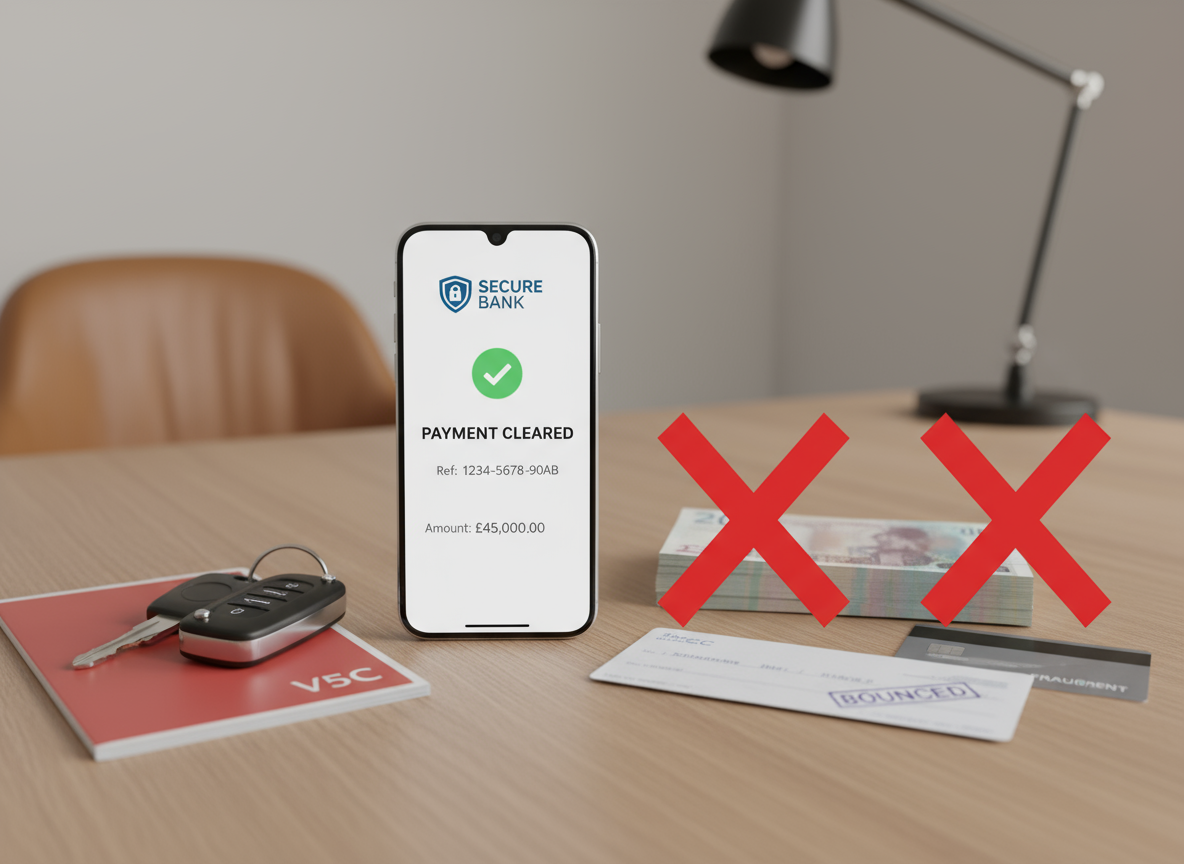
When it’s time to part ways with your car, the transaction isn’t just about the buyer, it’s about the money. Handshakes and trust don’t cut it anymore. There are too many stories of drivers caught out by a car sale fake payment, losing both the motor and the cash. That’s why choosing a safe payment for car transactions isn’t optional. It’s the very heart of a secure sale.
I’ve seen dodgy payments evolve over the years. Back then, it was forged cheques and counterfeit notes. These days, it’s fake bank transfer screenshots and overpayment scams. The technology may have changed, but the rule hasn’t: once you hand over the keys, there’s no easy way back. Protect yourself first, or risk losing everything.
Why payment safety matters more than ever
Selling a car isn’t like offloading an old sofa or a lawnmower. You’re handling hundreds, often thousands, of pounds in one go. That makes you a prime target.
- Cars are high-value assets that can be resold quickly or stripped for parts.
- Buyers can be strangers, and you don’t always know who you’re dealing with.
- Recovery is hard: once the car’s gone, getting it back is a legal and financial nightmare.
The harsh truth in private sales is this: one mistake can empty your wallet. That’s why sellers are turning more often to trusted car buyers like Sell a Vehicle, where payments are guaranteed and processed securely.
The risks of accepting cash
Cash might seem straightforward, but it’s riddled with problems.
Counterfeit currency
Fake notes circulate more than most people realise. Spotting them requires UV tools or experience few private sellers have.
Safety risk
Walking around or storing wads of cash puts a target on your back. There’s a reason the banks phased out “cash only” transactions.
No paper trail
Cash leaves no record. If a dispute arises, or worse, if your car later links to crime, you can’t prove you were paid.
Anecdote: I once knew a bloke who sold his Escort for a tidy cash sum. He stashed it in a biscuit tin until Monday when he went to the bank. By then, some of the notes had already been flagged as counterfeit. He lost hundreds with no way to claim it back.
Key takeaways:
- Cash is risky: counterfeit, theft, no proof.
- It’s not worth the gamble for a car sale.
Why to avoid cheques
Cheques might feel official, but they’re far from reliable.
- They can bounce days after deposit, leaving you empty-handed.
- Banker’s drafts, once the gold standard, are now forged with worrying accuracy.
- Waiting for clearance ties up the deal and exposes you to risk.
Anecdote: One customer proudly showed me his banker’s draft after a private sale. A week later, his bank told him it was worthless. The buyer, and the car, had long gone.
Key takeaways:
- Cheques can bounce long after handover.
- Banker’s drafts are not bulletproof.
- Avoid cheques entirely in car sales.
Safe payment options
So, what works? The safest methods are traceable, electronic, and leave a clear record.
Bank transfers, the gold standard
A direct bank transfer remains the safest payment for car transactions.
- Funds move straight from buyer to seller.
- Instant in many cases (thanks to UK Faster Payments).
- Leaves a permanent record in both accounts.
- Once cleared, funds can’t be pulled back.
Golden rule: always confirm funds have arrived in your own account before you hand over the keys. Never trust screenshots, text messages, or emails.
Escrow services
For higher-value cars, escrow adds extra peace of mind.
- The buyer deposits funds with a neutral service.
- The seller transfers the car.
- The service releases the money once conditions are met.
There’s a fee involved, but for expensive sales it’s a small price for security.
Key takeaways:
- Bank transfers are the best default.
- Escrow adds an extra safety net.
- Always verify funds yourself before release.
Protecting yourself during the sale
The method of payment is only one part of the deal. How you handle the process matters too.
Verify the buyer
Ask for ID, driving licence or passport. Confirm their details match the address they provide.
Meet in safe places
Arrange handovers at home, a bank branch, or public areas. Avoid remote or deserted spots.
Trust your instincts
If the deal feels off, walk away. I once warned a young lad against a cash deal that didn’t sit right. He ignored me, and half his bundle turned out to be fake notes. Gut instinct exists for a reason.
Key takeaways:
- Always check ID.
- Meet in safe locations.
- Trust your gut.
Final checks before handover
Before you let the car go, make sure of three things:
- The money has cleared in your account.
- You’ve logged in to confirm it, not just seen a “proof” screenshot.
- All paperwork is complete: update the V5C logbook, notify the DVLA, and cancel your car insurance.
Never rely on promises. Once the car leaves your drive, it’s gone.
Common car payment scams to watch out for
Scammers are creative. Here are some of the nastiest cons in circulation:
- Fake transfer confirmations: screenshots or spoofed emails showing “payment,” but no funds.
- Overpayment scams: buyer “accidentally” pays too much, asks for a refund. Their payment later bounces, leaving you out of pocket.
- Stolen accounts: money comes from a stolen account. When reversed, you’re left with nothing.
- PayPal or wallet scams: spoofed emails saying “you’ve been paid.”
- Forged banker’s drafts: convincing on paper, worthless at the bank.
Spotting these early saves you from an expensive mistake.
Legal protections and your rights
UK law is clear: as the seller, you’re responsible for making sure payment is legitimate.
- Fraudulent transactions: if you hand over the car before funds clear, you have little protection.
- Scrappage: if scrapping, ensure you get a Certificate of Destruction (CoD) and inform the DVLA. Check our guide on documents needed to scrap a car.
- Receipts and contracts: always draft a receipt with payment method, amount, and car details for your records.
Selling privately vs dealers vs scrappage
Each selling route has its own risks and payment systems.
- Private sales: highest risk of a car sale fake payment. Always insist on bank transfer.
- Dealers: safer, since payments come from regulated businesses.
- Scrappage services: using Sell a Vehicle guarantees secure, cleared payment before collection.
If you’re wary of scams, selling or scrapping through a trusted service is the simplest way to protect yourself.
A seller’s checklist for safe payment
- Decide your payment method before advertising.
- Never accept cash or cheques.
- Confirm transfers have cleared before release.
- Use escrow for high-value cars.
- Verify buyer ID and address.
- Meet in safe, public places.
- Complete DVLA paperwork.
- Walk away if anything feels wrong.
Conclusion
Choosing a safe payment for car sales isn’t about paranoia, it’s about protecting yourself. Scams are out there, and one car sale fake payment can cost you thousands. Stick to secure methods like bank transfers, consider escrow for higher-value cars, and always check funds before parting with your keys.
Selling a car is a business deal, not a favour. Protect your money, protect yourself, and let your car go with peace of mind.
Next steps
- Decide which safe payment method you’ll accept.
- Avoid risky options like cash and cheques.
- Confirm funds are in your account before handover.
- For stress-free sales, get a car valuation with Sell a Vehicle.
- If scrapping, use our scrap car service for guaranteed secure payment.
- Don’t forget admin: cancel your insurance after selling.
Contact us for any questions or guidance.