
Modern motors aren’t just machines; they’re memory banks. They store addresses, contact numbers, Bluetooth pairings, and even log-ins for apps you might have forgotten you set up. Let that information slip through the cracks, and you could end up handing over more than just a car.
I’ve seen what happens when people ignore this side of things. A neighbour of mine once sold his hatchback and forgot to clear the sat nav. A week later, the buyer turned up at his front door, following the saved “Home” setting, asking questions about service history. The chap meant no harm, but it rattled my neighbour. That little mistake highlighted how much personal information lives inside a car, and how dangerous it can be if it ends up in the wrong hands.
That’s why protecting personal data when selling a car isn’t just a nice extra. It’s as essential as getting the logbook signed or checking the bank transfer clears. If you want peace of mind, you’ve got to treat car sale data privacy with the same seriousness as the sale itself.
Why data protection is non-negotiable
We’re not just talking about a few nuisance calls here. Failing to secure your details when selling can create problems that follow you around for years.
The risks of ignoring data protection include:
- Identity theft: Information pulled from in-car systems or forgotten documents can be used to open accounts, take out loans, or commit fraud in your name.
- Phishing scams: Fraudsters thrive on scraps of data. Even a saved email in your infotainment system can help them create convincing scams.
- Unwanted contact: Leave your details on paperwork and you could face months of spam calls, letters, and dodgy emails.
In short, protecting your personal data when you sell is self-defence. The car goes to someone else, but your information should never travel with it.
Where personal information hides in a car
It’s easy to think your personal details are safe at home in a drawer. In reality, plenty of them are stashed away inside your vehicle.
- Vehicle documents: V5C logbooks, MOT certificates, service histories, and receipts all carry names and addresses. Some even include bank or garage account details.
- In-car systems: Sat navs save home addresses and regular trips. Bluetooth pairings keep call logs and contacts. Infotainment units may even store text messages.
- Linked apps: Many modern cars are tied to manufacturer apps. If you don’t disconnect, the data lives in the cloud, still linked to you.
Think of your vehicle like a filing cabinet. Before you hand it over, you need to empty every drawer.
Step-by-step plan to protect your data
The best approach is a simple, step-by-step routine that ensures nothing gets missed.
Step 1: Clear in-car technology
- Reset the sat nav, removing saved addresses and routes.
- Unpair all Bluetooth devices to erase call logs and contacts.
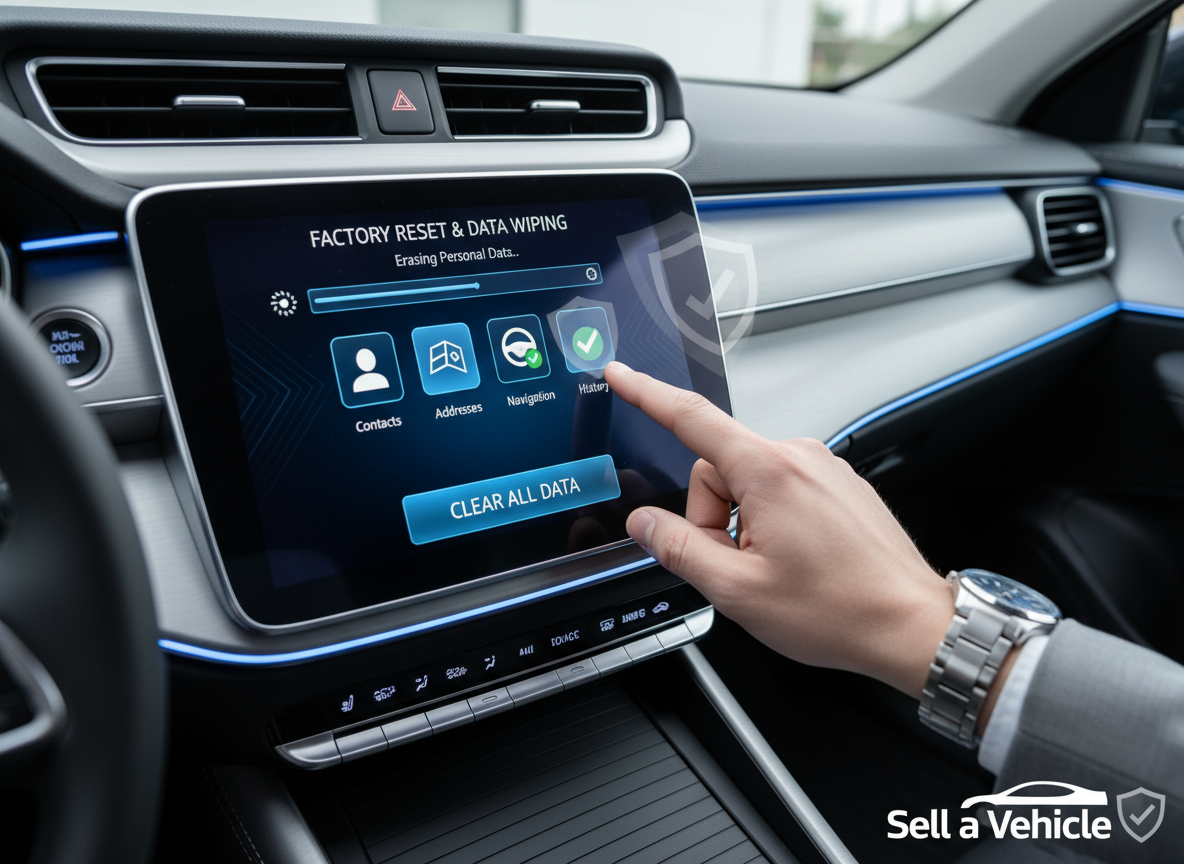
- Perform a factory reset on infotainment systems to clear messages and stored log-ins.
It’s the digital equivalent of changing your locks when you move house.
Step 2: Review your paperwork
- Strip out unnecessary details from service history copies.
- Only hand over what’s essential for the sale: V5C, MOT, and receipts that add value.
- Keep insurance records, bank slips, and personal notes out of the buyer’s reach.
Step 3: Control communication channels
- Set up a temporary email address dedicated to the sale.
- Use a secondary number if you can (plenty of apps provide one).
This ensures your main accounts stay safe from spam once the sale is done.
Step 4: Handle the handover safely
- Meet the buyer in a public place, not at your home.
- Stick to secure payments, bank transfers or cleared funds. Avoid gift cards or money orders.
- Confirm the DVLA transfer online immediately to draw a line under your responsibility.
Step 5: Post-sale clean-up
- Cancel your insurance to avoid future charges.
- Check your bank for the cleared payment.
- Monitor your credit file for suspicious activity in the following weeks.
By working through these steps, you create a firewall around your information.
Extra care with dealers and scrap yards
Many assume that selling to a business is safer than dealing with private buyers. In some ways it is, but you still need to be cautious.
- Dealerships: Ask how they handle customer data. Good dealers will explain their policies for storing and destroying sensitive information.
- Scrap yards: Only use an Authorised Treatment Facility (ATF). They’ll issue a Certificate of Destruction (CoD), which proves your car has been taken off the road properly.
Even with professionals, the basics remain the same. Clear your in-car systems, keep unnecessary documents, and hang on to your own copies. Services like Sell a Vehicle help here by making sure the process is compliant and safe.
The number plate question
If you’ve got a private plate, don’t leave it to chance. Transfer it to your new car or put it on retention through the DVLA before the sale. Standard plates will usually stay with the vehicle, but with private registrations, the responsibility falls on you, not the buyer.
For peace of mind, see how to keep your private number plate when selling a car.
Staying vigilant after the handover
Selling the car doesn’t mean your job is over. Personal data can resurface weeks or months later.
- Monitor your credit report: Services like Experian or Equifax help you catch suspicious activity early.
- Stay alert to phishing: If you get messages about your old car, treat them with caution.
- Report issues fast: Suspect data misuse? Contact your bank, the DVLA, and the police without delay.
This post-sale vigilance keeps your car sale data privacy intact long after the motor is gone.
Selling online: raising the bar on caution
Online platforms make it easy to advertise, but they also increase your exposure.
Best practices for online selling:
- Use well-known, reputable platforms with secure payment systems.
- Mask your exact home address in the advert.
- Verify the buyer’s identity before meeting, asking for a copy of their driving licence is fair.
The less information you share upfront, the less risk you carry.
Best practice checklist
- Clear all in-car systems.
- Remove personal details from paperwork.
- Use a separate email and number for the sale.
- Meet buyers in safe, public locations.
- Notify the DVLA online straight away.
- Cancel your insurance after the sale.
- Always use licensed ATFs for scrapping.
Stick to this checklist, and you’ll protect both your car and your personal data.
Key takeaways
- Cars hold more personal data than most owners realise.
- Overlooking it puts you at risk of fraud, scams, and identity theft.
- A strong data protection plan guarantees peace of mind.
- Whether selling privately, to a dealer, or for scrap, caution is essential.
- Post-sale monitoring is just as important as pre-sale preparation.
Next steps
If you’re planning a sale, take control of your data first.
- Wipe in-car systems completely.
- Review and limit the paperwork you hand over.
- Notify the DVLA online as soon as the deal is complete.
- If scrapping, get a quote to scrap your car and insist on a Certificate of Destruction.
- If selling privately, you can also find out how to sell your car safely through our trusted network.
For those in specific regions, Sell your car in Manchester, London, or Birmingham with full support for compliance and paperwork.
Selling your vehicle should leave you better off, not chasing fraudsters. With the right habits, you’ll lock down your information and enjoy a safe, stress-free sale.