

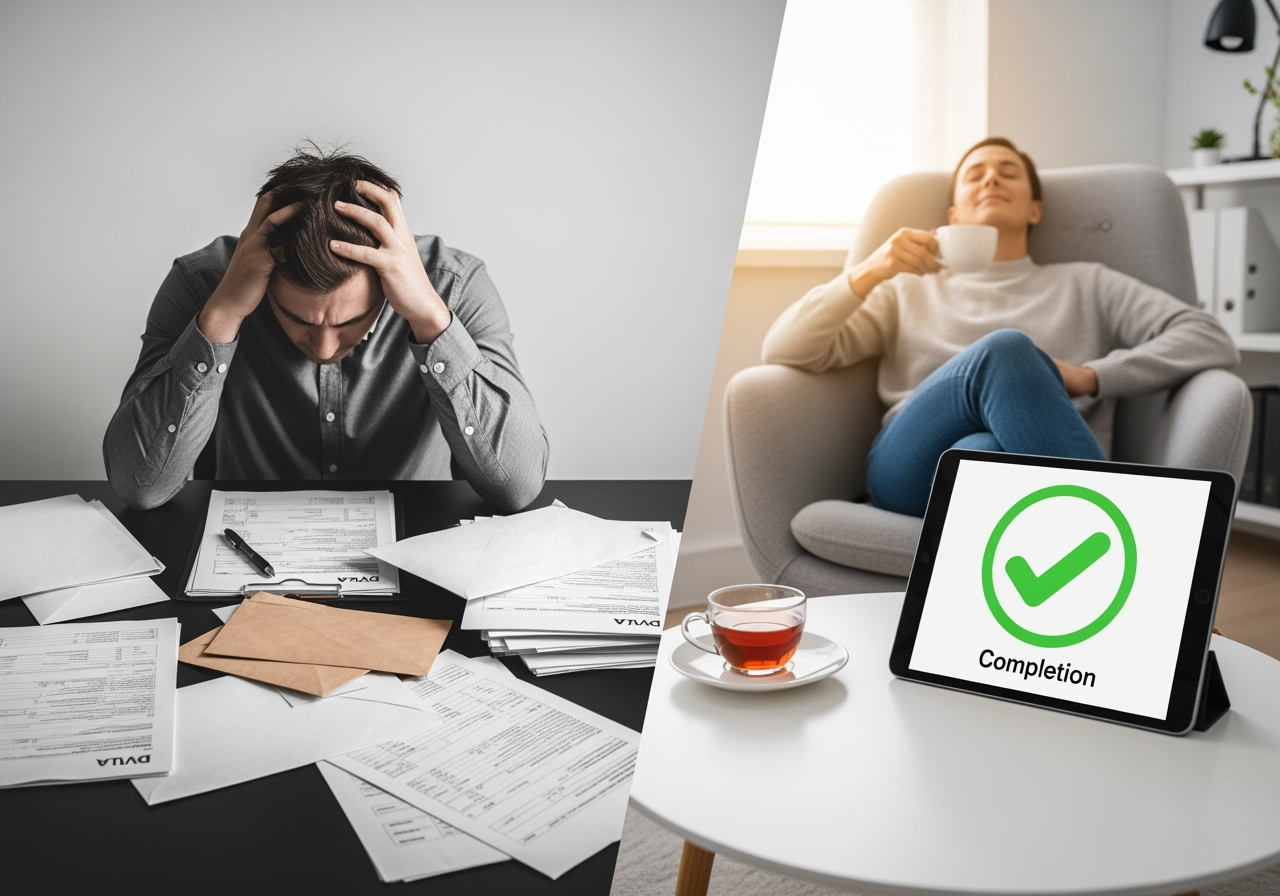
Selling a car ought to be simple. Hand over the keys, get your money, and walk away. But anyone who’s gone through the process privately knows that’s rarely the case. Something always clogs the works, and nine times out of ten, it’s the paperwork.
That dreaded DVLA logbook. The confusing V5C sections. The clunky online forms. The constant worry that one small mistake will land you in hot water weeks later. I’ve known people who’ve delayed selling their cars for months just because they couldn’t face the admin.
Here’s the good news: when you sell through Sell a Vehicle, you don’t have to wrestle with any of it. We handle the DVLA process for selling car from start to finish, acting as a professional car paperwork service. That means no sleepless nights over forms, no nasty surprises, and no letters telling you you’re still responsible for a car you waved goodbye to weeks ago.
Why the DVLA Matters When Selling Your Car
The DVLA isn’t just keeping tabs for fun. They have a legal duty to track who’s responsible for every car on Britain’s roads. Without that, the system would fall apart. If a vehicle is untaxed, dumped, or involved in an accident, they need to know who’s on the hook.
When you sell your car, you have to tell them. Otherwise, you’re still the official keeper in their eyes. And that means any penalty notices, unpaid tax letters, or insurance chasers are going to be aimed straight at you.
Take my neighbour’s Mini, for example. She sold it privately in Birmingham but never told the DVLA. Six months later, she had a pile of parking fines from London boroughs, even though she hadn’t driven past the M25 in years. It took a solicitor, a stack of letters, and months of stress to prove the car wasn’t hers.
That’s why the DVLA paperwork matters so much. It’s not just red tape, it’s your shield against being held liable for someone else’s mistakes.
Key takeaways
- DVLA must always be informed when a car changes hands.
- Failure to notify leaves you legally responsible.
- Proper transfer protects you against fines and penalties.
The Seller’s Responsibility: What You’d Normally Do
When you sell privately, the responsibility sits squarely on your shoulders. The DVLA expects you to:
- Fill out Section 9 of the V5C logbook with the buyer’s details and sale date.
- Submit that to the DVLA, either online with the 11-digit reference code or by post.
- Keep proof, because if it vanishes in transit, you’ll need evidence.
Sounds simple? In theory, yes. In reality, I’ve seen it go wrong more times than I can count. A wrong postcode scribbled on the form. A buyer who doesn’t provide a flat number. A logbook left in the glove box and forgotten about. One slip and the DVLA won’t see the transfer as valid, which means you’re still tied to the car.
Think of it like wiring up a house alarm. Easy on paper. But if you cross one wire, the thing either won’t work or it’ll go off at the wrong time. Paperwork’s the same: one mistake, and it can come back to haunt you.
A Closer Look at the V5C Logbook
It helps to know what you’re dealing with. The V5C (logbook) is the DVLA’s official record of your car. It proves who the registered keeper is, what the car’s VIN and engine number are, and what changes have been made.
Here are the bits that matter when selling:
- Section 2: Registered keeper details.
- Section 6: New keeper details.
- Section 8: Declaration signed by both parties.
- Section 9 (yellow slip): Notification of sale or transfer.
When selling privately, you’d fill in Section 6 with the buyer’s details, both sign Section 8, and then tear off Section 9 to send to the DVLA. The buyer keeps the rest.
It’s not complicated, but the sheer number of boxes and numbers leaves plenty of room for slip-ups.
How Sell a Vehicle Simplifies the DVLA Process
Here’s the bit most people breathe a sigh of relief at: Sell a Vehicle removes the paperwork headache altogether. You don’t need to worry about filling sections or posting forms. You hand us the logbook, and we do the rest.
As your car paperwork service, we:
- Notify the DVLA that ownership has officially changed.
- Complete the process immediately, so your name is cleared without delay.
- Ensure no gaps or mistakes, eliminating the risk of liability.
- Save you from having to navigate clunky government forms or queue at the Post Office.
It’s the difference between changing your own brake pads on the driveway and having a mechanic do it in the workshop. You could do it yourself, but why risk it when you can have it handled properly?
Key takeaways
- Sell a Vehicle completes the full DVLA process for selling car.
- No V5C confusion or admin headaches.
- A fast, stress-free experience from start to finish.
What Happens After You Sell Your Car to Us?
Here’s what the process looks like in practice:
- You request a free quote online.
- We arrange collection at a time that suits you.
- Our driver arrives, checks the car, and hands you your payment.
- We take the car away and complete the DVLA paperwork on your behalf.
- You receive DVLA confirmation that you’re no longer the registered keeper.
- You can then cancel your insurance.
If you’re not sure how to cancel properly, our guide on cancelling your car insurance will walk you through it step by step.
No paperwork stress. No gaps. Just a clean, clear break.
DVLA Penalties: What’s at Stake if You Get It Wrong
Some people think the DVLA paperwork is optional. It isn’t. Failing to notify them can come with real costs. Here’s what’s at stake:
- Fines: Up to £1,000 for not telling the DVLA about a keeper change.
- Unpaid tax: If the buyer doesn’t tax it, the DVLA could still chase you.
- Insurance issues: You might be seen as uninsured if the car is linked to your name.
- Enforcement letters: Parking fines and speeding notices will continue to land on your doormat.
I once knew a chap who sold a van to a mate and thought, “I’ll do the paperwork later.” He didn’t. Six months later, the van was clamped outside someone else’s house, and the DVLA sent him the penalty bill. Sorting it out cost him more than he made from the sale.
It’s just not worth the gamble.
Scrapping Your Car and the DVLA
When a car reaches the end of the road, scrapping it properly is just as important as selling. You still need to involve the DVLA.
With Sell a Vehicle, the process is simple:
- We provide a Certificate of Destruction (CoD) from an authorised treatment facility.
- We notify the DVLA that the car is scrapped.
- You keep the CoD alongside your logbook as proof.
That certificate is your golden ticket. Without it, you could be accused of abandoning the car. With us, you never need to worry. For more detail, check our guide on the documents needed to scrap a car.
Avoiding the Most Common DVLA Pitfalls
Here are the top three DVLA mistakes and how we prevent them:
- Forgetting to notify: The most common slip-up. With us, it’s automatic.
- Wrong address: We ensure everything is submitted with correct details.
- Lost logbooks: Even if your V5C is missing, we can advise on getting a replacement (form V62).
In short, we eliminate the traps that catch most private sellers out.
Keeping Your Private Number Plate
A personalised plate can be worth more than the car itself. If you’ve got one, you’ll want to keep it.
Before selling, you can transfer it to another car or put it on retention. We’ll help you manage that part of the process. Our guide to keeping your private number plate explains how to do it without risking your plate being lost with the car.
Regional Support Wherever You Are
Whether you’re selling in Manchester, London, Birmingham, or anywhere else in the UK, we’ve got local collection covered. Our network is nationwide, which means you don’t have to drive the car to us, we come to you.
Sell a Vehicle: Your Partner in Hassle-Free Car Selling
Selling a car should never feel like taking an exam. With Sell a Vehicle, it doesn’t. We handle the full DVLA process for selling car, so you don’t have to. Think of us as your trusted car paperwork service, one that’s efficient, accurate, and built to protect you.
At the end of the day, all you should be thinking about is what to do with the cash in your hand. The rest is our job.
Next Steps
Here’s how to make it happen:
- Go to Sell a Vehicle.
- Enter your car’s details for a free, no-obligation quote.
- Accept the offer if you’re happy.
- We’ll arrange collection at a time that suits you.
- Get paid and let us take care of the DVLA paperwork.
Got questions? Get in touch and we’ll help.