

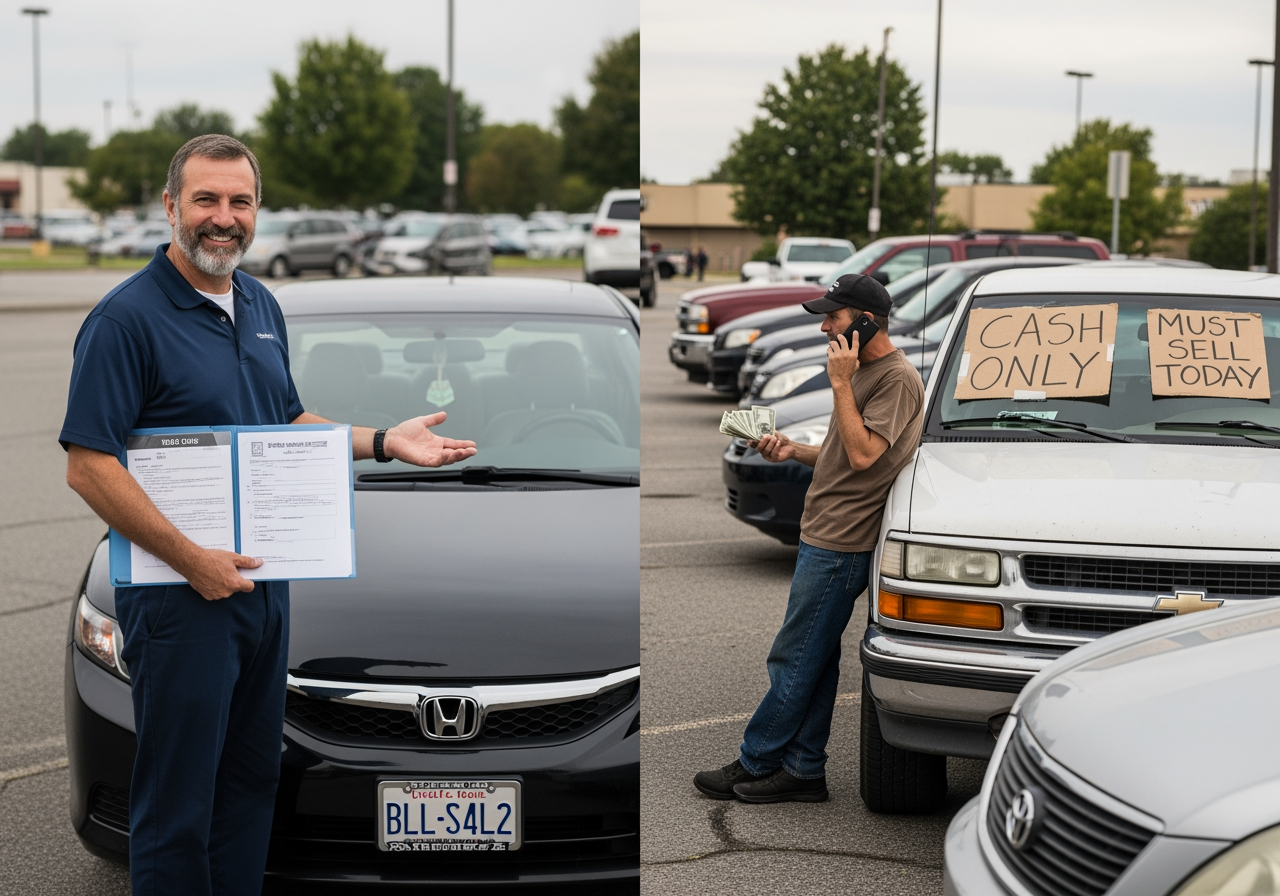
Selling your car should be simple. You put it up for sale, find a buyer, agree on a price, and everyone walks away happy. Unfortunately, there’s a group of people who make that more complicated. They’re known as curbstoners, and they’re a type of dodgy car buyers who cut corners, bend the rules, and leave unsuspecting sellers or buyers exposed.
If you’re wondering what is a curbstoner, here’s the blunt definition: an unlicensed dealer who poses as a private seller. They buy cars cheaply, usually damaged or high mileage, patch them up just enough to look presentable, and flip them quickly. Because they operate outside dealer regulations, there’s no safety net if things go wrong.
I’ve seen them in action countless times during my years on the garage floor. A shiny-looking car rolls in with an eager buyer, but underneath the polish is rust, bodged wiring, or hidden accident damage. That’s the world of curbstoners, and spotting them early is the best way to protect yourself.
What is a curbstoner?
A curbstoner is an unlicensed trader pretending to be a private seller. They’ll claim “it’s my car” or “I’m selling for my cousin,” but in reality they’ve got a small operation running.
Common tactics include:
- Buying accident-damaged or high-mileage cars at auction.
- Making quick, cheap repairs to hide bigger issues.
- Selling multiple vehicles online as though they’re personal cars.
- Using vague excuses like “just upgrading” or “selling on behalf of family.”
It’s a bit like buying food from a bloke in the pub. The packaging might look fine, and it might even taste fine, but you’ve no idea what went into it.
Key takeaways:
- Curbstoners are unlicensed traders posing as private sellers.
- They dodge tax and consumer protections.
- They leave buyers and sellers exposed if things go wrong.
Why curbstoners are a problem
The main issue with these dodgy car buyers is accountability. If you buy from a licensed dealer, you have legal rights under consumer protection law. If the car’s faulty, you can challenge it. With curbstoners, there’s no such comeback. Once money and keys change hands, that’s the end of it.
Problems with curbstoner sales often include:
- Clocked mileage: odometers wound back to look lower.
- Hidden accident history: damage repaired just enough to fool an MOT.
- Rust and wear: covered up cosmetically but structurally unsound.
- Payment scams: forged drafts, fake transfers, or counterfeit cash.
Anecdote: I remember a lad who bought what he thought was a bargain from a “private seller.” On the test drive it seemed sound. A few weeks later, rust came through the floorpan, and a HPI check showed it had been in a heavy crash. The seller? Gone without a trace.
Key takeaways:
- Curbstoners shift cars with hidden faults.
- There’s no legal recourse if the car fails.
- Payment scams are common in these transactions.
Warning signs: how to spot a curbstoner
Curbstoners often follow the same patterns. Learn the red flags and you’ll be better equipped to avoid them.
- Multiple cars for sale – a private seller usually has one, maybe two. More than that is a sign of trading.
- Vague or missing history – incomplete service records or excuses about “lost” MOT certificates.
- Strange meeting locations – supermarket car parks, laybys, or side streets instead of their home.
- Pushy behaviour – trying to pressure you into buying quickly before you spot flaws.
- Cash only – they insist on cash to avoid leaving a trail.
- Lack of paperwork – missing logbooks, vague receipts, or no proof of ownership.
- Reluctance to share details – dodging ID requests or refusing to give a proper address.
- Generic adverts – bland listings with little personal touch, often copied between multiple cars.
Analogy: Think of it like dating profiles. Genuine ones have detail and personality. Scammers use generic blurbs and vague lines because they’re juggling too many.
Key takeaways:
- Multiple listings, vague details, and pushy behaviour = danger.
- Cash-only sales and missing paperwork are classic curbstoner signals.
Protecting yourself when selling
When you’re the one selling, you set the rules. A few sensible steps make all the difference.
- Research the buyer: check their name online. If they claim to be a dealer, verify their licence.
- Meet safely: arrange viewings at your home or in a safe public place.
- Allow inspection: genuine buyers want a proper look.
- Bring backup: a friend or family member adds security.
- Trust instincts: if something feels off, it usually is.
- Use safe payment: never accept cash or cheques. Stick to secure transfers, see our guide on safe payments.
- Keep records: hold on to receipts, ID copies, and communication.
Anecdote: I once told a young couple to check the ID of a pushy buyer. Turns out he’d given a fake address. They avoided handing their car to a crook.
Key takeaways:
- Verify ID and paperwork.
- Meet in safe, well-lit locations.
- Stick to traceable payments.
What to do if you suspect a curbstoner
Don’t shrug it off. Report it.
- Trading Standards: they investigate unlicensed traders.
- Local councils: many councils run enforcement teams.
- Online platforms: flag suspicious ads and sellers.
- Warn others: share your experience to help other drivers.
Key takeaways:
- Report curbstoners to authorities.
- Flag ads online.
- Sharing helps protect others.
Curbstoners vs legitimate buyers
Spotting the difference is easier once you know the signs.
- Legitimate private seller: has one car, paperwork ready, proper ID, and a home address. Payment methods are safe and flexible.
- Curbstoner: multiple cars, vague history, generic ads, cash-only demands, unusual meeting spots.
The contrast is obvious when you know what to look for.
Why curbstoners still thrive
Despite stricter car recycling regulations UK and tighter trading rules, curbstoners still operate. Why?
- Bargain hunters: many people want cheap cars.
- Online anonymity: it’s easy to create fake listings.
- Low enforcement: authorities can’t chase every dodgy advert.
That’s why awareness matters. If you’d rather skip the risk altogether, use Sell a Vehicle for a guaranteed safe sale, secure payment, and proper paperwork.
Payment risks with curbstoners
A big part of the risk is how they handle money.
- Counterfeit cash: easy for them, hard for you to prove.
- Forged cheques and drafts: they look genuine but bounce days later.
- Fake transfers: they show screenshots or spoofed emails, but no money arrives.
- Overpayment scams: they “accidentally” pay too much, then ask for a refund before the payment bounces.
Protect yourself by sticking to secure bank transfers. For higher-value cars, escrow can add protection. Our full guide on safe payment methods when selling your car explains more.
The bigger picture: how curbstoning links to scrappage
Many curbstoners buy old, non-compliant cars and flip them in Clean Air Zone areas. It’s why schemes like the ULEZ scrappage programme exist, to get high-polluting cars off the road. If your car is at the end of its life, consider whether scrapping through Sell a Vehicle’s scrap car service is a safer, cleaner option than risking a sale to a dodgy buyer.
For guidance on the paperwork, see our blog on what documents you need to scrap a car.
Conclusion
So, what is a curbstoner? In plain terms, they’re unlicensed traders pretending to be private sellers, a classic example of dodgy car buyers.
Spotting the signs early protects you from scams: multiple listings, vague records, cash-only demands, and pushy behaviour are all red flags. Protect yourself with secure payments, proper paperwork, and a willingness to walk away if it feels wrong.
If you’d rather avoid the risk altogether, use a trusted network like Sell a Vehicle. Whether you want to sell your car quickly or scrap your car responsibly, you’ll get a fair price, safe payment, and peace of mind.
Next steps
- Learn the warning signs of curbstoners.
- Always verify buyer details before agreeing to a deal.
- Stick to safe payment methods.
- Report suspicious buyers to Trading Standards.
If you want complete peace of mind, get a car valuation and use a trusted buyer.