

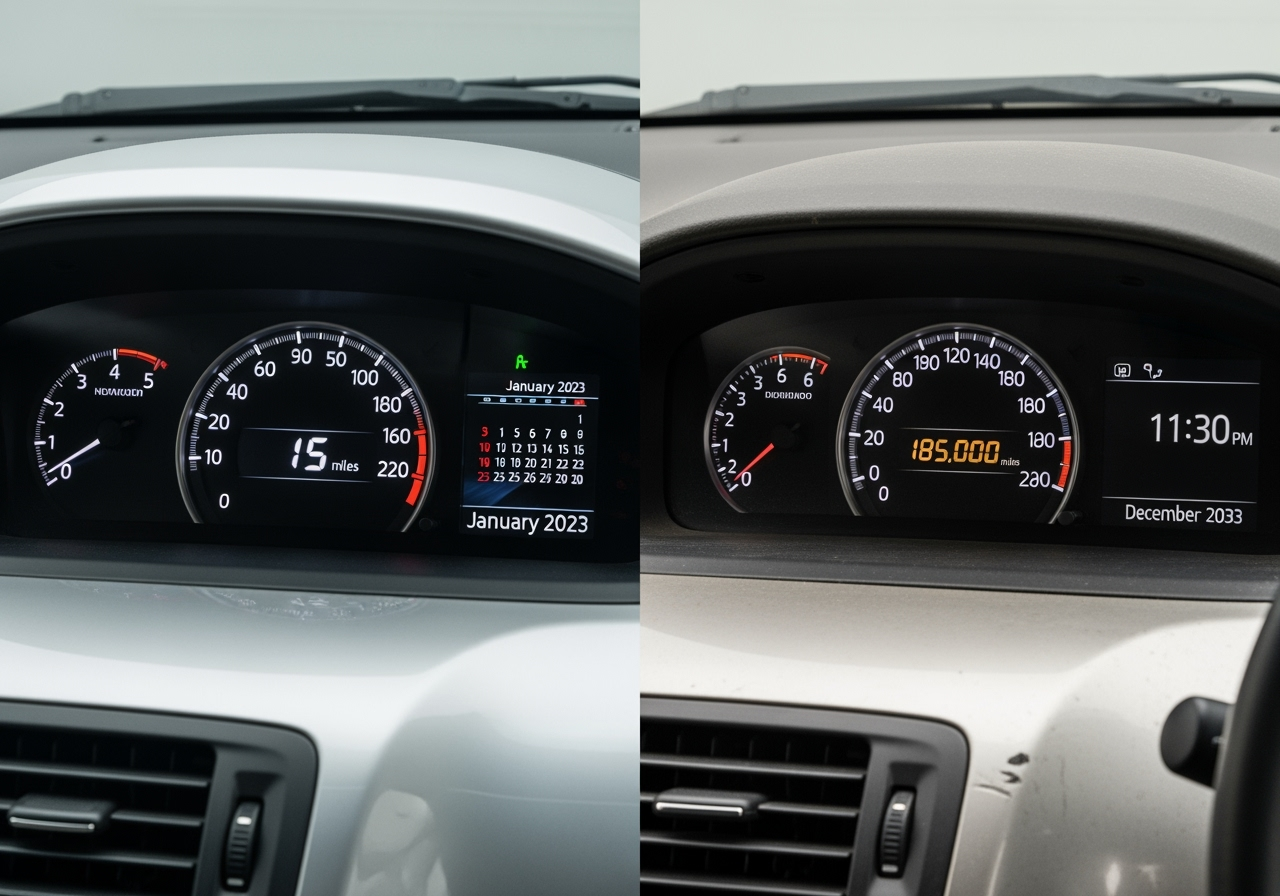
One truth unites every car owner: vehicles rarely get better with age. As years pass and mileage racks up, the price buyers are willing to pay steadily drops. This isn’t opinion, it’s the cold reality of the market.
But knowledge is power. By understanding how age and mileage influence car resale value, you can make smarter decisions about when to sell, how to present your motor, and when it’s time to stop chasing offers and consider scrapping.
It’s not about squeezing miracles out of an old banger. It’s about protecting your wallet, planning your timing, and recognising what affects a car’s worth in the eyes of a buyer.
How Mileage Affects Resale Value
Mileage is the car’s CV, a record of how hard it’s been worked. Even a tidy-looking motor with high miles tells buyers a story of worn engines, tired suspension, and the potential for expensive repairs.
Why Mileage Matters
- Wear and tear – Every mile adds strain to moving parts. Engines, gearboxes, suspension, and brakes all wear out faster with higher mileage.
- Repair worries – Buyers see big numbers on the odometer and assume big bills are waiting just around the corner.
- Perception of reliability – A high reading makes people hesitate, even if the car has a perfect service history.
There was once a Jaguar that came in showing more than 200,000 miles. Gleaming bodywork, cared-for interior, but buyers still saw it as a risk. The harsh truth? It was worth more in parts than as a complete car. That’s the power of car mileage value in shaping perception.
Key takeaways:
- High mileage sets alarm bells ringing.
- Buyers link mileage with future repairs.
- Low-mileage cars nearly always attract stronger offers.
The Impact of Age on Car Value
Age doesn’t just mean older styling. It chips away at desirability in more ways than one.
Why Age Reduces Value
- Technology – Modern cars come loaded with features now considered standard: Bluetooth, reversing cameras, and advanced driver aids. Older cars often lack these essentials.
- Safety – Airbags, ABS updates, and stability systems have improved drastically. An older car often looks outdated compared to newer safety benchmarks.
- Design – Styling changes quickly. A car that looked sharp ten years ago may now look tired, even if mechanically sound.
Take two Focuses. Both roadworthy, both reliable. The 10-year-old model with outdated tech won’t command the same price as a newer version, even if the mileage is similar. Buyers aren’t just buying transport; they’re buying peace of mind.
Key takeaways:
- Older cars fall behind on tech and safety.
- Design trends reduce desirability.
- A newer model, even with a few extra miles, often holds more value.
The Double Whammy: Age and Mileage Combined
When age and mileage work together, car resale value takes its biggest hit.
Consider:
- A 5-year-old Focus with 50,000 miles.
- A 10-year-old Focus with 150,000 miles.
The second example is worth a fraction of the first, despite both being capable of driving. Why? Buyers see remaining lifespan. The newer, lower-mileage car has more of it.
That’s the double-edged sword of age and mileage combining forces.
Other Factors That Affect Resale Value
Age and mileage dominate, but they’re not the whole story.
- Condition – Scratches, dents, and shabby interiors drag prices down. A clean car suggests mechanical care.
- Make and model – Some brands hold value (Toyota, Honda). Others fall faster due to poor reputation or limited demand.
- Service history – A complete record reassures buyers that the car has been looked after.
- Location – Trying to sell your car in Manchester? Local supply and demand affect prices.
- Colour – Greys, blacks, and silvers attract broader markets than lime green or mustard yellow.
- Optional extras – Features like heated seats or panoramic roofs add appeal, but they rarely offset age and mileage.
Analogy: Selling a car is like selling a house. If the paint’s peeling and the taps are leaking, buyers walk away or haggle hard. Fix it up, and you’ll fetch far better offers.
How Condition Plays a Role
Condition is the first thing a buyer sees. Two cars of the same year and mileage can fetch wildly different offers based on presentation.
Tips for Improving Condition
- Wash and polish regularly.
- Hoover interiors and remove clutter.
- Fix small issues like blown bulbs or squeaky hinges.
- Keep servicing up to date.
A pair of Astras once came up for valuation. Same year, same mileage. One was spotless inside and out; the other looked like a bin on wheels. The difference in offers? Hundreds of pounds.
Maximising Your Car’s Resale Value
Want to squeeze the most money from your car? Focus on presentation and proof of care.
- Keep it clean – Inside and out, polish sells.
- Stick to servicing – Oil changes and stamps matter.
- Fix small jobs – Don’t let a £30 repair scare off a buyer.
- Keep paperwork – Service history is gold.
- Pick timing wisely – Convertibles sell best in summer, SUVs in winter.
The combination of good looks, strong paperwork, and smart timing maximises value.
The Importance of a Full Service History
A full service history is one of the most powerful tools for protecting car resale value.
It tells buyers:
- The car has been maintained properly.
- Surprises and hidden faults are less likely.
- They’re safer spending money on it.
If your service book is missing, don’t panic. Many garages keep digital records, and even a folder of receipts helps.
When Is It Time to Scrap?
Not every car deserves to keep chasing resale. Sometimes, age and mileage push a motor beyond financial sense.
Signs It’s Scrap Time
- High mileage and old age together.
- Repairs outweigh the car value.
- MOT failures need major fixes.
At this stage, scrapping is often the smartest route. With Sell a Vehicle, you can get a quote instantly and still unlock some value.
Understanding Scrap Value
Scrap isn’t just a number pulled from the air.
- Weight – Heavier cars bring more metal.
- Market prices – Scrap values rise and fall with global demand.
- Parts – Catalytic converters, alloys, and electronics can boost the figure.
Never settle for the first offer. Compare multiple quotes through trusted services, and check our guide on the documents needed to scrap a car to keep DVLA compliant.
A Mechanic’s Anecdote
There was once a Cavalier that had been loved but neglected. Paperwork missing, paint faded, tyres bald. Depreciation had done its work. After a clean, a service, and digging out old receipts, the owner secured a much better offer than expected.
Lesson learned? Even if the years and miles are against you, care and preparation can still help you get the best deal.
Key Takeaways
- Age and mileage are the biggest drivers of car resale value.
- High mileage signals wear and looming repairs.
- Older cars lose appeal due to outdated design, safety, and tech.
- Condition, service history, and extras all make a difference.
- A full service history is invaluable.
- Scrapping is often best for very old, high-mileage, or costly-to-fix cars.
Next Steps
Be realistic about your motor. Look at its age, mileage, and condition, then decide whether to sell or scrap.
- Get a free valuation to see current worth.
- If the car’s ready for retirement, get a quote to scrap your car.
- Remember to tidy up the admin: cancel your car insurance once the sale or scrap is final.
- If in doubt, contact us for advice.
Don’t wait until depreciation leaves you with nothing. Take action early, and keep more value in your pocket.