

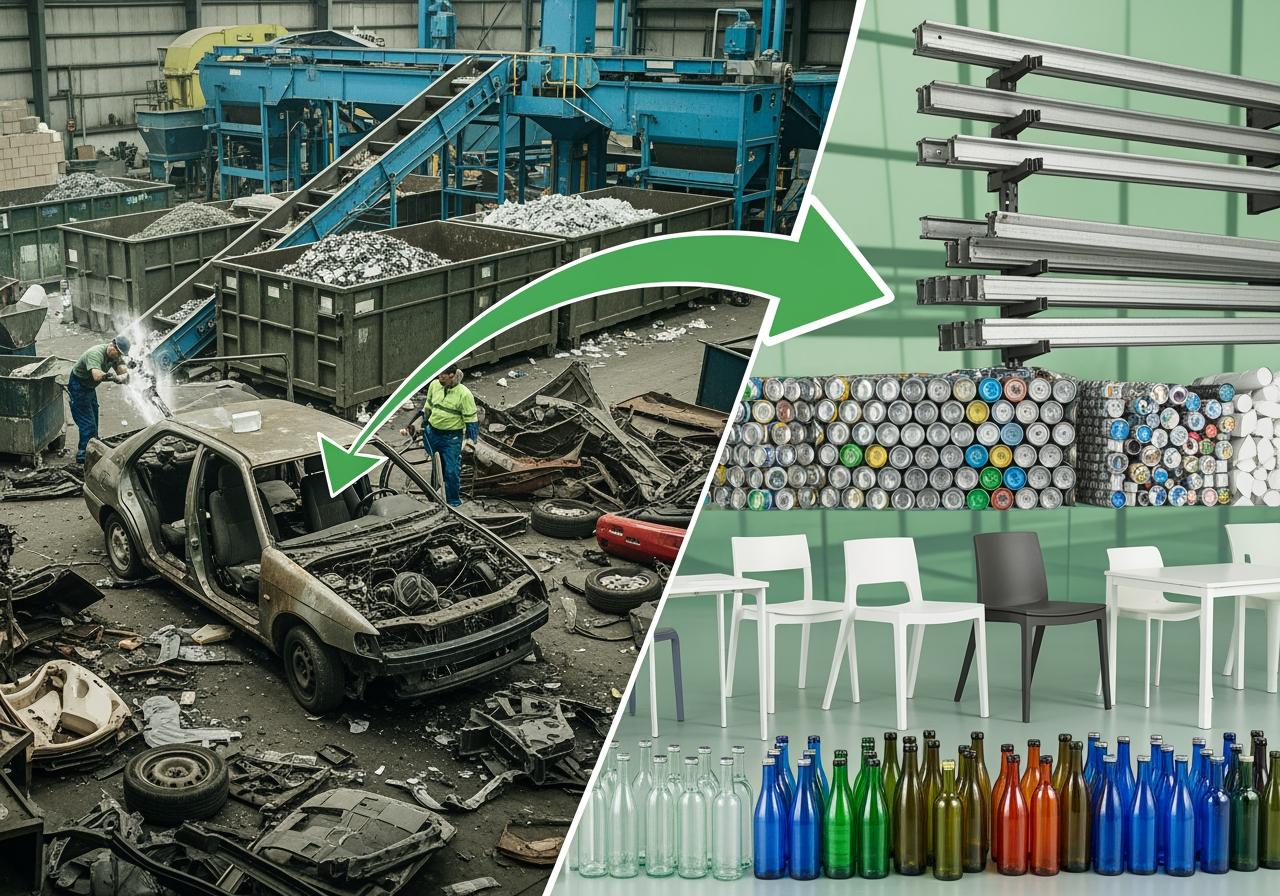
An old car never really disappears. Once it’s taken off the road and processed, its bits and pieces reappear in surprising places, from scaffolding poles to fizzy drink cans. The recycled car materials pulled from scrapyards form the backbone of industries far beyond motoring.
So if you’ve ever wondered what scrap cars are used for, here’s a closer look at the many second lives hiding inside that rusty old motor.
Engines, gearboxes, and panels: the parts that keep rolling
The first stop for any scrap car is the stripping bay. Before metal gets crushed or melted, anything with value is removed. Engines, gearboxes, alternators, and body panels often still have life in them.
- Engines and gearboxes: reconditioned and fitted into other vehicles, keeping them on the road for years to come.
- Panels and doors: salvaged and bolted onto cars in need of replacement parts.
- Smaller spares: mirrors, lights, and trim pieces end up in the second-hand market.
I once knew a lad who ran a taxi with more second-hand parts than original ones. His pride and joy ran reliably for another five years thanks to bits salvaged from scrap cars. That’s one way old vehicles keep others moving.
Key Points:
- Usable parts are removed and resold before recycling.
- Salvaged components extend the life of other cars.
- Keeps costs down for drivers who can’t afford brand-new spares.
Steel and iron: the backbone of industry
By weight, most of a car is steel and iron. Once the usable bits are gone, the shell is crushed, shredded, and melted down. That molten steel is the answer to what scrap cars are used for most commonly.
Where it ends up:
- New car bodies and structural components.
- Construction materials like girders and rebar.
- Everyday items like tools and appliances.
Recycling steel saves around three-quarters of the energy compared to making it from scratch. That’s why scrapyards are such a vital link in the vehicle recycling industry.
Aluminium, copper, and other non-ferrous metals
A modern car hides a surprising stash of non-ferrous metals: aluminium in wheels and bodywork, copper in wiring, and lead in batteries. These are all separated out and sent for their own recovery streams.
- Aluminium: reborn as drink cans, alloy wheels, or even aeroplane parts.
- Copper: stripped from wiring and re-used in plumbing or new electrical systems.
- Lead: recovered from batteries and recycled into new ones.
These metals fetch higher prices than steel, making them some of the most valuable recycled car materials.
Plastics and rubber: from dashboards to playgrounds
Cars contain hundreds of kilograms of plastics and rubber. From dashboards to bumpers and tyres, these materials are increasingly being given a second life.
- Plastics: shredded, sorted, and reused in new car interiors, garden furniture, or clothing fibres.
- Rubber: old tyres are chopped up to make playground surfaces, running tracks, and even filler in road tarmac.
It’s not always easy. Different plastics melt at different temperatures, and separating them can be fiddly. But new technologies are improving recovery rates every year.
Glass: windows with a future
Car windows and windscreens don’t just vanish either. They’re removed, crushed, and melted back into usable glass.
While laminated windscreens are trickier because of their plastic layer, specialist facilities can recycle them into insulation or new glass products. So your old windscreen could well return as part of a conservatory or even a fresh set of bottles.
Fluids and hazardous materials
Before recycling begins, all the hazardous bits are dealt with. Oil, brake fluid, coolant, and fuel are drained to prevent leaks. Batteries are pulled and sent to specialist plants.
- Oil: cleaned and refined into lubricants or fuels.
- Coolant and fuel: reprocessed where possible.
- Batteries: broken down to recover lead and acids.
I once saw a fellow pour old coolant straight into a storm drain, the mess and the fine nearly bankrupted him. That’s why scrapyards follow strict depollution rules.
The environmental payoff
By recycling cars properly, the UK saves mountains of raw material from landfill and slashes the need for mining. To put it in perspective: recycling just one tonne of steel saves over a tonne of iron ore and half a tonne of coal. Multiply that by the thousands of scrap cars processed every year and you see why this system matters.
So what are scrap cars used for? They’re used to save energy, cut pollution, and keep resources in circulation instead of buried in the ground.
Selling your car for scrap: your role in the cycle
Scrapping your car responsibly means you’re directly contributing to this chain. Instead of rusting on a driveway, your old car becomes part of new cars, new buildings, or even new gadgets. And thanks to trusted services like Sell a Vehicle, you’ll get a fair price while knowing your motor is recycled the right way.
If you’re not sure what paperwork you need, check our documents guide. And if you’re based in places like Manchester, we can help you arrange collection locally.
Key takeaways
- Recycled car materials include steel, aluminium, copper, plastics, glass, and rubber.
- Salvaged parts keep other vehicles running affordably.
- Recycling saves energy, reduces mining, and prevents waste.
- Selling a car for scrap supports the circular economy and benefits the environment.
Next steps
If your old motor has reached the end:
- Get a quote with Sell a Vehicle.
- Gather your paperwork.
- Arrange a collection slot.
- Let the recycling process turn your car into something new.
From scaffolding to soda cans, your scrap car has a busy future ahead. That clapped-out runabout could be the backbone of a bridge or the alloy in someone’s next family car.