

Some motors hang around long after their best days are behind them. They sit outside, MOT failures pinned to the windscreen, or cough their way down the road with warning lights glowing. Owners often find themselves asking the same question: what’s it worth now?
In the past, getting an answer meant trekking to dealers, flicking through classifieds, or waiting weeks for callbacks. These days, it’s different. A free vehicle valuation can be at your fingertips in moments, no appointments, no hassle.
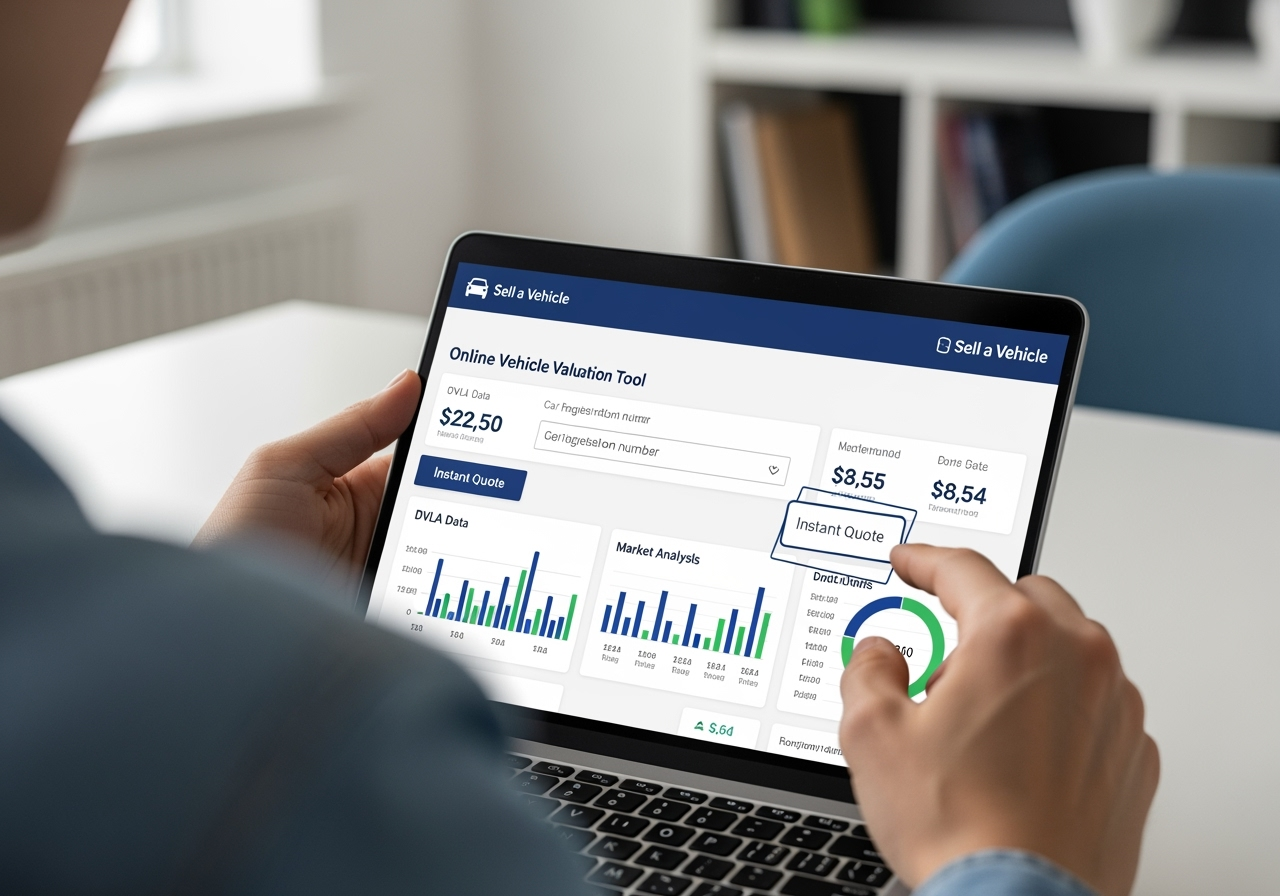
The clever part is that modern online car valuation tools aren’t just guessing. They’re powered by data, market checks, and condition details that combine to give you a figure grounded in reality. That number might be the starting point for a private sale, a trade-in, or a trip to the scrapyard, but it always gives clarity before you decide.
How the System Really Works
Many assume valuations pulled from the internet are little more than guesses. The truth is, a proper tool works more like a mechanic with a diagnostic scanner, running through structured checks, comparing patterns, and producing an output you can actually rely on.
The process combines three inputs:
- DVLA data – the foundation.
- Market analysis – the real-time pulse of prices.
- Condition reports – the final adjustment that reflects reality.
Bring those together, and the result is a fair, data-backed estimate.
DVLA Data: The Foundations
Every vehicle in the UK is logged with the DVLA. Details such as registration, make, model, year, fuel type, and body shape are all stored on record.
When you enter your registration into Sell a Vehicle’s free vehicle valuation tool, it automatically pulls in that DVLA information. This means there’s no risk of confusing trim levels or misidentifying engine sizes.
Analogy: It’s like reaching for the right socket before starting a repair. If you know what you’re working with, the job gets done quickly and properly.
Market Checks: Live Comparisons
Knowing the basics is useful, but value also depends on what buyers are paying right now. That’s where market analysis comes into play.
The tool reviews thousands of UK listings and recent transactions, factoring in:
- Mileage: Lower mileage often adds value.
- Condition: Clean, tidy cars attract stronger offers.
- Trim level: Extras, such as sat navs or leather seats, bump up demand.
- Regional trends: A small hatchback in Manchester might fetch less than the same model in London.
Think of it like the housing market: two near-identical properties on the same street can vary by thousands depending on upkeep and demand. Cars work the same way.
Condition: The Final Adjustment
This is where your input matters. A valuation can’t know the dents, scratches, or service gaps without your honesty.
- Scratches, scuffs, or missing trim reduce the figure.
- Full service history adds trust and raises value.
- Interior condition, tyres, and glass all influence the outcome.
I once came across a neighbour swearing blind his car was “immaculate.” In reality, the mirror was missing and the seats carried a stain that looked older than half the local council. The valuation only reflected the truth once those details were logged honestly.
Key takeaway: Be accurate. The closer your condition report is to reality, the smoother the sale later on.
Why Use an Online Car Valuation Tool?
Traditional methods, dealer visits, handwritten adverts, haggling aren’t the most efficient anymore. An online car valuation offers distinct advantages:
- Speed: Enter your reg and get a figure in minutes.
- Clarity: Helps check if your expectations match market reality.
- No obligation: A valuation is information, not a commitment.
- Convenience: All from your driveway or sofa.
It’s quick, free, and clears away guesswork before you take your next step.
Pitfalls to Watch Out For
No system is perfect. Keep these points in mind when using valuation sites:
- Treat valuations as guides, not guarantees. Final sale prices can vary.
- Avoid inflated promises. Some sites lure you with high numbers, then lower them later.
- Check the small print. Ensure it’s a free vehicle valuation with no hidden fees and safe data handling.
Analogy: It’s like buying parts online. A cheap “bargain” might look good until you realise half the fittings are missing.
How to Improve Your Valuation
Once you’ve got an instant figure, you can still nudge it upwards with small efforts.
- Clean the car: A polished exterior and vacuumed interior show care.
- Fix small jobs: Replace bulbs, tighten fittings, and top up fluids.
- Sort paperwork: V5C, MOT history, and receipts build trust.
- Be honest: Buyers spot the truth faster than most think.
If you’re scrapping rather than selling, paperwork matters too. See our guide on the documents needed to scrap a car.
Where Sell a Vehicle Fits In
Here’s how the process ties together. Sell a Vehicle provides a free vehicle valuation that combines DVLA data with market checks to give you a fair, no-obligation figure.
- If the car’s running, explore how to sell your car.
- If it’s ready for recycling, get a quote to scrap your car.
- For location-specific services, check sell your car in Manchester or scrap a car in London.
- Need advice? You can always get in touch.
Regional Insights
Valuations also vary with geography:
- Manchester: Abundant supply lowers prices slightly, but competition between buyers works in your favour.
- London: Stronger demand, especially for ULEZ-compliant models, often lifts values.
- Birmingham: Balanced market with steady demand for family cars.
Wherever you live, Sell a Vehicle ensures valuations reflect local conditions while keeping collection and payment straightforward.
A Mechanic’s Analogy: Reading the Gauges
Think of an online car valuation like the dashboard of your car. It doesn’t tell the whole story, but it gives you the indicators you need: fuel, temperature, and oil pressure. You still need to check under the bonnet, but the gauges guide your decisions.
Valuation tools play the same role; they don’t replace the sale itself, but they give you the numbers to work from.
A Real Story: Expectations vs Reality
A local owner with a Peugeot 206 insisted it was worth “at least two grand.” The instant valuation came back at £1,200. Disappointed, he considered giving up.
After cleaning the car properly, fixing a cracked rear light, and finding his full service history, he ended up selling it for £1,500.
The lesson? Valuations are starting points, and small efforts make a tangible difference.
Next Steps
Ready to see what your car is worth?
- Get your free vehicle valuation through Sell a Vehicle.
- Clean and tidy the car.
- Fix minor issues and gather paperwork.
- Decide whether to sell or scrap.
- Contact us for support if you need guidance.
Final Thoughts
That car outside may look tired, but it still carries value. By using a free vehicle valuation, you cut through the guesswork and see a realistic figure based on DVLA data, live market checks, and your car’s actual condition.
It’s not about guesswork, it’s about clarity. Whether you sell, part-exchange, or scrap, knowing your starting number puts you in control. And with Sell a Vehicle, the process is simple, reliable, and nationwide.