

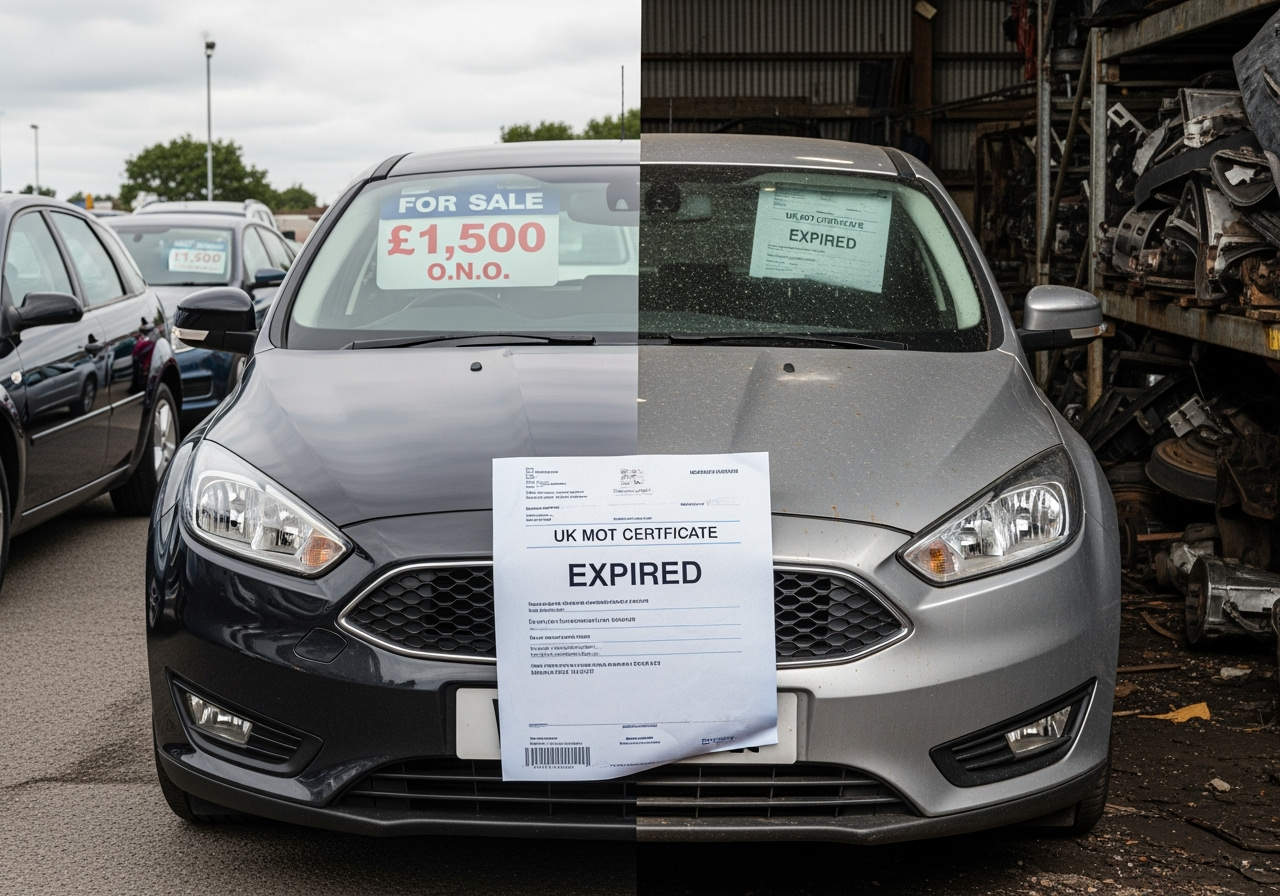
When an MOT runs out, many drivers feel stuck. A garage might have just failed the vehicle, or perhaps the renewal slipped through the cracks. Either way, the result is the same: a car that isn’t legally roadworthy, and a question mark over what to do next. The reality is straightforward – you can sell car without MOT or a scrap car without MOT in the UK. Thousands of motorists choose one of these options every year.
The important part is understanding exactly what that involves. Selling without an MOT usually leads to a lower price and fewer potential buyers, while scrapping is often simpler because the MOT status is irrelevant to the recycling process. Knowing the rules helps you stay compliant with the law, avoid unnecessary stress, and secure the best possible outcome for your vehicle.
What is an MOT and why does it matter?
The MOT (Ministry of Transport test) is a legal requirement for most cars over three years old. It’s an annual safety and emissions inspection designed to prevent unroadworthy vehicles from circulating.
Without a valid MOT:
- It’s illegal to drive a car on public roads, other than directly to a pre-booked MOT test.
- The vehicle’s market value drops, as buyers know they face costs and risks.
- Insurance may be invalidated if the car is used without certification.
In short, the MOT functions as an official confirmation that a vehicle meets minimum safety and environmental standards. Without it, the car is immediately considered a higher risk.
Why MOT affects sales
Buyers see a valid MOT as reassurance. It proves that, at least at the time of the test, the car met the required standards. Without it, there’s uncertainty. Some failures are minor, such as faulty bulbs, while others involve expensive repairs. That unknown factor pushes prices down.
Analogy: Purchasing a car without an MOT is like buying second-hand electrical equipment with no guarantee. It could work reliably for years, or it might fail on the first day. In either case, no one is willing to pay top money when the risk is obvious.
Selling a car without an MOT
It’s entirely legal to sell car without MOT in the UK, but expectations must be realistic.
The legal side
- Cars can be sold without an MOT through private sales, dealerships, or auctions.
- Sellers must provide accurate information about the condition and history. Misrepresentation – for example, advertising the car as roadworthy when it isn’t – can lead to legal consequences.
- Driving the car to meet a buyer isn’t allowed unless it’s en route to a pre-booked MOT appointment. Transport or collection must be arranged separately.
Price impact
Vehicles without MOT certification typically sell for 10–40% less than their MOT-certified equivalents.
Examples:
- A hatchback valued at £2,000 with a valid MOT may only attract £1,200–£1,400 without it.
- An older model worth £800 with MOT could drop to £300–£400 if the certificate has expired.
Although figures vary, the reduction illustrates how buyers calculate the risk of repairs.
Who buys cars without MOTs?
- Trade buyers – Dealers and online services often purchase non-MOT cars for repair or dismantling.
- Enthusiasts – Mechanics and hobbyists may buy project cars for restoration.
- Scrap yards – If the cost of repair outweighs the car’s value, recycling becomes the logical route.
Key points:
- Selling without MOT is legal.
- Buyers expect a lower price.
- Full transparency is essential to avoid disputes.
Scrapping a car without an MOT
For vehicles where repairs are not worthwhile, scrapping is usually the simplest solution. MOT status has no bearing on scrap eligibility or value.
How scrapping works
Vehicles must be processed through an Authorised Treatment Facility (ATF). Once delivered or collected:
- Hazardous materials are removed.
- Valuable parts such as catalytic converters and alloys may be salvaged.
- Remaining materials are shredded and recycled in line with government regulations.
Paperwork requirements
- Obtain a Certificate of Destruction (CoD) as official proof the vehicle has been dismantled.
- Complete the yellow section of the V5C logbook and send it to the DVLA.
- Cancel insurance and road tax promptly.
Failure to follow these steps can result in fines or continued liability for the vehicle. Always ensure an ATF provides the necessary documentation.
Key points:
- Cars can be scrapped without MOT.
- The procedure is identical to scrapping a car with MOT.
- A CoD protects the registered keeper from ongoing responsibility.
Why cars fail MOTs
The cause of failure often dictates whether it’s sensible to sell, repair, or scrap.
Common MOT failures
- Brakes – worn pads, discs, or hydraulic leaks.
- Tyres – tread below legal depth or structural damage.
- Lights – faulty bulbs, broken lenses, misaligned beams.
- Suspension – damaged springs or shock absorbers.
- Exhaust systems – holes, excessive noise, or failing emissions checks.
Repair or scrap?
- Minor faults: Bulbs, tyres, or brake components can often be replaced for £100–£200. Repairs like these are typically worthwhile if the rest of the vehicle is in good condition.
- Major faults: Severe rust, engine failure, or emissions system problems may cost more than the car’s value. In these cases, scrapping is usually the most practical option.
Analogy: Deciding whether to repair or scrap is similar to evaluating an old television. Replacing a fuse makes sense, but replacing a shattered screen costs more than buying a replacement. Cars follow the same logic.
Maximising value without an MOT
Even if the car has no certificate, preparation can improve returns.
For selling
- Accuracy matters: Clearly state the lack of MOT in any advertisement.
- Paperwork supports value: Service history and receipts prove maintenance has been carried out.
- Clean presentation: While cosmetic touches won’t solve faults, a tidy appearance suggests care and improves buyer confidence.
For scrapping
- Remove belongings: Check for items such as electronics, documents, or personal valuables before collection.
- Compare quotes: Prices vary between ATFs, so sourcing multiple offers can increase returns.
- Watch market trends: Scrap values fluctuate with steel and aluminium prices. Timing can influence the final payment.
Regional differences in selling and scrapping
Geography often influences convenience and price.
- London: Ultra Low Emission Zones make older cars without an MOT particularly unattractive for resale. Many owners choose scrapping instead.
- Manchester: High competition between recycling centres often results in stronger scrap offers. See Sell a Vehicle Manchester.
- Birmingham: Industrial demand ensures efficient turnaround, though values may be slightly lower. Explore options with Sell a Vehicle Birmingham.
- Rural areas: Transport costs can reduce offers, and fewer buyers limit competition. Travelling slightly further may secure a better deal.
Regional conditions should always be factored into decisions, especially when calculating overall convenience.
Step-by-step: selling or scrapping without MOT
Selling without MOT
- Request an online or dealer valuation.
- Collect essential documents: V5C logbook, service history, and receipts.
- Clean the vehicle.
- Advertise with clear “no MOT” labelling.
- Finalise the transfer and notify the DVLA.
Relevant resources:
- Guide on the documents needed to scrap a car.
- Steps for cancelling your car insurance.
- How to keep your private number plate when selling a car.
Scrapping without MOT
- Contact several ATFs for quotes.
- Arrange vehicle collection or delivery.
- Provide V5C slip and identification.
- Collect the Certificate of Destruction.
- Cancel insurance and road tax.
Owners can begin the process at get a quote to scrap your car.
Final thoughts
So, is an MOT required to sell or scrap a vehicle? The answer is no. A car can be sold or scrapped without a valid certificate. However, a missing MOT certificate reduces resale value and narrows the pool of interested buyers. Scrapping, on the other hand, remains unaffected and is often the simplest route for vehicles where repairs don’t make financial sense.
The most important steps are to remain honest, complete all paperwork, and choose the right channel. Doing so ensures compliance with the law and helps secure the best possible return for the vehicle.
Motorists ready to proceed can find out how to sell your car or get a quote to scrap your car today. For any queries, simply contact us – support is always available.