

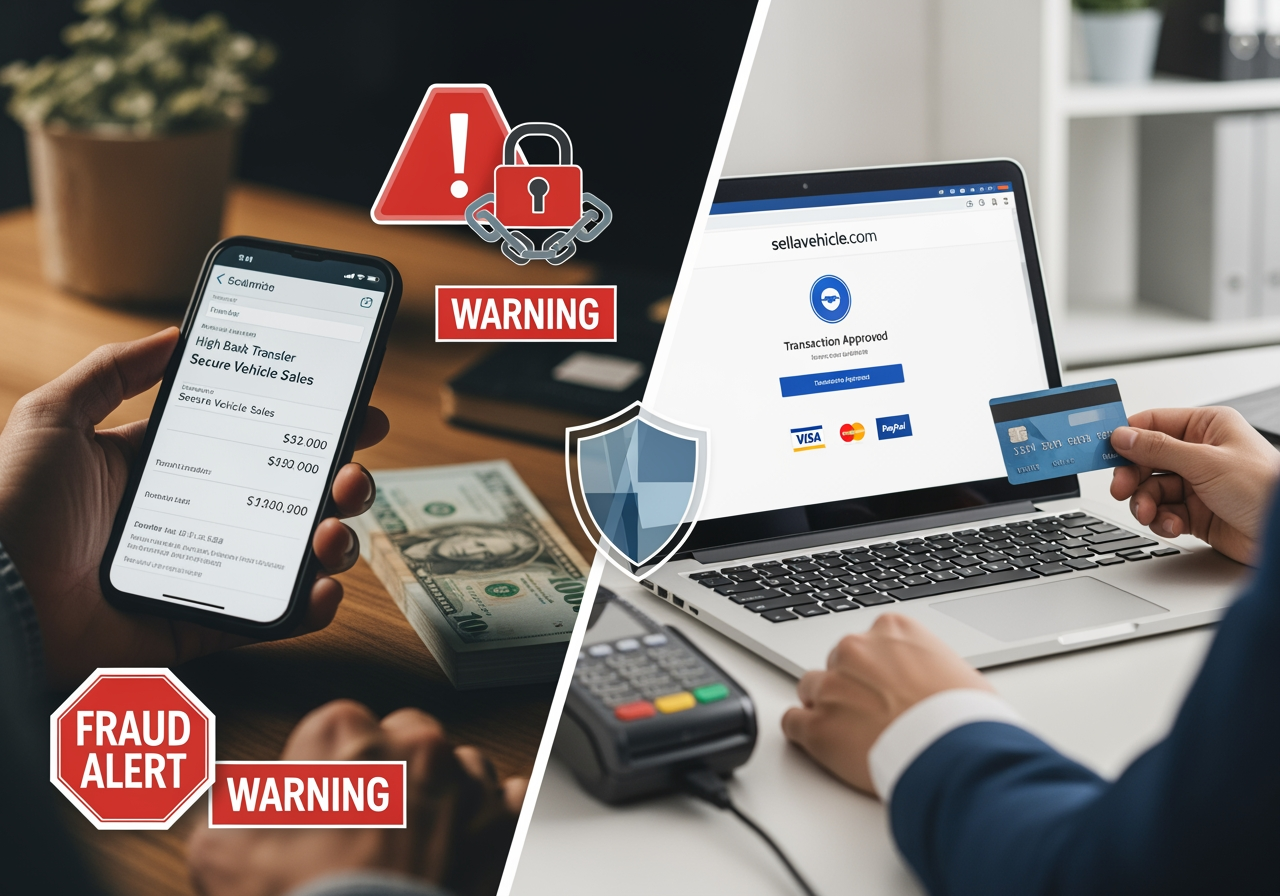
The rise of car selling scams has turned what should be a straightforward deal into a real gamble for sellers. Across the country, people are losing money – and sometimes their vehicles – to fraudsters who rely on pressure, fake payments, and clever tricks. It’s a growing problem that continues to catch out even cautious drivers.
Understanding how car selling fraud UK schemes operate is the best way to protect yourself. By learning the signs early and knowing which tactics criminals use most often, you can avoid the traps, secure your sale, and make sure the only person driving off happily is the genuine buyer who’s paid in full.
The most common car selling fraud in the UK
Fraudsters aren’t original, but they are persistent. The same schemes resurface again and again, catching out unsuspecting sellers. Here are the big ones to watch out for when it comes to car selling fraud UK.
Fake bank transfer
The scammer flashes a “proof of transfer” on their phone and insists the money is on its way. In reality, nothing’s been sent. If you hand over your car before confirming cleared funds, you’ve lost both.
Story from the street: Mrs Miggins nearly handed over her Mini when a buyer showed her a screenshot of a transfer. I warned her not to trust the phone, only her own bank account. Sure enough, the money never arrived.
Bogus escrow services
Fraudsters set up slick-looking “escrow” websites, claiming your money is held safely until the car is handed over. In truth, the escrow doesn’t exist, and once you release your car, it’s gone.
Overpayment trick
This one looks generous. The buyer “accidentally” pays more than the asking price and asks for a refund of the difference. Later, their original payment bounces, leaving you with a loss.
The “I’ll pay later” promise
Simple but effective. The buyer drives away with your car, promising to transfer the money later when “funds clear.” Of course, the payment never arrives.
Key points:
- Always confirm funds have cleared before releasing your car.
- Never use an escrow service you haven’t verified.
- Don’t refund supposed “overpayments.”
- Full payment first, no exceptions.
Red flags every seller should spot
Fraudsters often reveal themselves if you know what to look for.
- Too eager – A genuine buyer asks questions; a scammer rushes the deal.
- Odd communication – Poor grammar or unusual phrases often point to overseas scams.
- Pressure tactics – “I need it today” or “I’ve got other offers” are designed to push you.
- Avoiding face-to-face – Many scammers dodge meeting in person.
- Unusual payments – Requests for obscure apps or odd methods should ring alarm bells.
Key points:
- A rushed buyer with little interest in the car is suspicious.
- Poor communication is a warning sign.
- Don’t bow to pressure. If it feels wrong, walk away.
Protecting yourself from car selling scams
Here’s how to keep safe when selling and avoid becoming another statistic in car selling fraud UK.
Verify every payment
Don’t rely on screenshots. Log in to your own bank account and make sure the money is there before you release the car. Remember, some transfers can take hours or days.
Use secure payment methods
Cash can work for small sales, but it isn’t always practical. Safer options include:
- Bank transfers (confirmed).
- Bank drafts.
- Trusted, regulated payment services.
Steer clear of personal cheques; they can bounce days later.
Choose safe meeting spots
Always meet in well-lit public places, like supermarket car parks or busy petrol stations. If possible, bring a friend for backup.
Confirm the buyer’s identity
Ask to see ID such as a driving licence or passport. Note down details. Genuine buyers won’t mind; scammers will.
Trust your instincts
If your gut says something’s off, it probably is. Walk away. Another buyer will come along.
Key points:
- Double-check your account before releasing the car.
- Avoid risky payment methods like cheques.
- Meet in public places and never go alone.
- Always check ID.
What to do if you’ve been targeted
Even the most careful seller can fall victim to car selling scams. If you suspect you’ve been scammed:
- Contact the police – File a report with all names, texts, and vehicle details.
- Inform your bank – They can freeze accounts and investigate.
- Report to Action Fraud – The UK’s national fraud service provides a reference number and passes details to investigators.
- Warn others – Sharing your experience can protect other sellers.
- Consider scrapping – If your car is recovered but badly damaged, it may be best to get a quote to scrap your car.
Key points:
- Report quickly to police, bank, and Action Fraud.
- Warn others so they don’t fall into the same trap.
- Scrapping may be the best route if your car is written off.
Safer alternatives for selling your car
Private sales can be risky, but you don’t have to go it alone. Services like Sell a Vehicle offer safe alternatives that cut out scammers entirely.
With Sell a Vehicle, you can:
- Get a free online quote.
- Arrange for free collection from your home.
- Have all paperwork handled, from notifying the DVLA to providing proof of sale.
- Receive payment by secure bank transfer.
If you’re in London, Birmingham, or Manchester, you can also use Sell a Vehicle’s regional services for tailored local support.
And if you’re selling an end-of-life car, you can recycle it responsibly by following our guide on the documents needed to scrap a car. Don’t forget to sort the admin; our step-by-step on cancelling car insurance keeps you from paying after the car is gone.
Resources worth knowing
For extra advice on tackling car selling fraud UK:
- Action Fraud – The UK’s official fraud and cybercrime reporting centre.
- Citizens Advice – Free advice on scams and fraud.
- DVLA – Official government guidance on safe car sales and transfers.
Key takeaways
- Car selling scams are a growing issue in the UK.
- Fake transfers, escrow websites, overpayment tricks, and “pay later” promises are the most common.
- Spotting red flags early is your best defence.
- Protect yourself with secure payments, safe meetings, and ID checks.
- Using Sell a Vehicle cuts out risk and guarantees a safe, simple sale.
Next steps
If you’re preparing to sell your car:
- Stay alert to the scams listed above.
- Stick to safe payment methods.
- Verify funds before releasing your vehicle.
- Use a reputable service like Sell a Vehicle to avoid private-sale risks.
Selling your car should be rewarding, not stressful. Keep your wits about you, and you’ll avoid the fraudsters trying to turn a simple sale into a nightmare.