

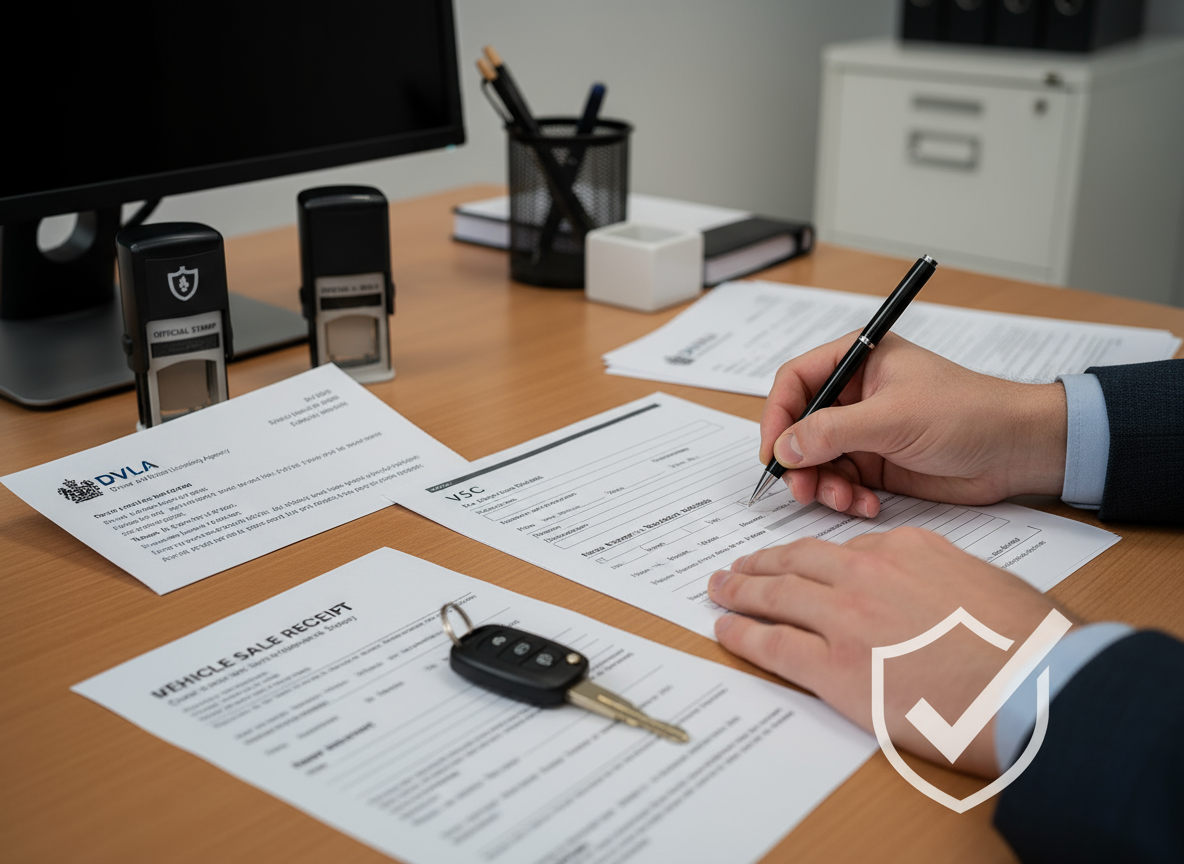
When a car changes hands, the money and the keys are only part of the deal. The real protection lies in the paperwork. Overlooking a single form can open the door to car paperwork fraud, leaving you responsible for fines, penalties, or even legal trouble linked to a vehicle you no longer own. It’s a trap that catches countless sellers who assume the sale ends the moment the buyer drives away.
Carrying out a proper car ownership transfer is the only way to cut ties cleanly and protect yourself from nasty surprises. Whether it’s notifying the DVLA, updating insurance, or making sure the buyer’s details are recorded accurately, each step builds a safety net around the sale. Get it right, and the car – and the problems that might follow it – are no longer yours.
Why paperwork matters more than people think
The minute the buyer drives away, you might feel the car is no longer your responsibility. But legally, you’re still in the hot seat until the DVLA updates its records. Until that confirmation lands, every ticket, toll, and fine points back at you.
Here’s what stays on your shoulders until the DVLA recognises the transfer:
- Speeding tickets still land in your name.
- Parking fines head your way.
- Tolls and congestion charges stick to you.
- Insurance disputes can drag you into accidents you had nothing to do with.
This is where proper car ownership transfer becomes more than just a courtesy. It’s your firewall against unwanted liability. Without it, the line between seller and buyer stays blurred, and you’re left exposed.
Key takeaways:
- Ownership doesn’t shift until the DVLA says it does.
- Fines and claims can keep following you if the paperwork’s not done.
- Car paperwork fraud is often about missed details rather than deliberate scams.
The V5C logbook explained
If the car’s identity has a backbone, it’s the V5C logbook. Officially, it’s not proof of ownership, but it’s the DVLA’s record of who the registered keeper is. In other words, it tells the authorities who to chase when something goes wrong.
Inside, you’ll find:
- Registration number.
- VIN (Vehicle Identification Number).
- Engine details.
- Registered keeper’s information.
When selling a car, the logbook is what underpins a proper car ownership transfer. If you don’t update it, the DVLA assumes you’re still responsible.
How to complete the V5C correctly
This is the bit where too many sellers slip up. The logbook isn’t difficult, but precision matters.
Steps to complete the V5C properly:
- Find Section 6 – “New Keeper Details.”
- Fill in the buyer’s details, full name, address, postcode. Spelling errors are costly.
- Add the sale date, the exact handover date, no fudging.
- Get the buyer’s signature, the DVLA won’t accept it otherwise.
- Detach Section 10 (the green slip), give this to the buyer. It’s needed to tax the car.
- Post Section 6 to DVLA straight away, not tomorrow, not next week, the same day.
Key takeaways:
- Section 6 is your safeguard, so treat it carefully.
- Without the buyer’s signature and date, your protection doesn’t hold.
- Delay posting it, and you create a gap where liability still sits with you.
What happens after you send it
Once the DVLA has your form, they’ll process the update and send you a confirmation letter. That letter is gold dust, proof that you’re no longer tied to the vehicle.
- Keep it safe with your insurance documents.
- If nothing turns up in four weeks, chase the DVLA.
- Without that letter, you’ve no evidence that you’re free of responsibility.
I once knew a chap who tossed the confirmation aside, only to need it later when disputing a parking fine from months after he sold his car. Luckily, he dug it out, and it saved him from a world of hassle.
Common mistakes that cause headaches
Even the most careful seller can trip up. Here are the blunders I see time and again:
- Messy handwriting, if the DVLA can’t read it, they can’t process it.
- Wrong address, even a single digit missing from the postcode is enough to cause limbo.
- Forgetting to post, the single most common (and costly) error.
- No personal copy, without a photo or photocopy, disputes are tougher to resolve.
Think of it like rebuilding an engine. Miss one gasket, and the whole job leaks.
Key takeaways:
- Clear writing avoids rejections.
- Double-check dates and addresses.
- Always keep a personal record.
Spotting and reporting fraud
Sadly, not every buyer plays fair. Some hand over false details, others keep driving without registering the transfer. When the fines land at your address months later, don’t sit on them.
Steps if you suspect fraud:
- Contact the DVLA immediately.
- Supply evidence, receipts, photos of the V5C, or messages.
- Keep a copy of every conversation and letter.
The faster you act, the quicker the DVLA can correct their records. Hesitation just lets the problem fester.
Key takeaways:
- Suspect car paperwork fraud? Report it straight away.
- Proof like receipts and copies of forms makes your case stronger.
- The DVLA has channels to put things right, but only if you speak up.
Scrapping a car: a slightly different story
If the car’s on its last legs and destined for the yard, the rules change slightly. You’ll need a Certificate of Destruction (CoD) from the Authorised Treatment Facility (ATF). This proves the vehicle is off the road for good.
- The ATF notifies the DVLA.
- You should receive the CoD directly.
- If it doesn’t arrive, chase both ATF and DVLA.
Without that certificate, the system assumes you still own the vehicle, and again, that leaves a door wide open for car paperwork fraud.
When it comes to scrapping, it’s always worth using a trusted service. For example, with Sell a Vehicle, you can get a quote to scrap your car and rest easy knowing the DVLA notifications are handled properly.
The cost of sloppy transfers
Fines and penalties don’t care whether you “meant to send it” or “forgot to date it.” Enforcement systems go by what the DVLA database says.
I once heard of a seller who didn’t date the V5C correctly. The DVLA rejected it, but he didn’t notice. Months later, he was contesting insurance fraud over a crash in Manchester, despite living hundreds of miles away. All because the paperwork had a gap.
Best practices for stress-free transfers
Here’s your straightforward checklist for avoiding the traps:
- Fill in the V5C neatly and completely.
- Double-check the buyer’s details and signature.
- Add the exact date of the sale.
- Hand the green slip to the buyer.
- Post your section to the DVLA the same day.
- Keep copies of everything.
- Chase confirmation if you don’t receive it within four weeks.
Follow these, and you’ll never be caught out by sloppy admin again.
Key takeaways
- Paperwork is your shield against unwanted liability.
- The V5C logbook drives a proper car ownership transfer.
- Mistakes like messy writing or late posting lead to fraud risks.
- Keep records, chase confirmations, and stay proactive.
- Scrapping requires a Certificate of Destruction.
Next steps
If you’re preparing to sell, make sure your paperwork is watertight before you do anything else. If you’d rather not juggle the admin, Sell a Vehicle takes the hassle off your hands. From ensuring proper car ownership transfer to scrapping compliance, our team gets it right.
- Find out how to sell your car through trusted buyers.
- Get a quote to scrap your car with full DVLA compliance.
- If you’re based locally, we can also help with regional services: Sell your car in Manchester, London, or Birmingham.
- Check related guides such as documents needed to scrap a car, how to cancel your car insurance, and keeping your private number plate.
By covering these bases, you bank the cash with peace of mind and avoid the nightmare of car paperwork fraud.