

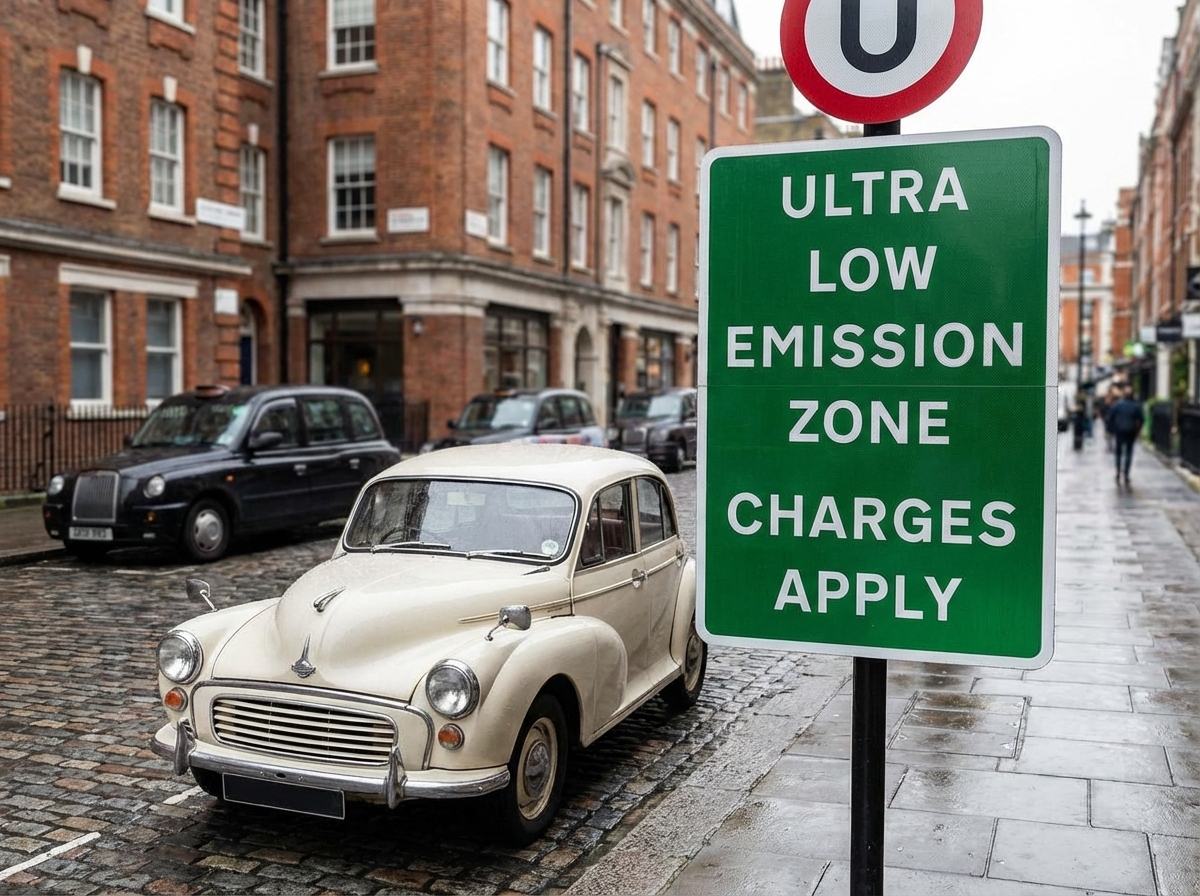
Cities are changing. Roads that once echoed with the rumble of smoky diesels and coughing old petrols are now marked by signs warning you about charges, cameras, and compliance. Welcome to Low Emission Zones UK, where the future of driving is cleaner, stricter, and often a bit more expensive if you’re clinging to an old motor.
For drivers of ageing cars, these zones are more than just lines on a map. They dictate whether you pay to drive, whether your vehicle is still practical, and sometimes whether it’s time to sell up and move on.
Let’s take a clear-eyed look at what they mean, how they work, and how they impact those of us with older cars in emission zones.
What exactly are Low Emission Zones (LEZs)?
Low Emission Zones are areas, usually in larger towns and cities, where vehicles that don’t meet certain emissions standards are either charged to enter or barred altogether. The idea is straightforward: cut pollution by discouraging the dirtiest vehicles from clogging up congested streets.
Across Low Emission Zones UK, the specific rules vary, but the common goal is cleaner air. Each zone sets thresholds for emissions, usually tied to Euro standards. Vehicles that don’t cut must pay a daily charge, or risk a penalty fine.
It’s a bit like a mechanic standing at the city gates, clipboard in hand, saying: “Right, if your exhaust is spewing muck, you’re not getting in without paying.”
Key points:
- LEZs improve air quality by restricting polluting vehicles.
- Charges or bans apply to cars, vans, lorries, and buses depending on emissions.
- Rules differ between cities; always check before driving in.
Which vehicles are affected?
Here’s where owners of older cars in emission zones start to feel the squeeze.
Petrol cars
- Generally, only Euro 4 and newer petrol cars (registered from 2006 onwards) are compliant.
- Older models struggle because they lack modern catalytic converters and fuel controls.
Diesel cars
- Diesel faces stricter rules. You’ll usually need Euro 6 (registered from September 2015) to avoid charges.
- Older diesels pump out nitrogen oxides (NOx) and especially harmful particulates.
Larger vehicles
- Lorries, coaches, and buses are included too, though thresholds and charges vary depending on weight and use.
I remember old Mrs Miggins down the road, she loved her Rover, but it smoked like a chimney. Lovely car in its day, but in today’s LEZ, it wouldn’t stand a chance.
Key points:
- Pre-2006 petrols and pre-2015 diesels are most at risk.
- Compliance is about emissions, not just age.
- Always check your vehicle’s Euro standard (V5C or online checker).
How do Low Emission Zones work?
It’s all done with technology.
- ANPR cameras (Automatic Number Plate Recognition) track cars entering the zone.
- The system checks your reg against the compliance database.
- Non-compliant cars either face a daily charge or a fine if you don’t pay.
Think of it like a club bouncer. If your car doesn’t meet the dress code (emission standards), you either pay extra to get in, or you’re turned away with a fine.
Operating hours
Some zones run 24/7. Others only apply during working hours. London’s ULEZ, for example, operates around the clock.
Charges
Fees differ depending on the city and vehicle type. For a non-compliant car, you might be looking at £8–£15 a day, while heavier vehicles can face much higher charges.
Key points:
- ANPR cameras do the enforcement.
- Charges or fines apply automatically.
- Know the hours and costs before you drive in.
The impact on owners of older cars
If you’re driving an older vehicle, LEZs change the equation.
Paying the charge
Daily fees stack up quickly. £12.50 a day doesn’t sound much, but if you drive into London’s ULEZ five days a week, that’s over £3,000 a year.
Modifying your car
In theory, retrofitting emissions controls can help, but in practice, it’s costly and often not viable for private cars. Commercial fleets sometimes go this route, but for the average driver, it’s rarely worth it.
Avoiding the zone
You could simply steer clear, but that’s easier said than done if you live or work inside the boundaries.
Selling and upgrading
For many, the sensible path is to sell the old motor and buy something compliant. It might mean an upfront cost, but long-term it saves money and hassle.
I had a customer once with a trusty old diesel estate. It had done 200,000 miles and was still plodding on. But once ULEZ expanded, the daily charge was more than the car was worth in a year. He sold it through a quick-buy service and switched to a hybrid. Painful, but it made sense.
Key points:
- Daily charges can outweigh the car’s value.
- Modifications are costly and impractical for most.
- Selling and upgrading is often the best long-term move.
Selling your non-compliant car
Once you’ve decided enough is enough, you’ll want the smoothest way to part with your vehicle.
Private sales
You could advertise privately, but older non-compliant cars are harder to shift, especially in cities. Buyers don’t want to inherit the charges.
Quick-buy services
This is where Sell a Vehicle helps. You can get a quote to sell your car without faffing with adverts and time-wasters. They’ll collect from your doorstep and handle the paperwork.
Regional options
If you’re based in areas like Birmingham or London, regional services exist that focus on local demand and compliance pressures.
Key points:
- Private selling can be slow.
- Quick-buy services offer speed and simplicity.
- Regional services cater to local LEZ markets.
Upgrading to a compliant vehicle
Once you’ve sold the old car, the next step is choosing what to replace it with.
Newer petrol or diesel
Cars meeting Euro 4 (petrol) or Euro 6 (diesel) are compliant in most zones. Check before buying, though, standards may tighten further.
Hybrid cars
Hybrids combine petrol with electric assistance: lower emissions, better fuel economy, and compliance with most zones.
Electric vehicles
EVs are exempt from LEZ charges altogether. While upfront costs are higher, fuel and maintenance savings often balance it out.
It’s a bit like swapping your old smoky lawnmower for a quiet cordless one. Same job, fewer fumes, easier life.
Key points:
- Petrol Euro 4+ and diesel Euro 6+ are currently compliant.
- Hybrids give balance.
- EVs are exempt and future-proof.
What if your car is beyond repair?
Sometimes an older vehicle isn’t worth selling. It’s tired, rusty, and better off retired.
Scrapping responsibly
Use a licensed Authorised Treatment Facility (ATF). They’ll recycle parts, handle the DVLA paperwork, and issue a Certificate of Destruction (CoD).
You can get a quote to scrap your car through trusted services, and they’ll even collect it.
For details, see our guide on the documents needed to scrap a car.
Key points:
- Scrapping avoids ongoing costs and charges.
- ATFs ensure legal disposal and recycling.
- You still get paid for the scrap metal.
Navigating the future of motoring
LEZs aren’t going away. More cities are joining the scheme, and standards are likely to tighten.
- Expansion: Expect more areas to roll out zones.
- EV adoption: Incentives for electric cars will grow.
- Public transport push: Alternatives to private cars will get more funding.
Think of it like learning new road signs. At first, they’re confusing, but once you know the rules, you adjust your driving.
Key points:
- LEZs will expand across the UK.
- Compliance standards may get stricter.
- Drivers need to plan for the long term.
Conclusion
The rise of Low Emission Zones UK marks a shift in how we think about cars. For owners of older cars in emission zones, the rules are closing in. Charges, restrictions, and compliance headaches aren’t fun, but they’re not insurmountable.
With the right plan, whether that’s upgrading, selling, or scrapping, you can adapt without being caught out. At the end of the day, it’s about cleaner air, healthier cities, and making sure daily charges don’t drain your wallet.
Next steps
- Check your car’s Euro standard (V5C or online).
- Research the rules of LEZs where you drive.
- Weigh your options: pay, avoid, upgrade, sell, or scrap.
- Get a quote to sell your car if upgrading makes sense.
- Scrap your car responsibly if it’s beyond repair.
Contact Sell a Vehicle for help with quotes, collection, and paperwork.